
••• Grow + Gather!
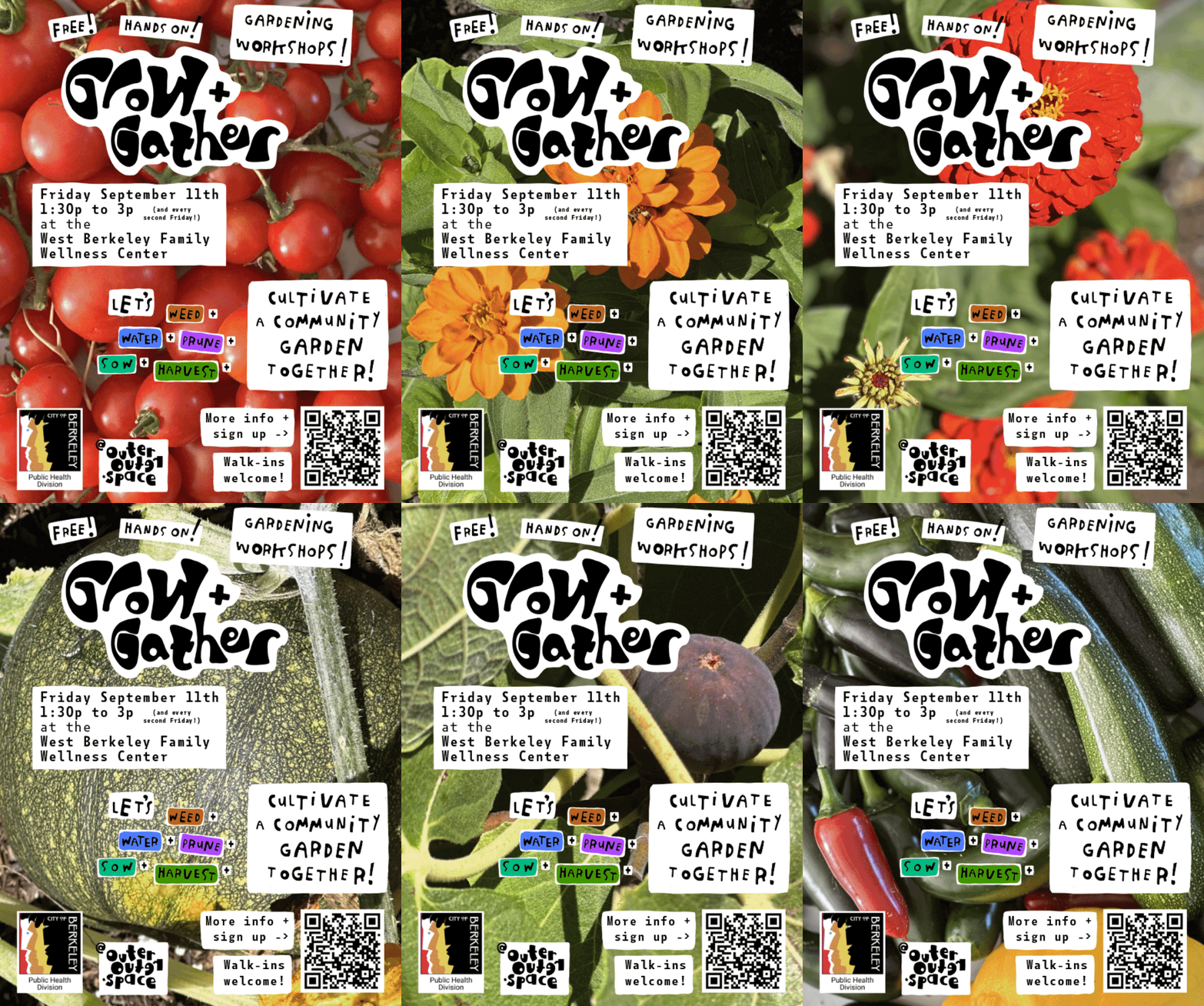
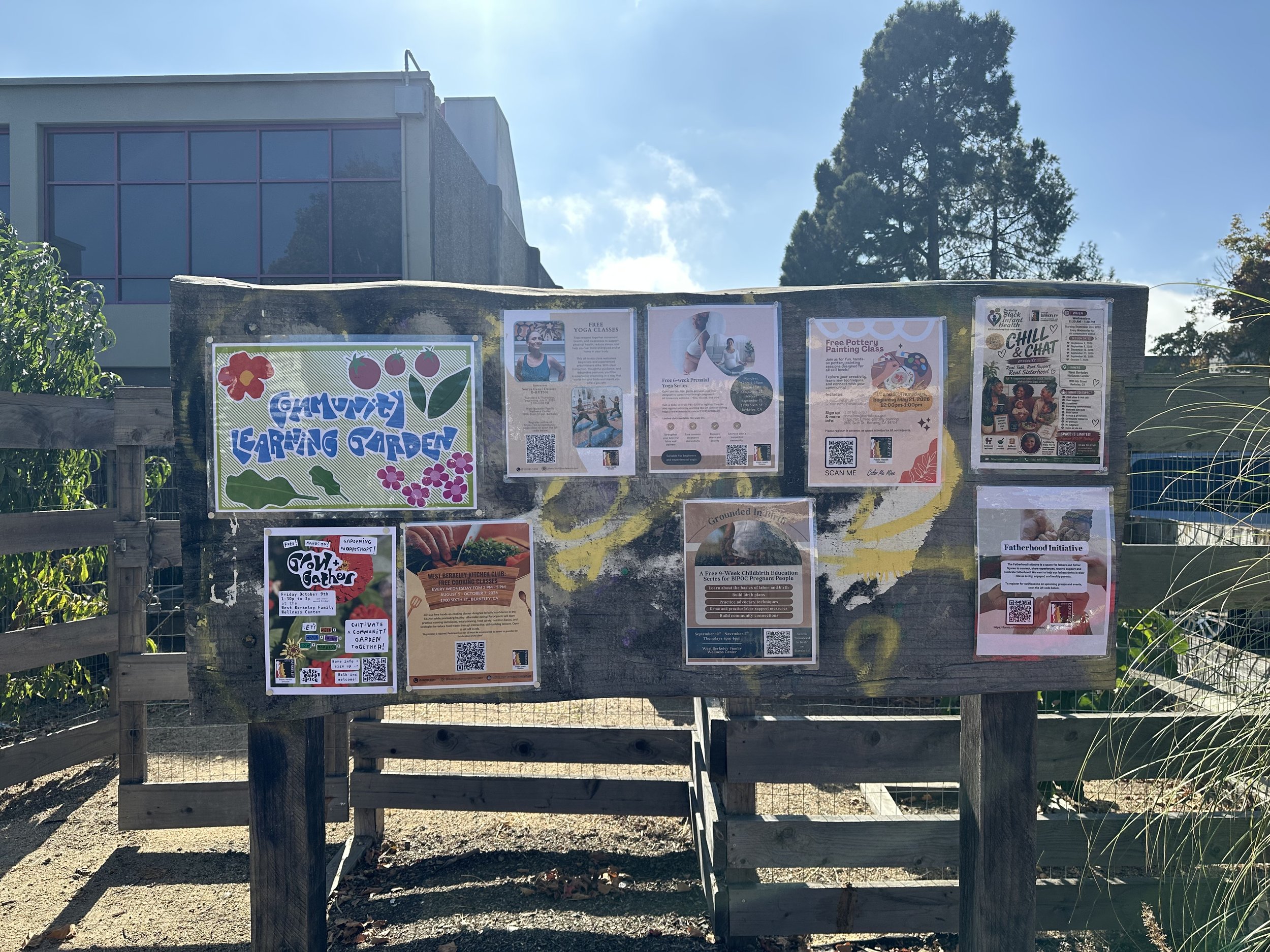
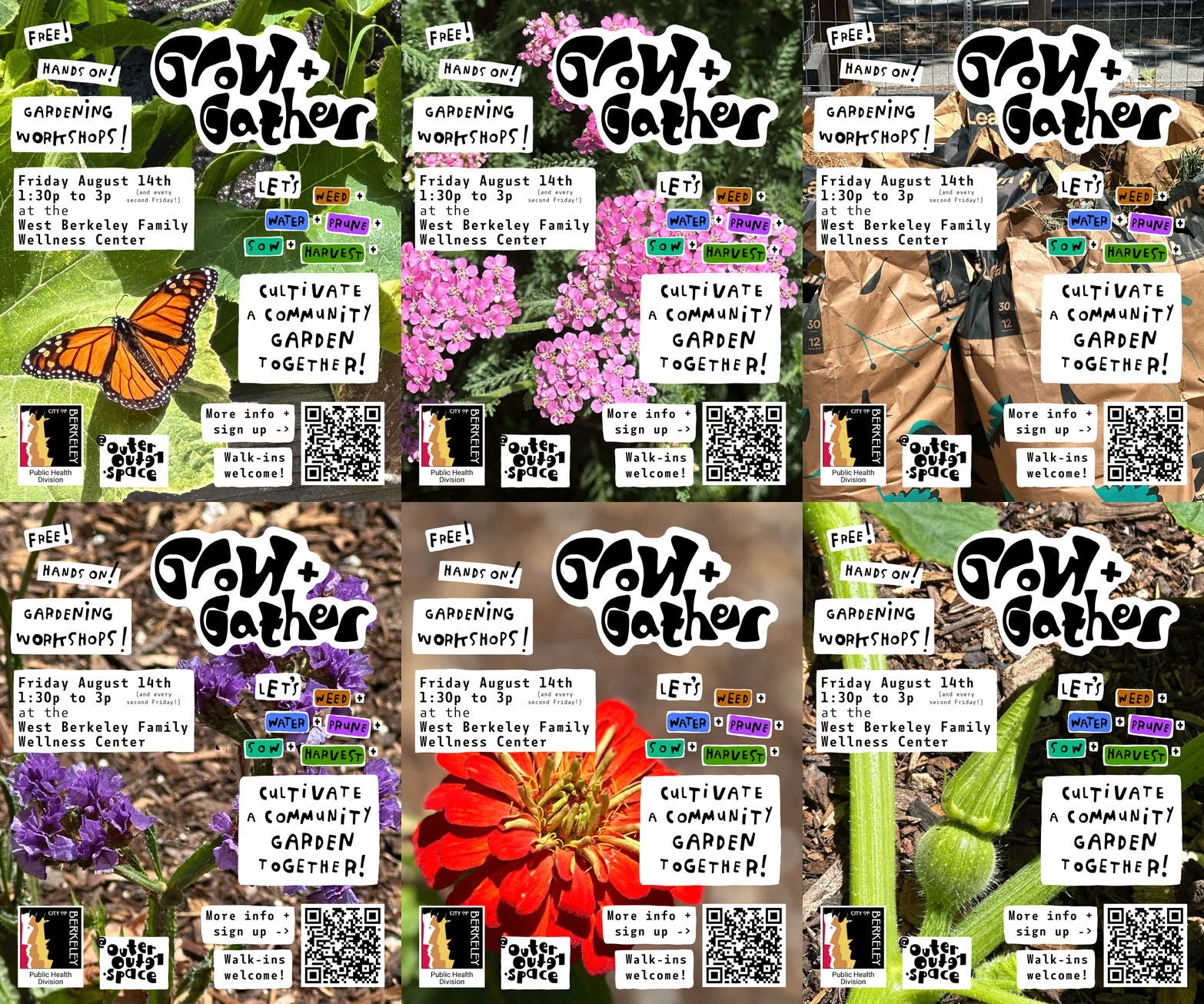
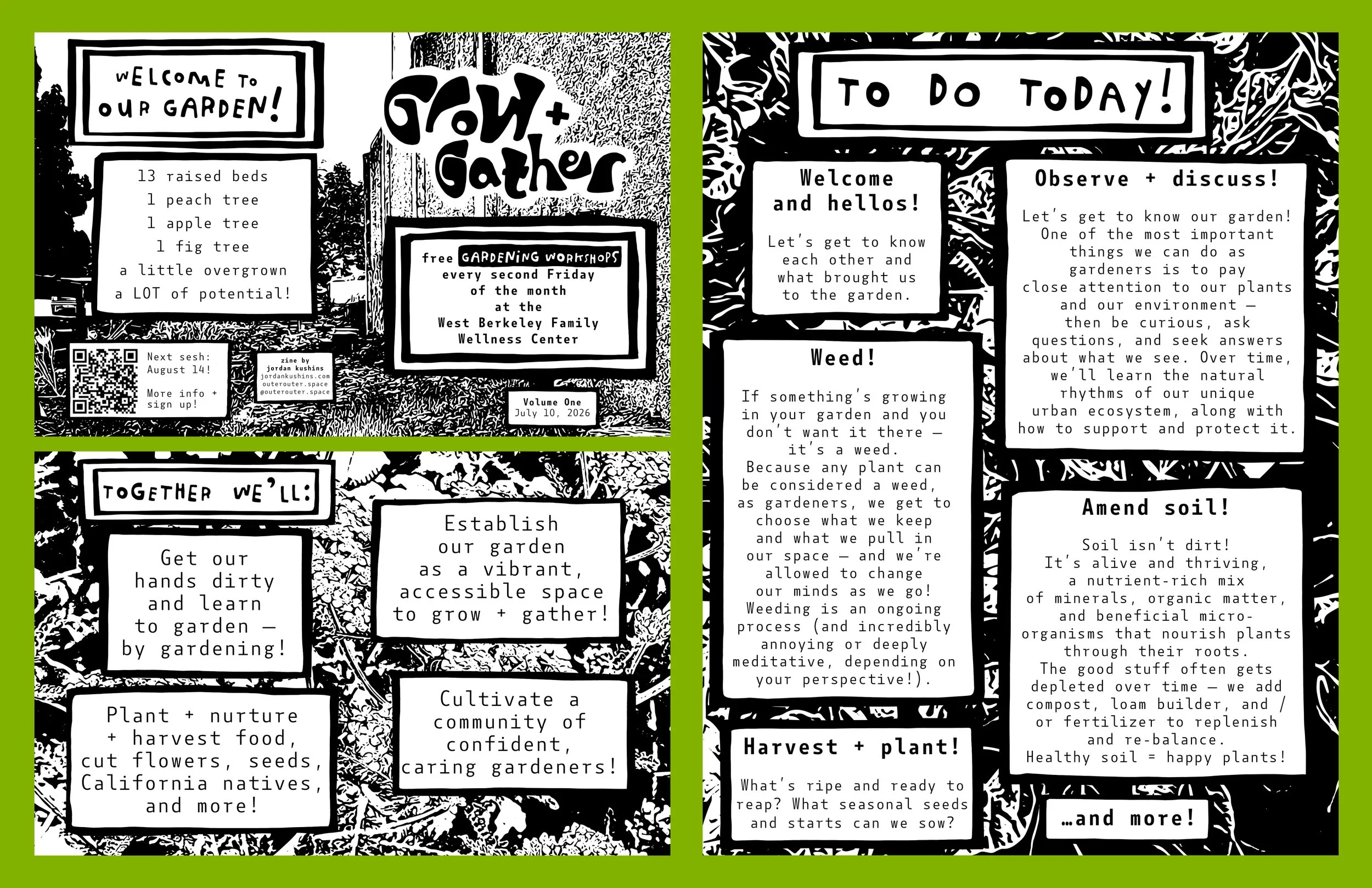
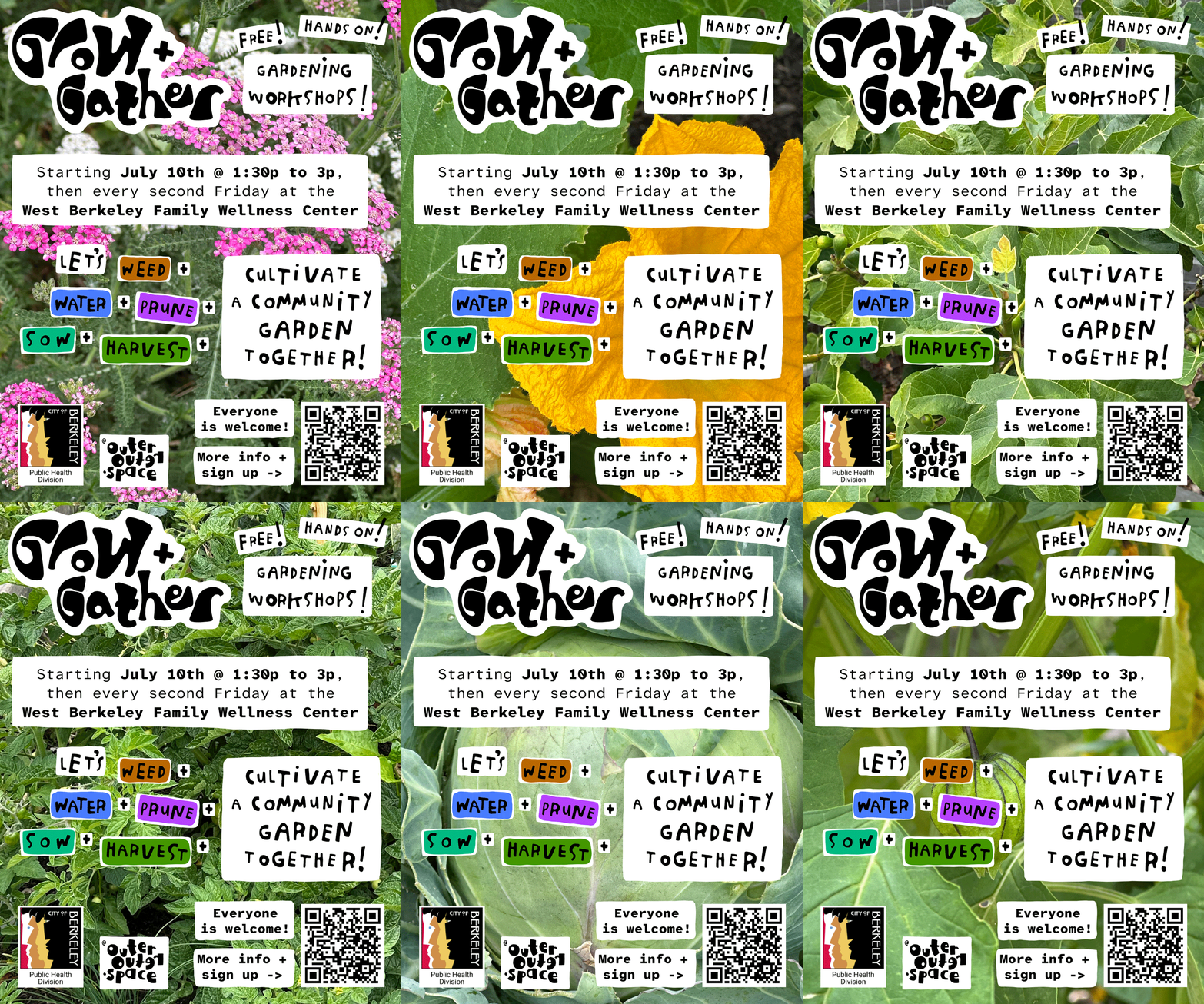
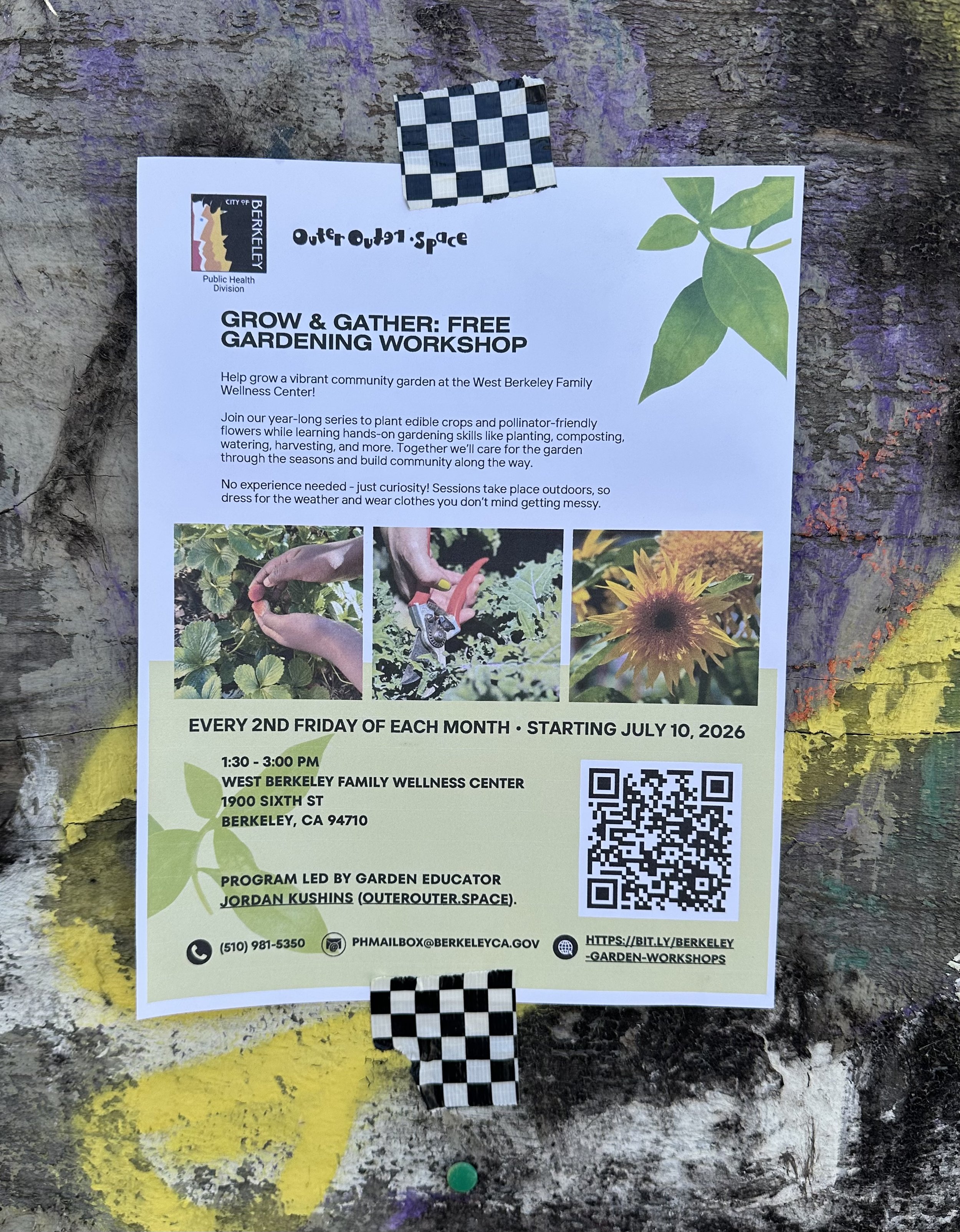
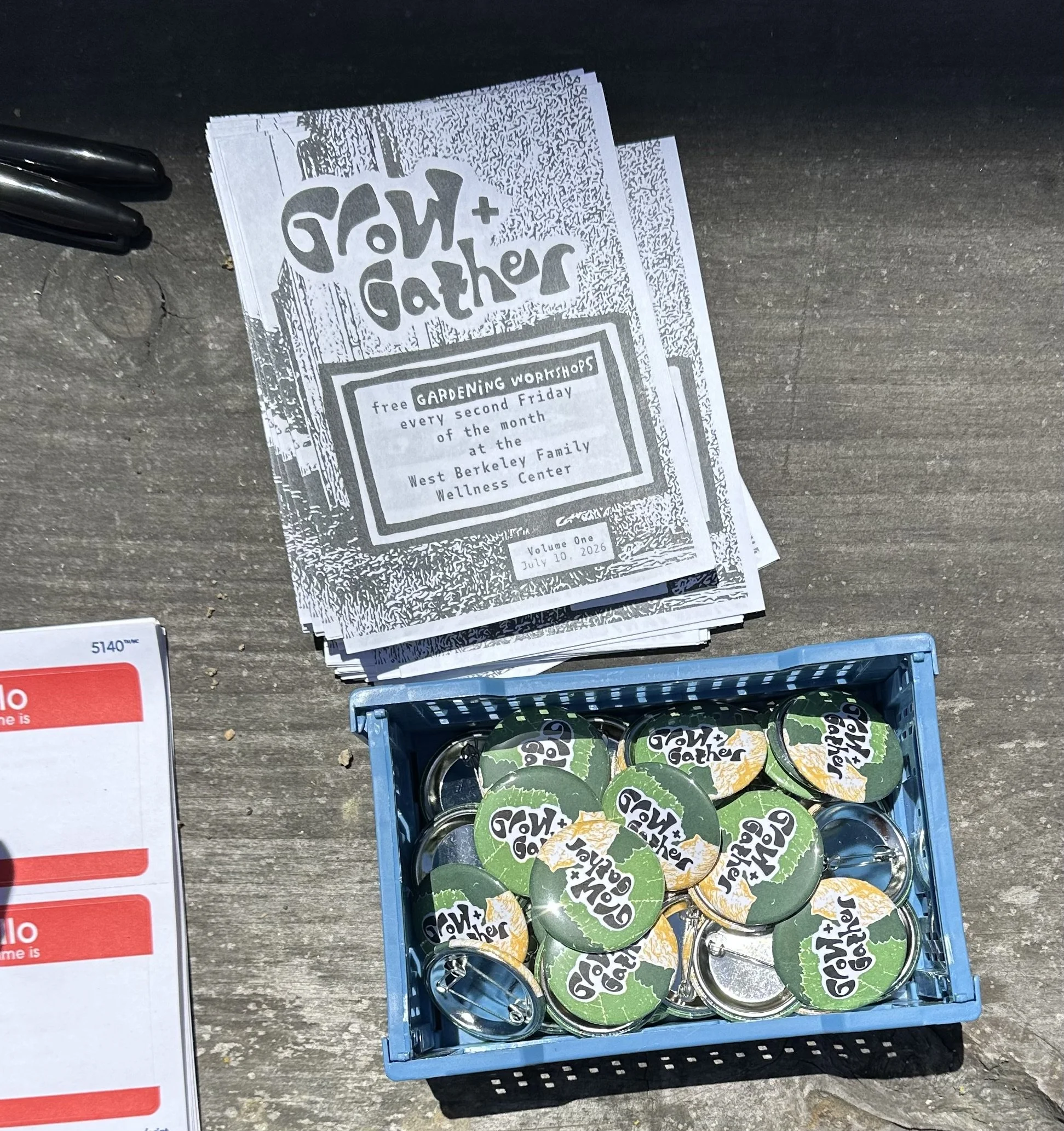
Free gardening workshops every second Friday of the month at the West Berkeley Family Wellness Center!
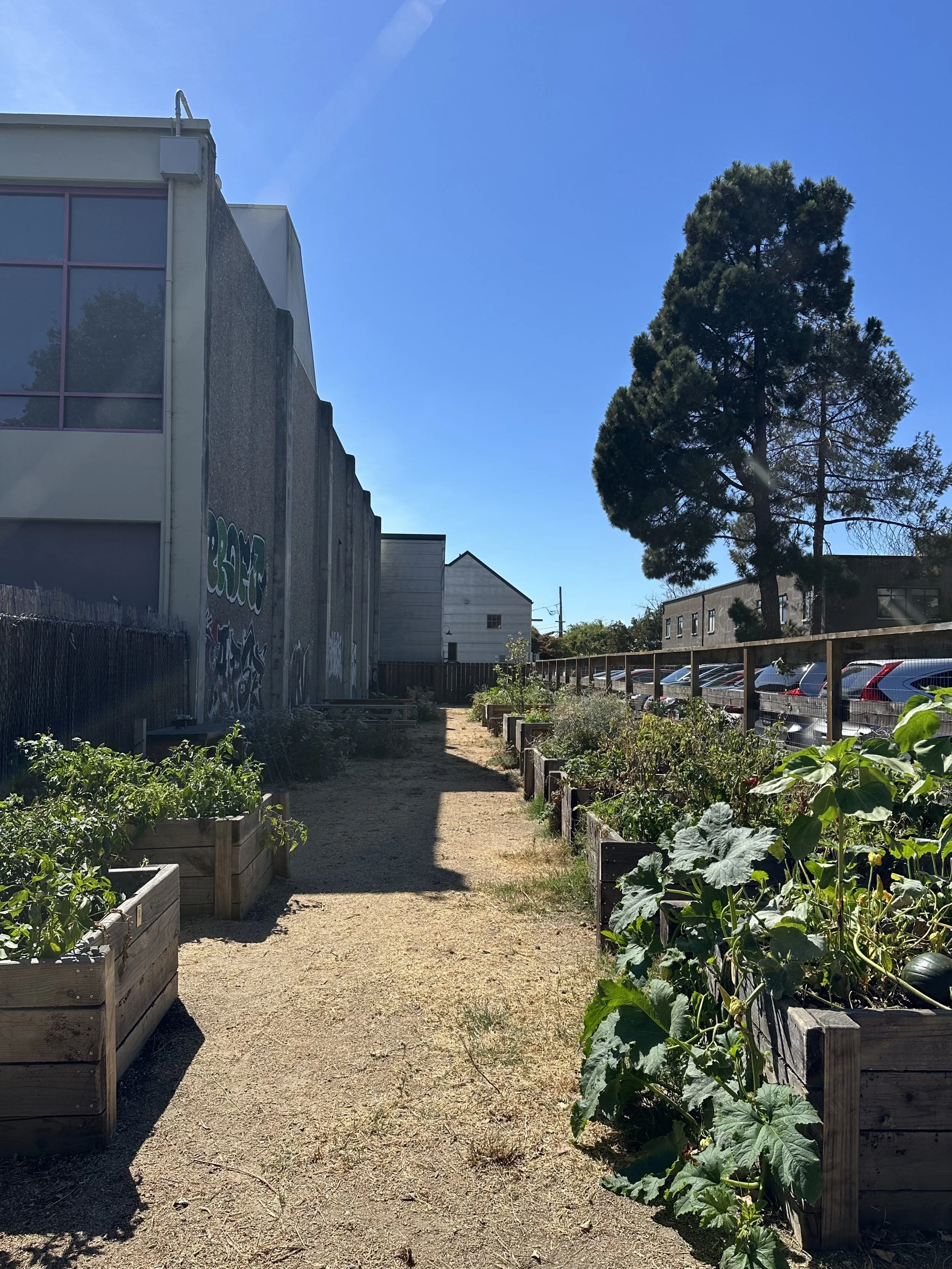
We’re bringing a learning garden to life — and everyone is welcome!
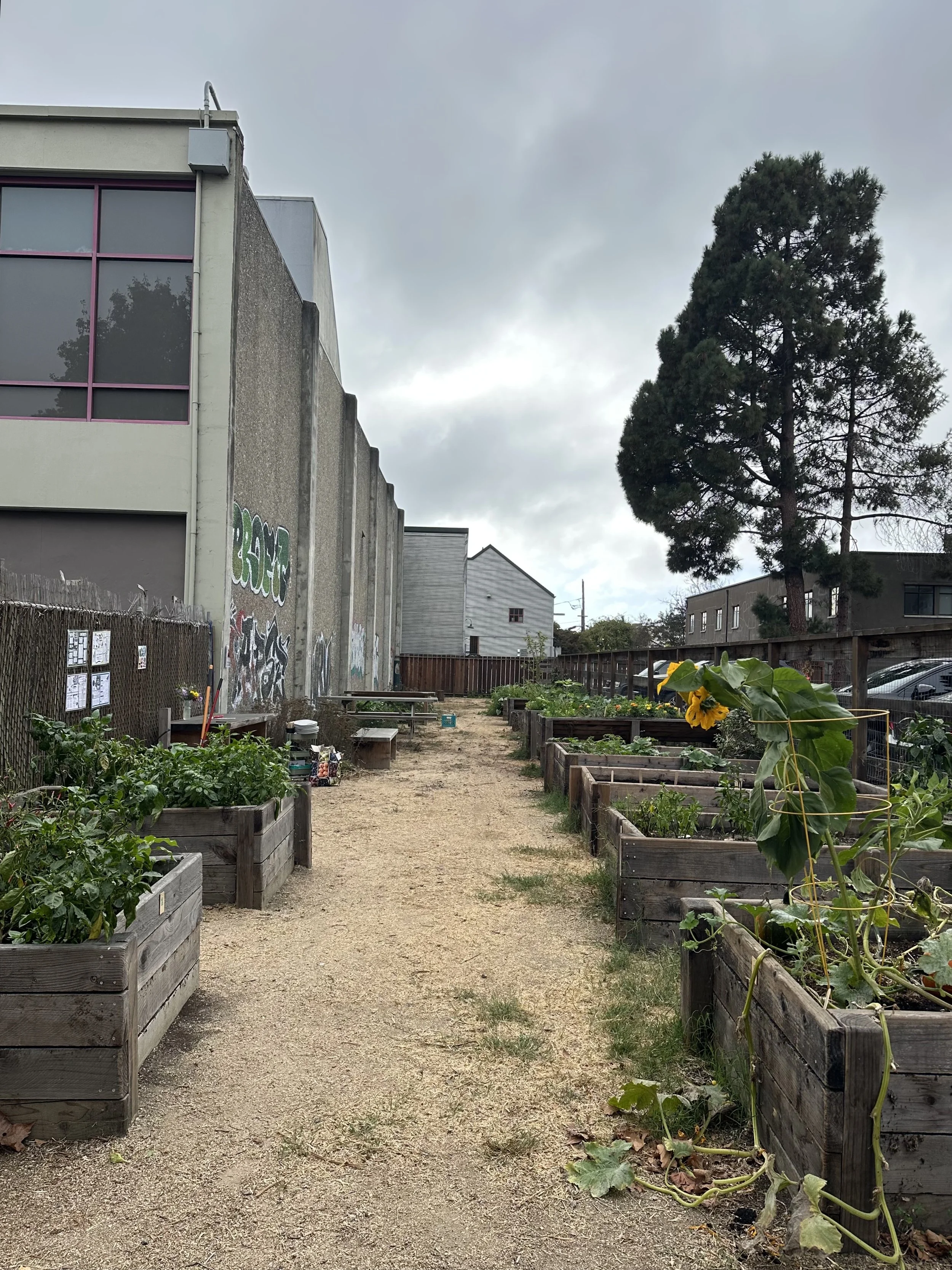
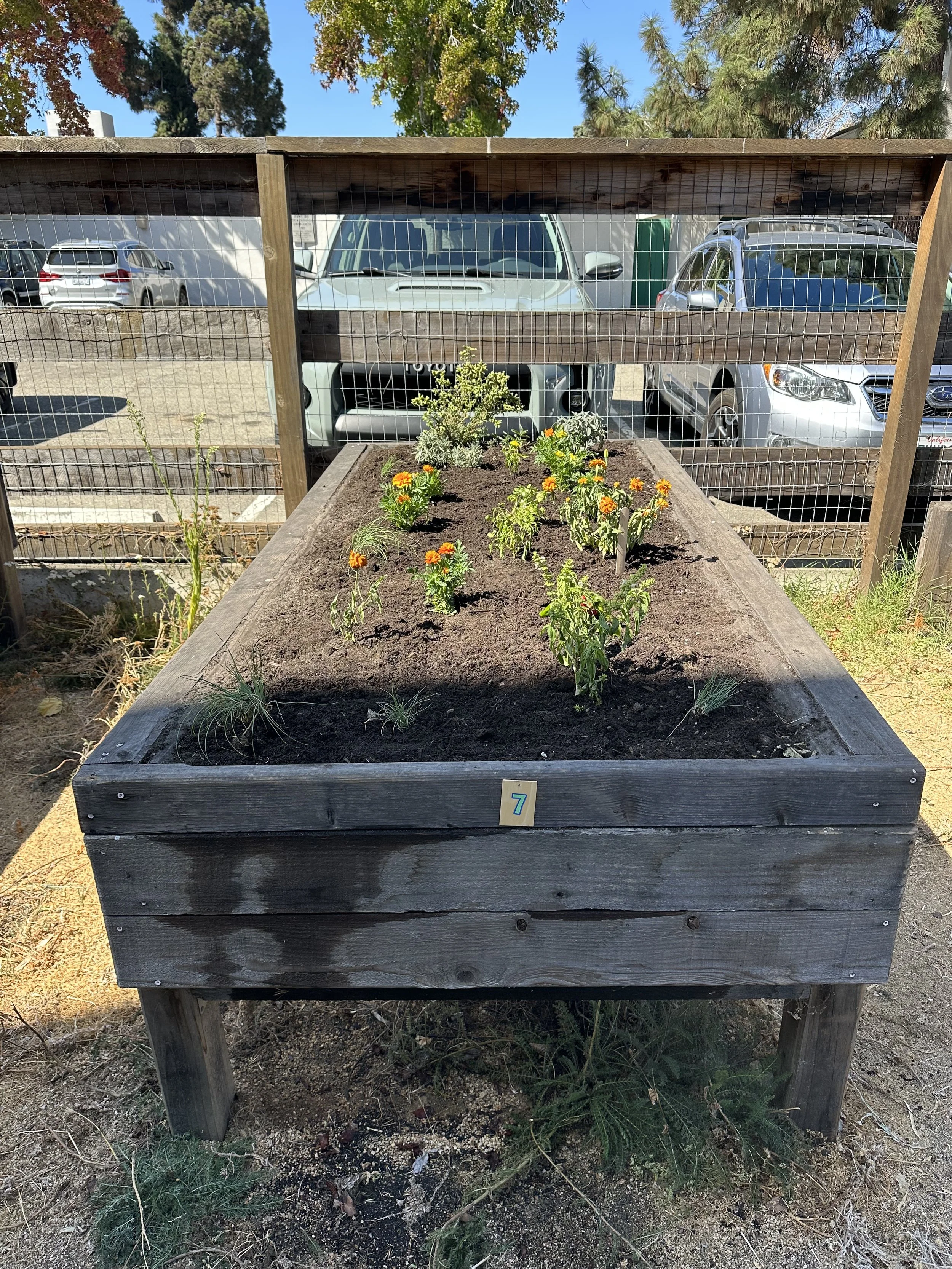
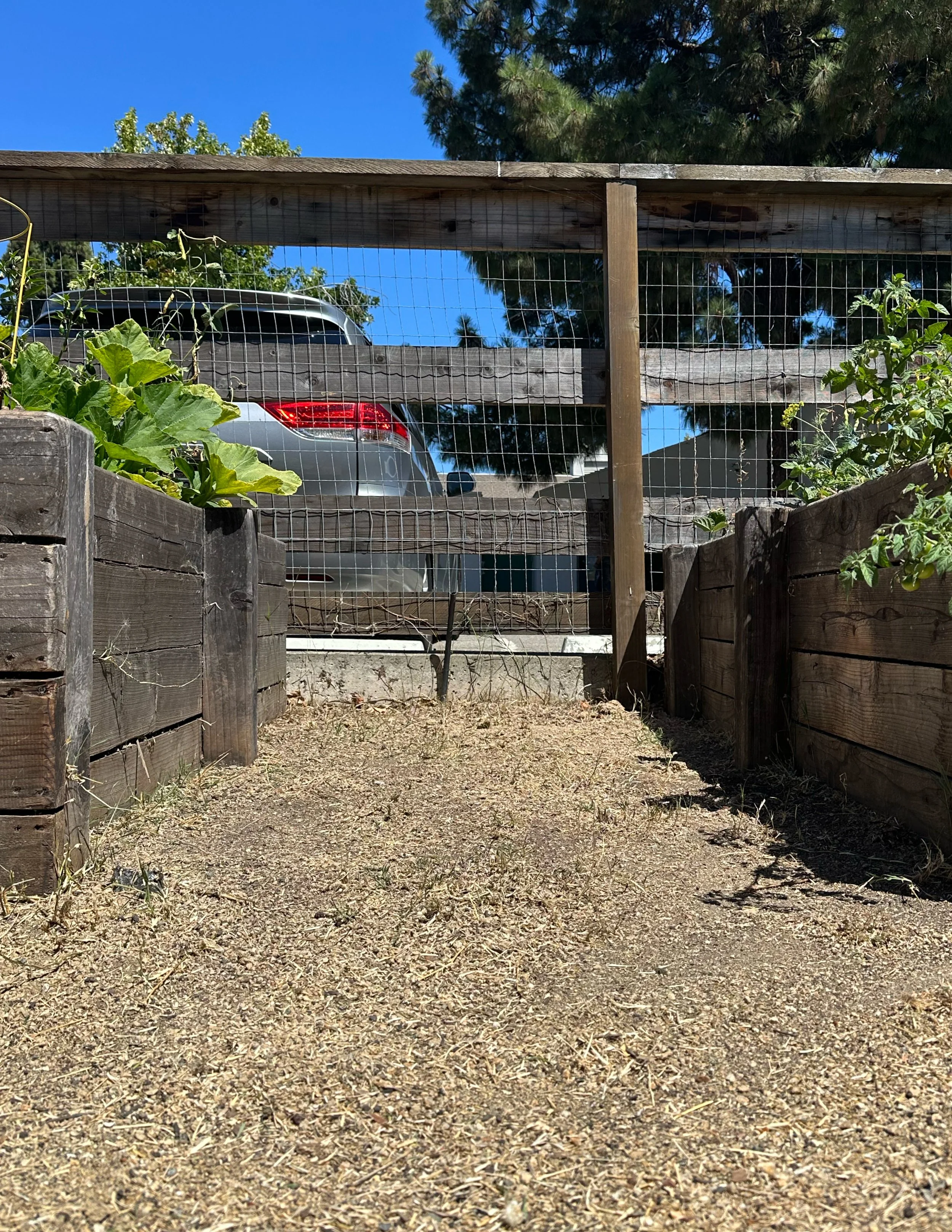
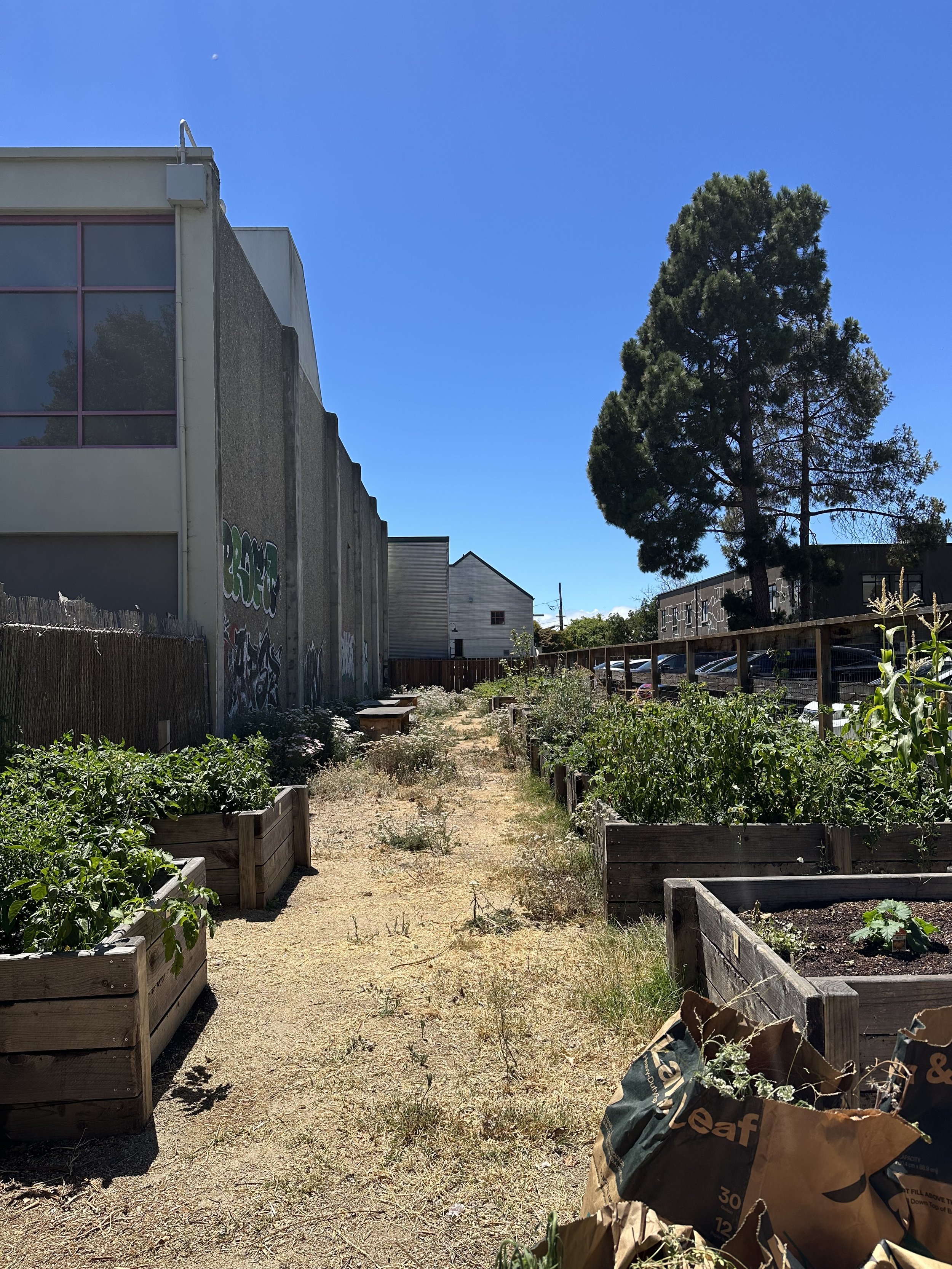
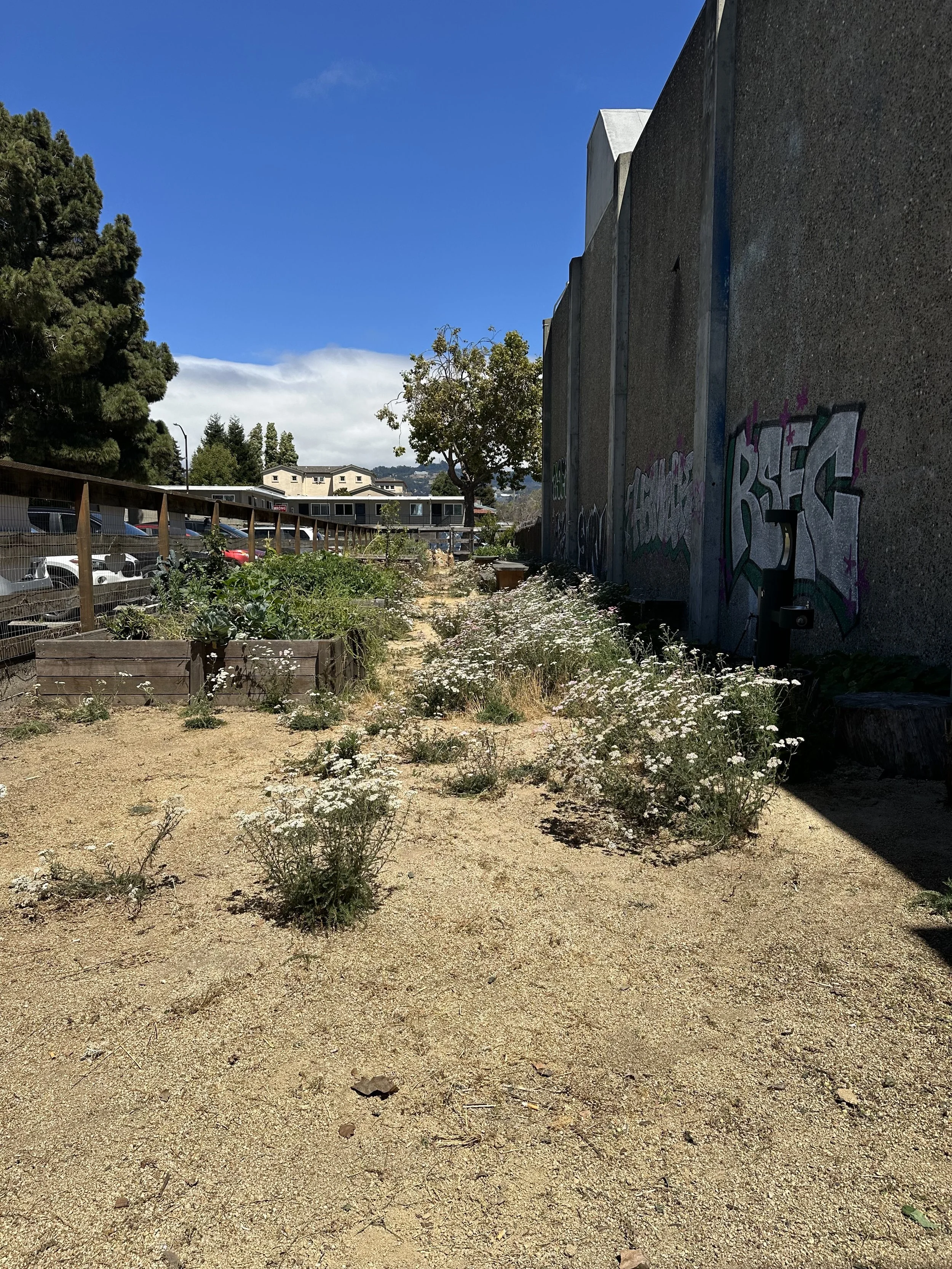
Join us for this year-long series (July 2026 to June 2027) to create a thriving hub of edible plants, pollinator-friendly flowers, and local community at the West Berkeley Family Wellness Center (1600 Sixth Street, Berkeley).
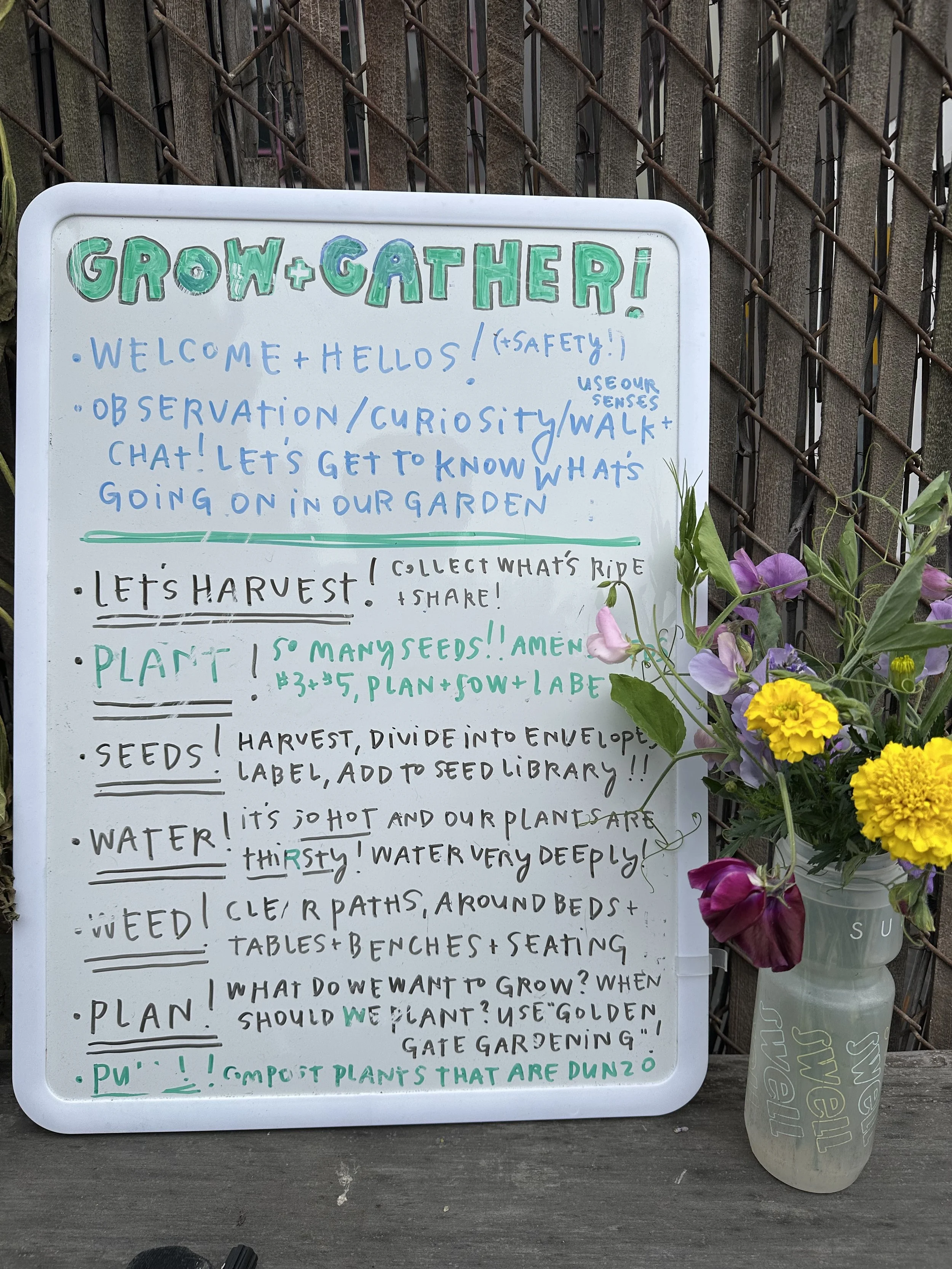
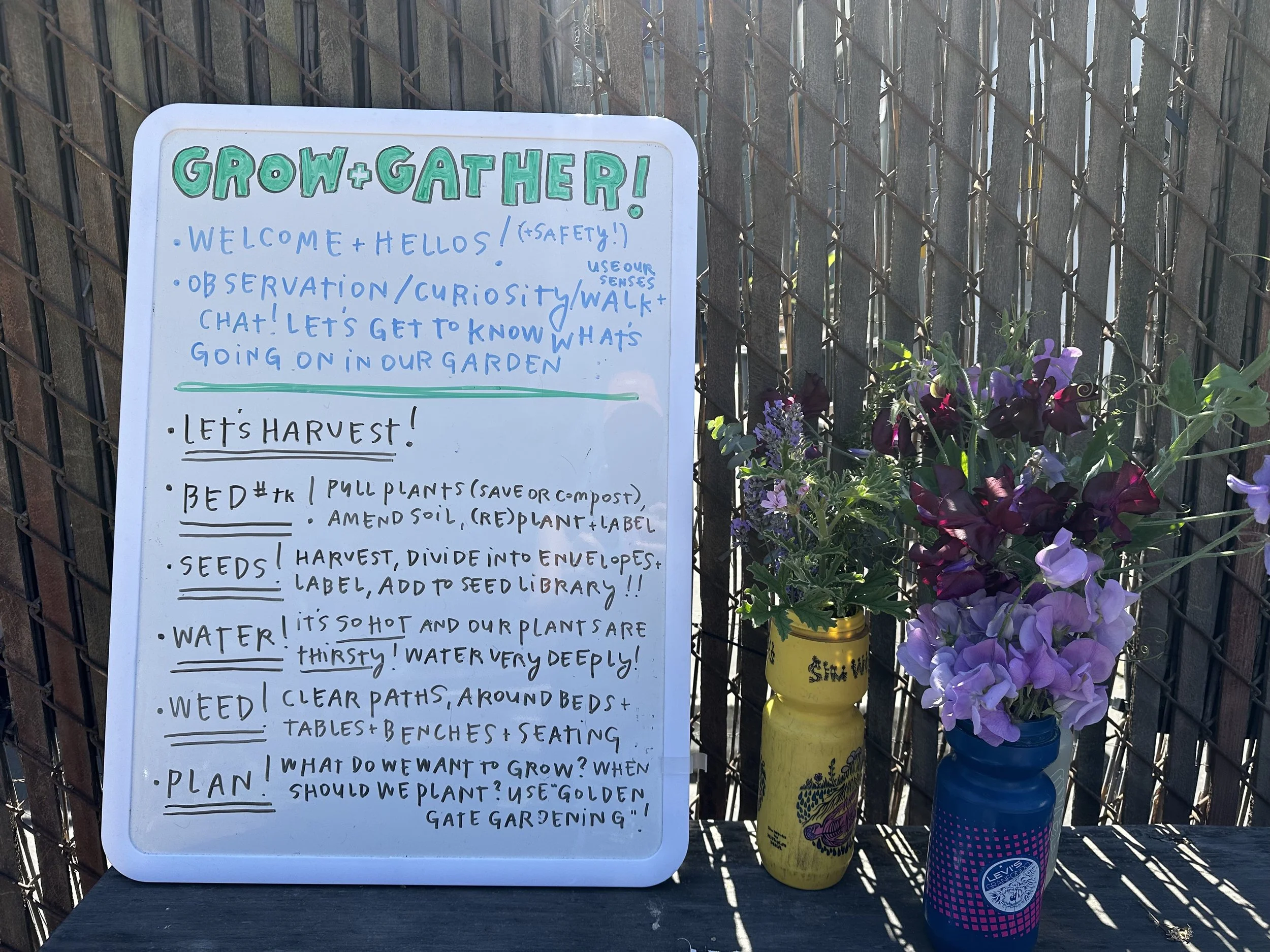
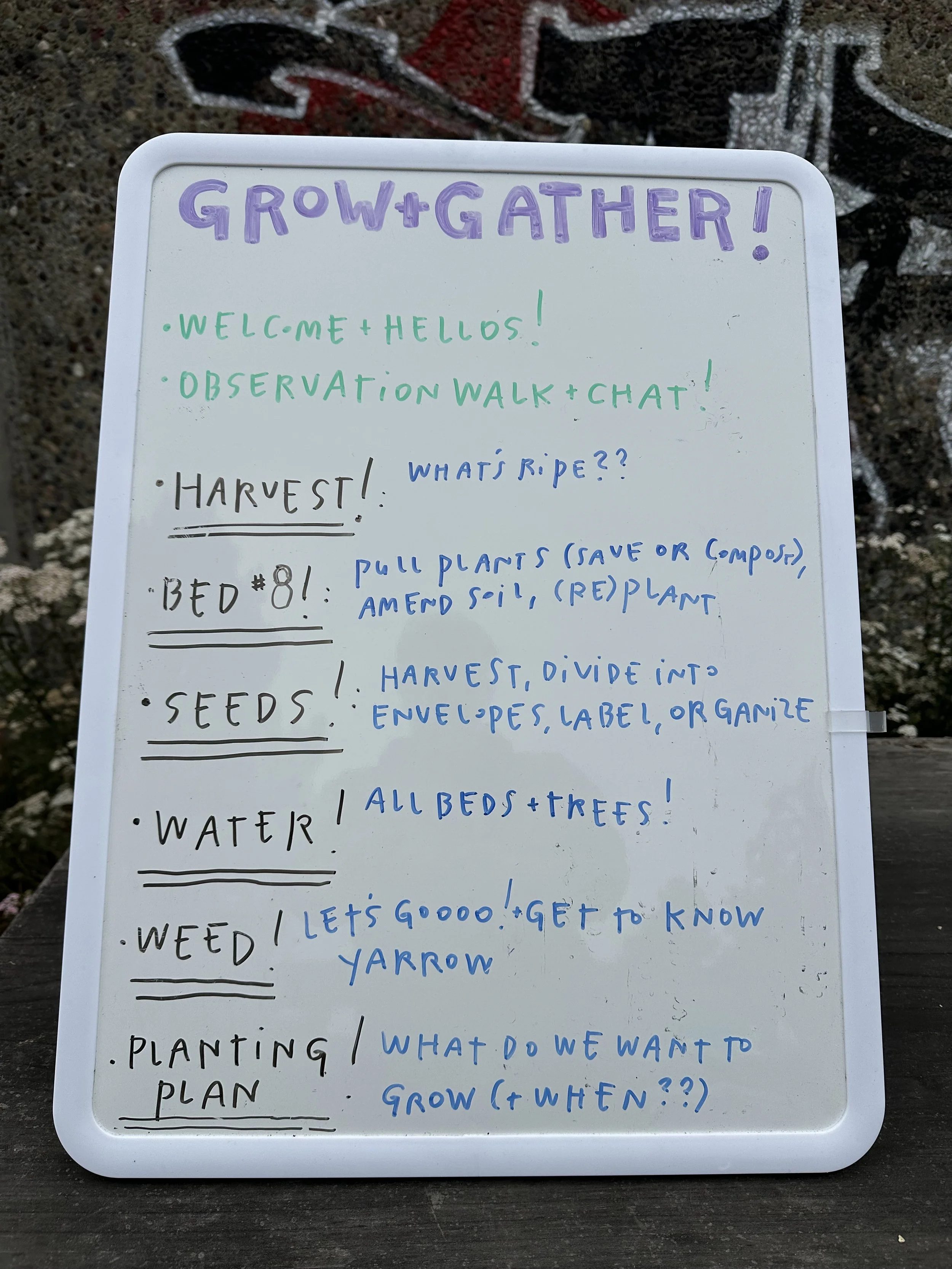
Each month we’ll observe what’s going on in our garden, then get our hands dirty with: planting and weeding, soil amendment and watering, sweeping and sowing, harvesting and composting, and more. We’ll watch the garden change with the seasons, and learn how to be thoughtful caretakers of nature in our city, and beyond.
Develop skills, share knowledge, and be a part of building something special together. No experience necessary — just curiosity!
October 2026!!
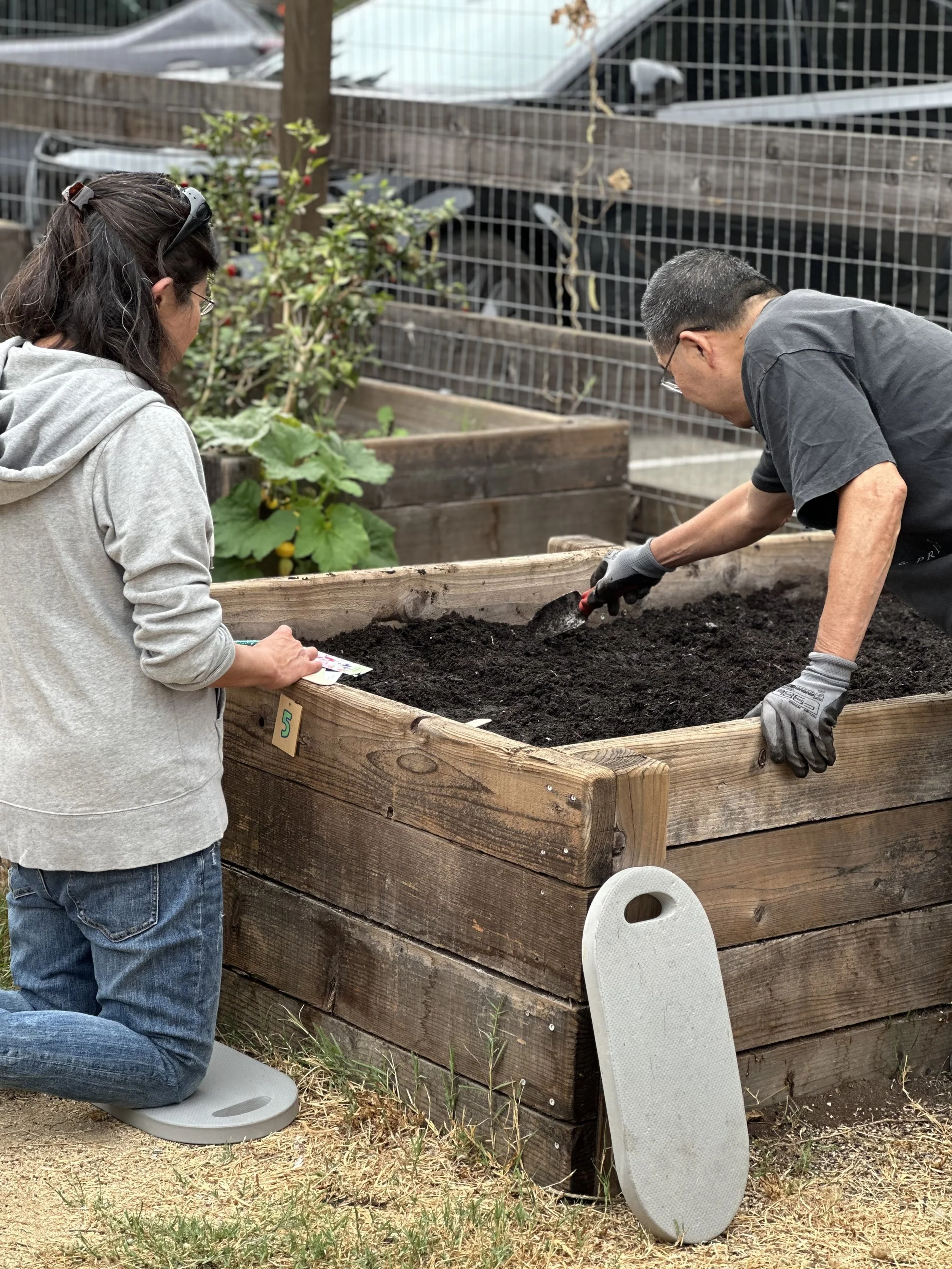
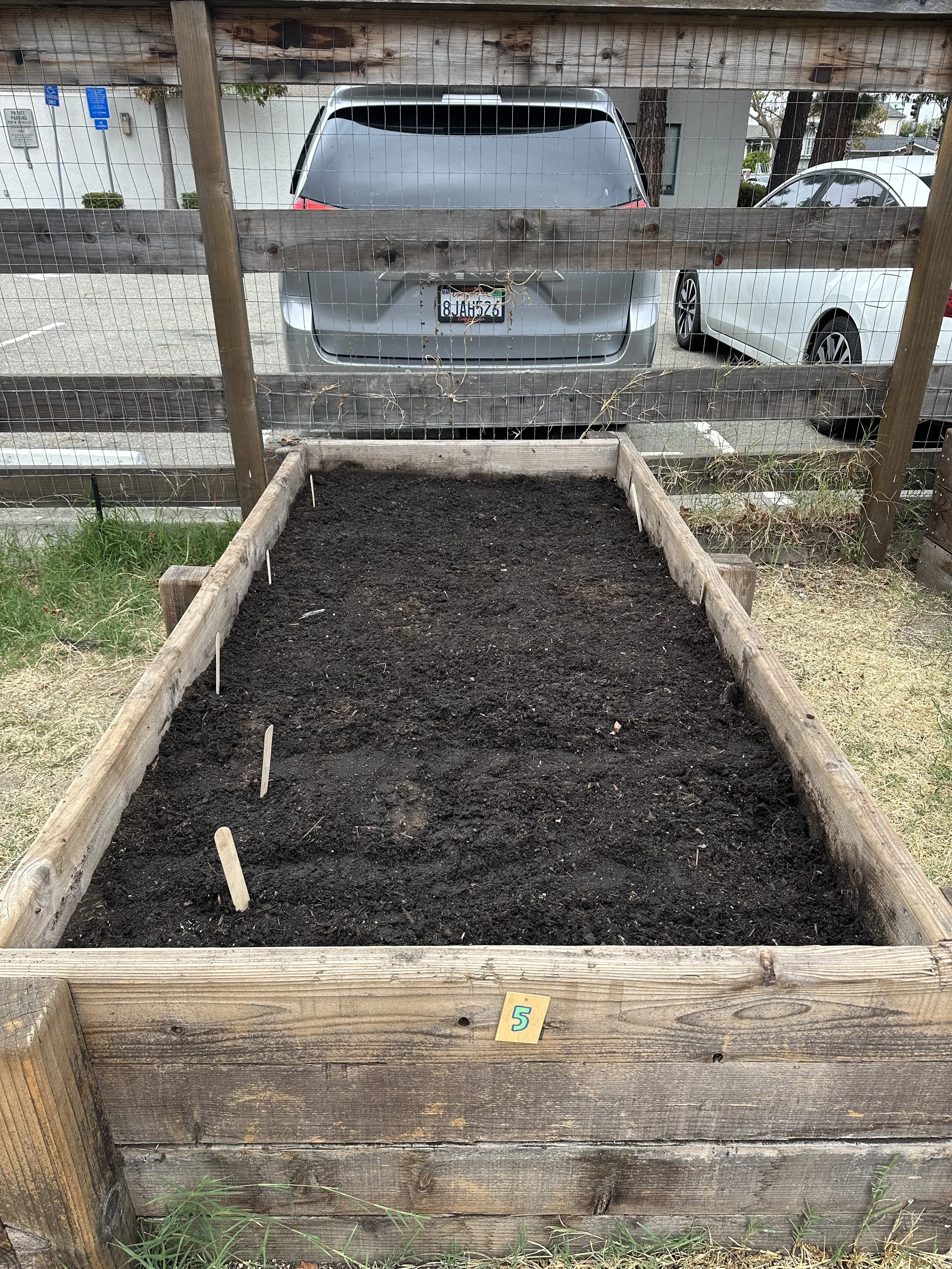
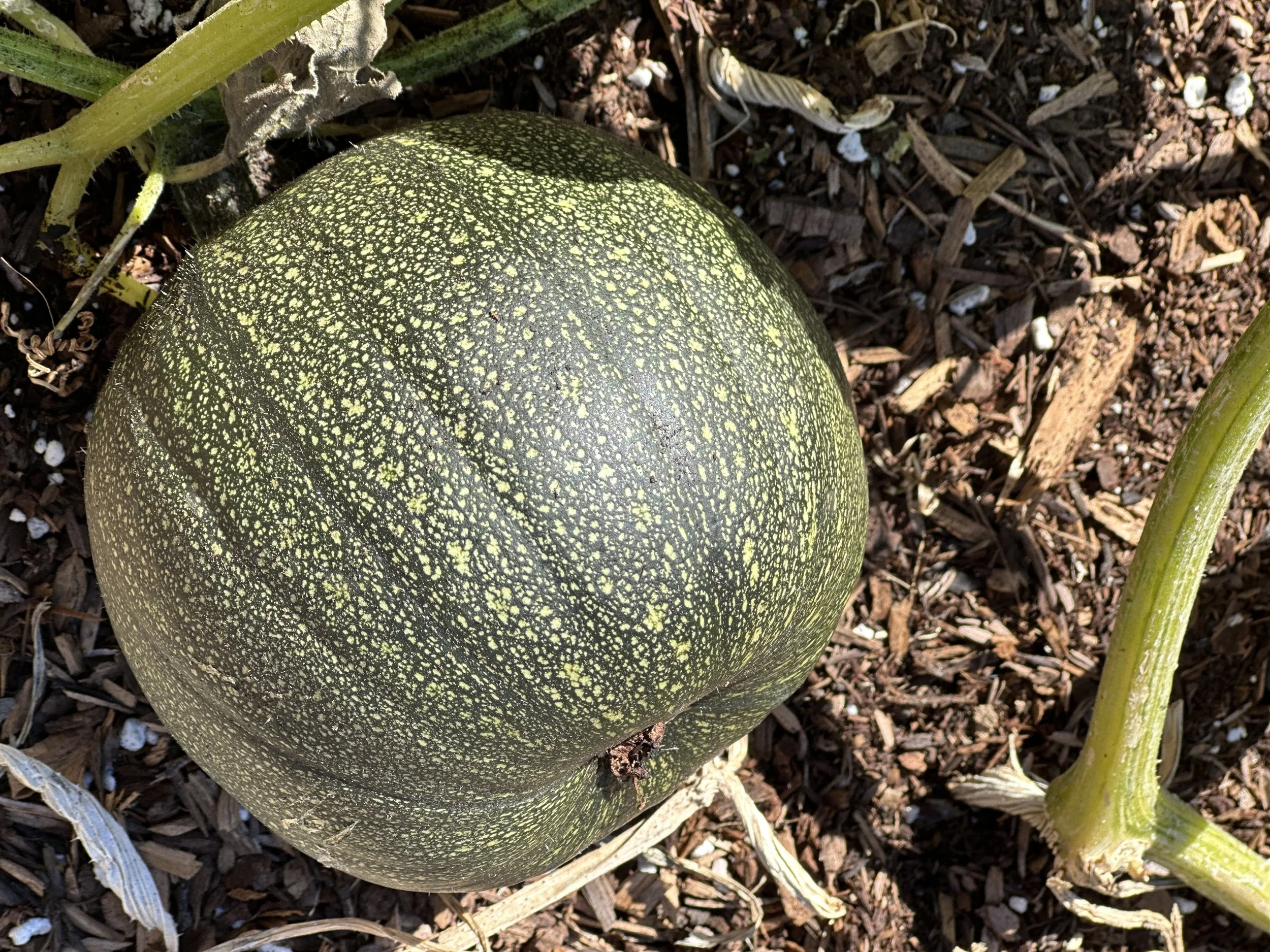
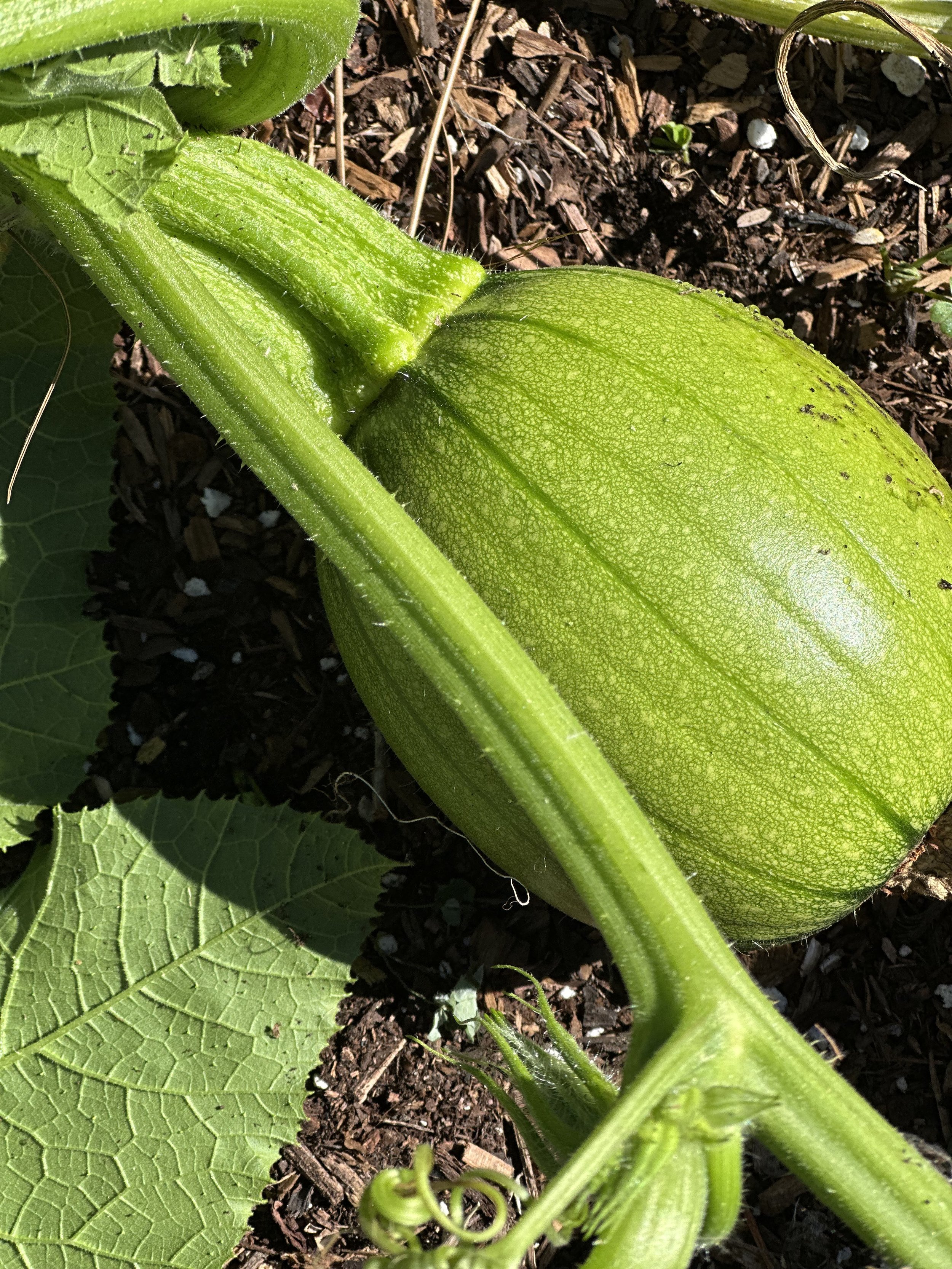
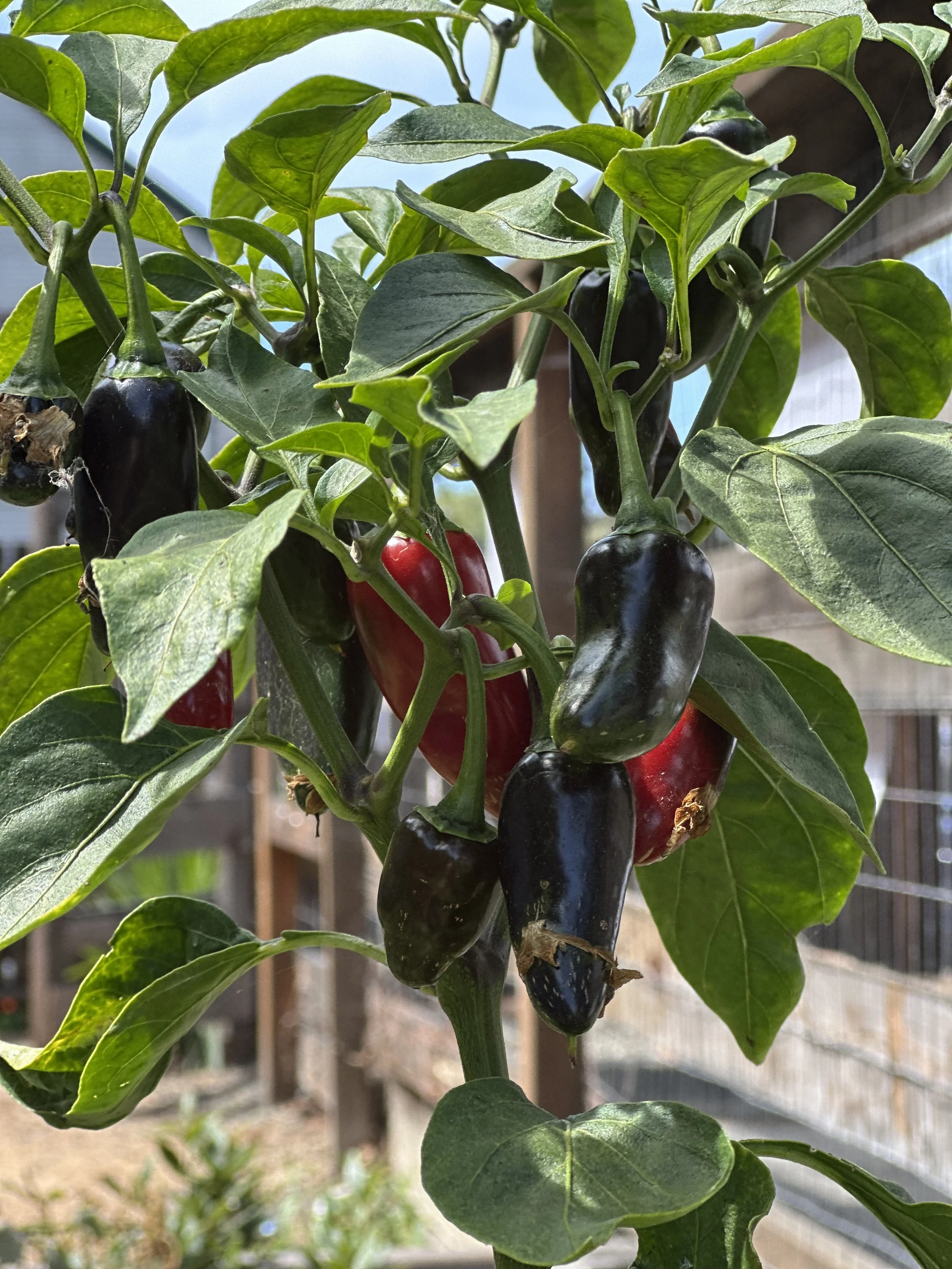
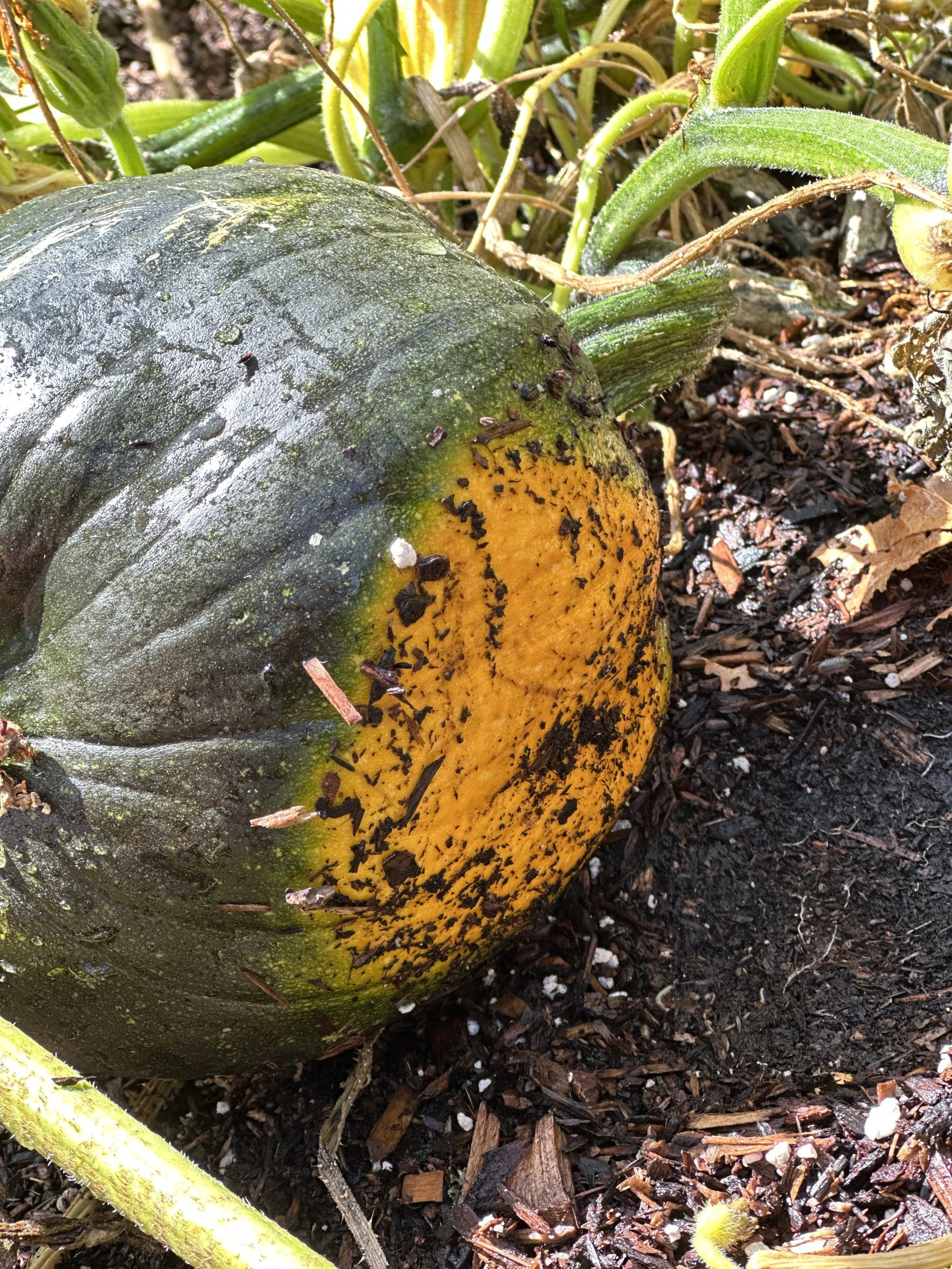
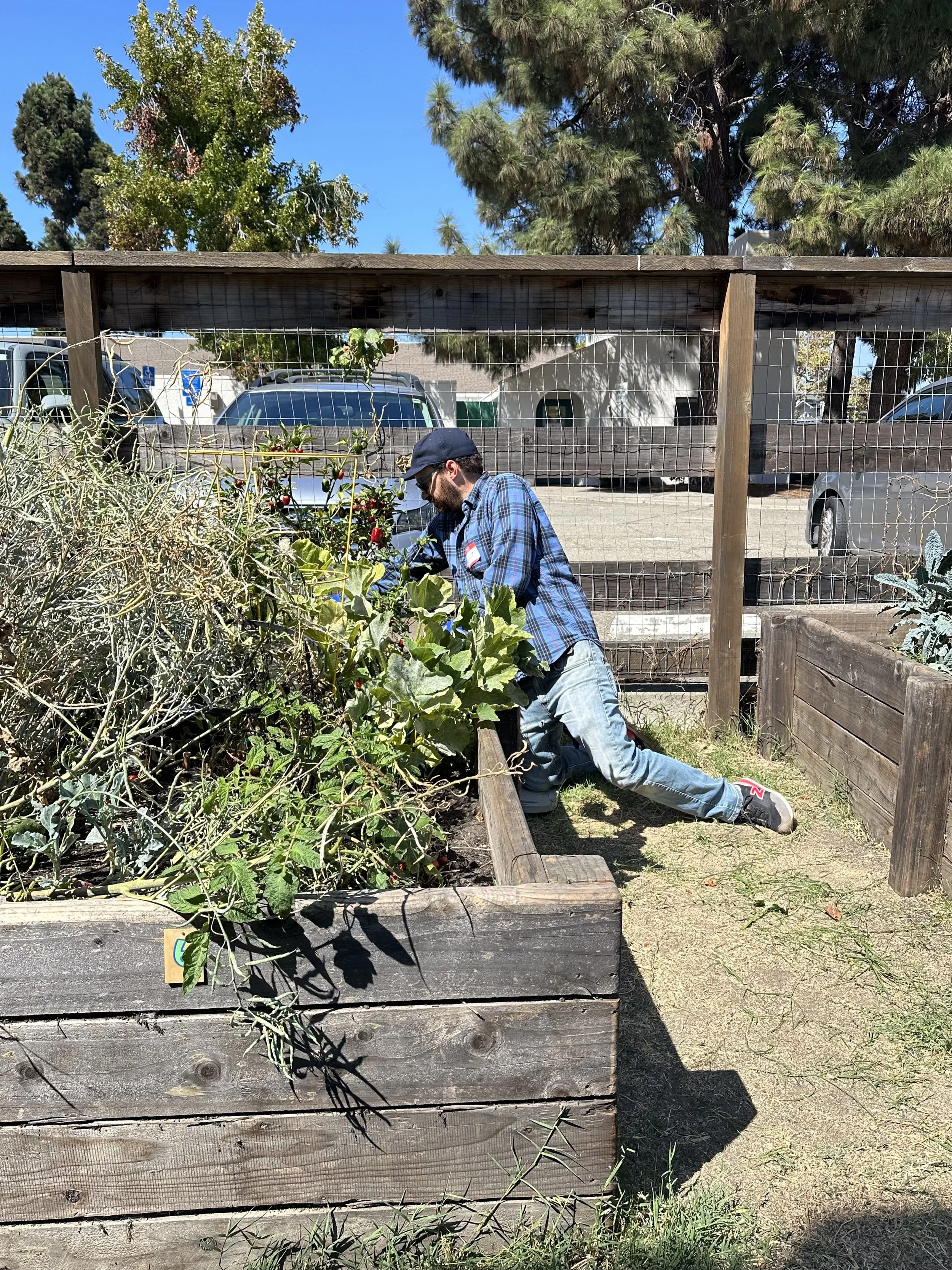
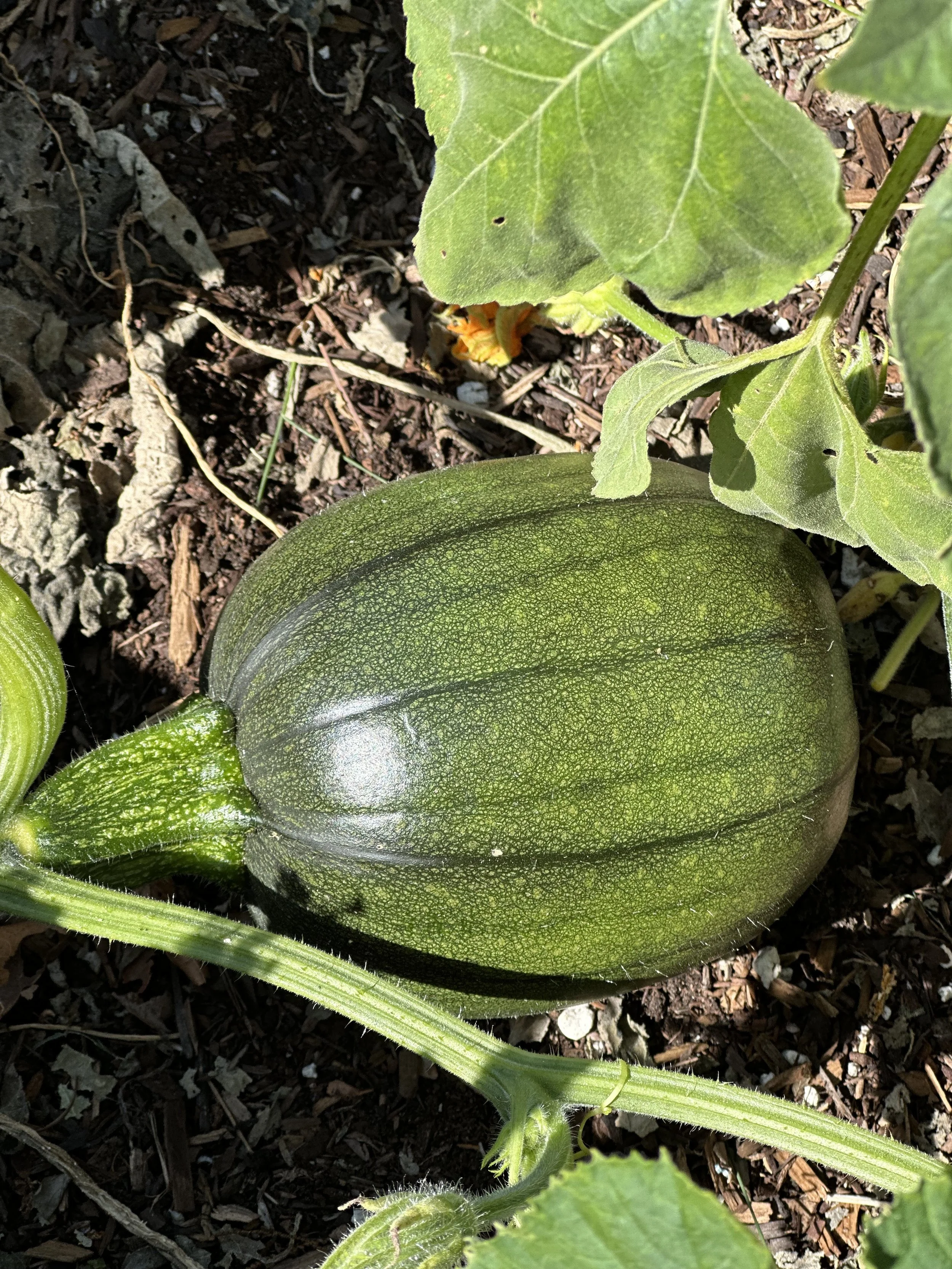
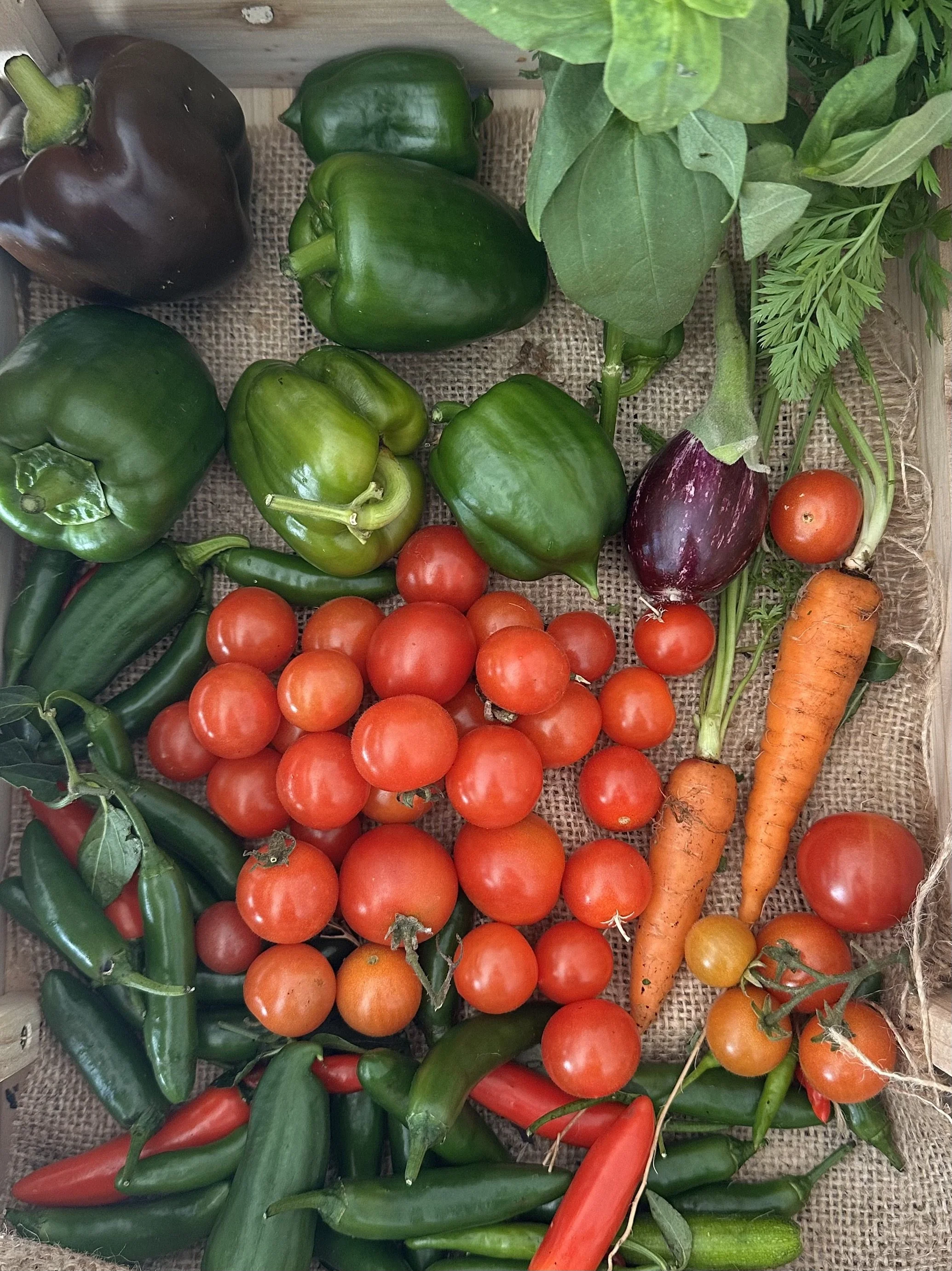
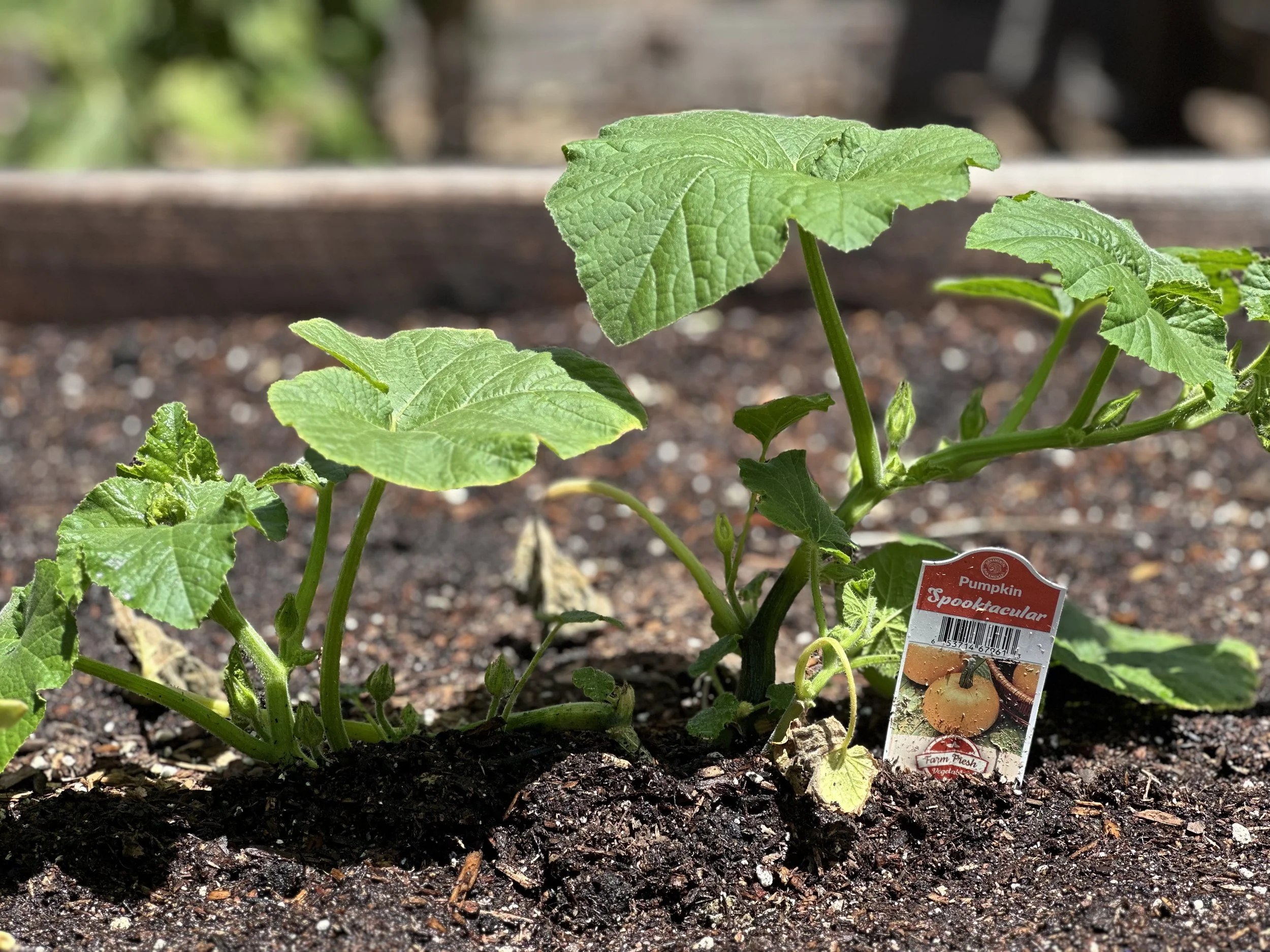
We are officially saying goodbye to summer now — time to compost our tomatoes and zukes, amend our beds, and get some seeds in the ground before El Niño does its thing. Oxalis is starting to pop up where we hadn’t seen it before so we’ll stay weeding for sure, and we are still rich with spicy peppers so I need to find a good hot sauce recipe. Most of our pumpkins got munched, but we have two still hanging on (that may or may not turn orange — we shall see).
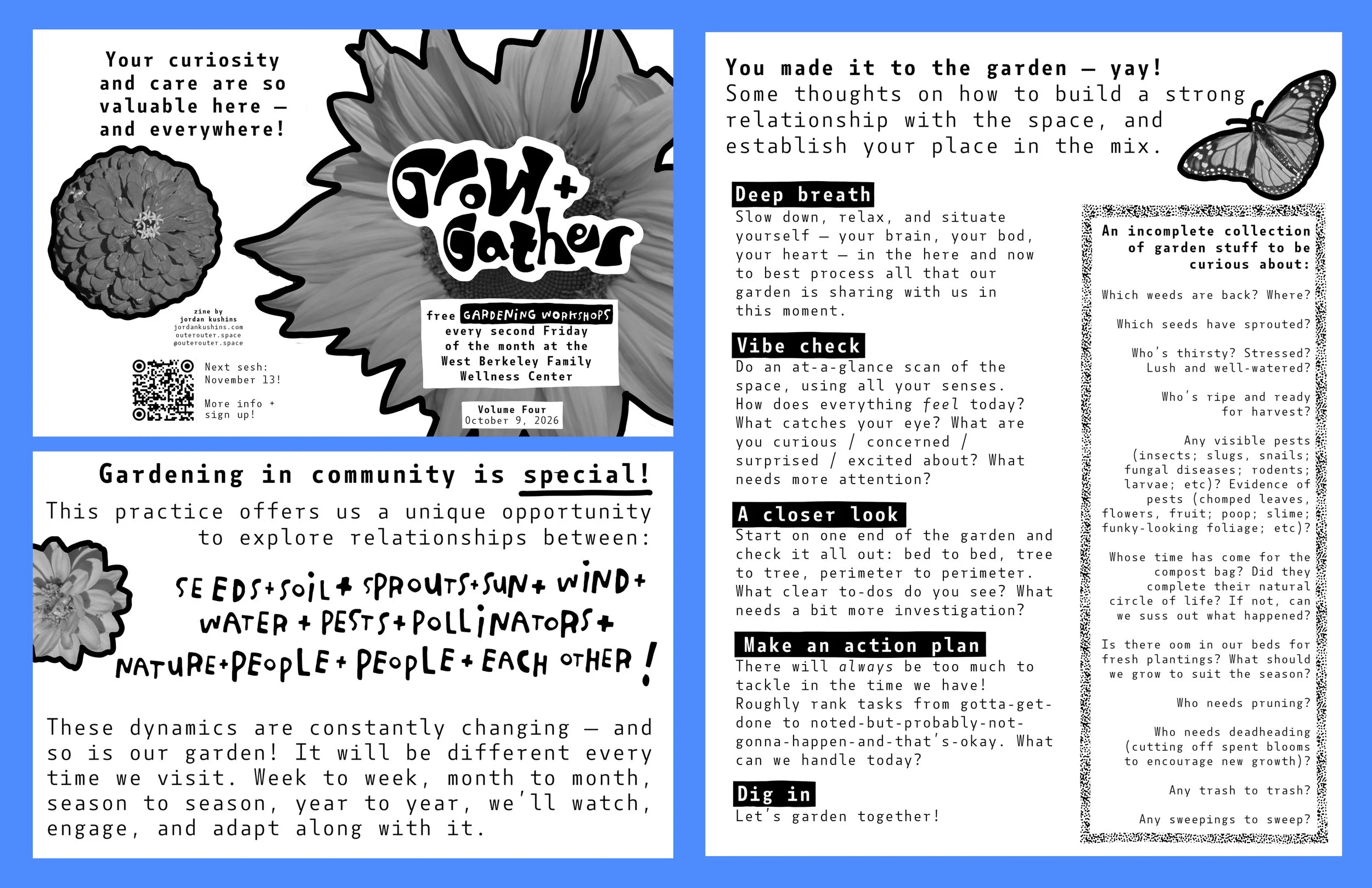
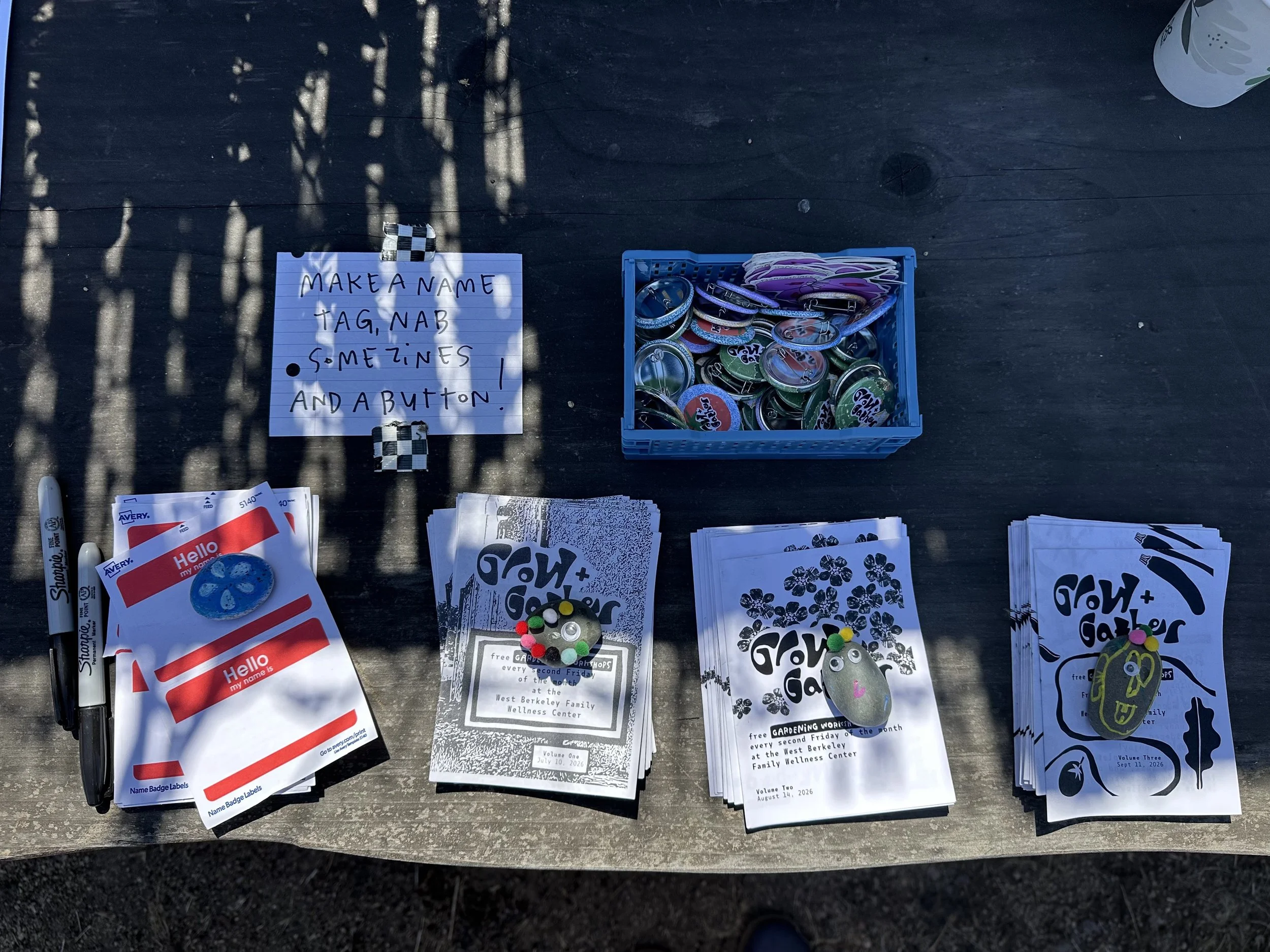
This month’s zine focused on how we look, and see, and process things as gardeners, and how these acts help establish our place in the web of relationships that make up a community garden. We’ve got so much to learn from our plants, our critters, and each other!
VERY excited to launch our seed library next month!! More good stuff to come.
Thanks to Ray and Sophie for being such awesome gardeners, and to Tino for watering!
What we planted
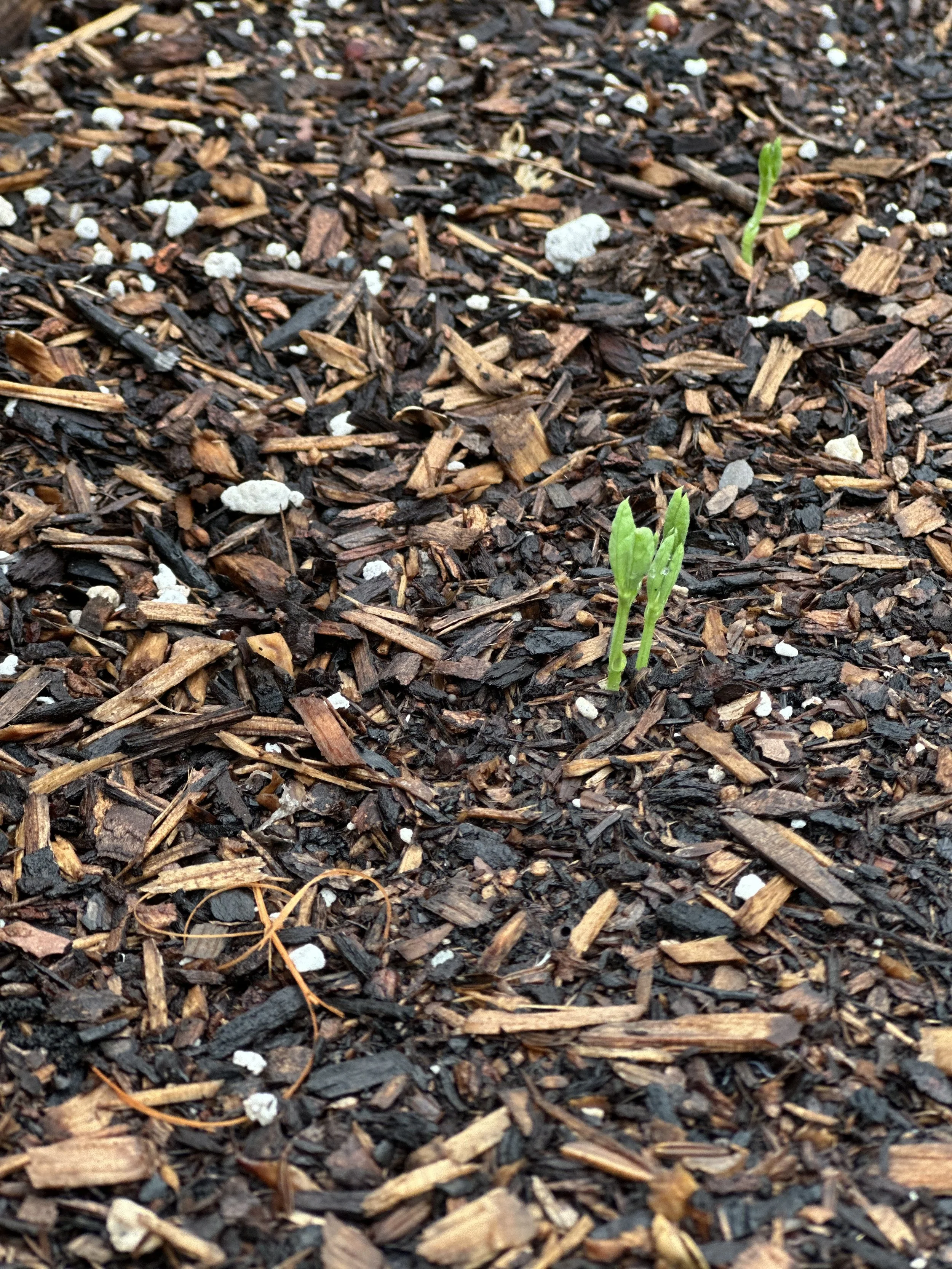
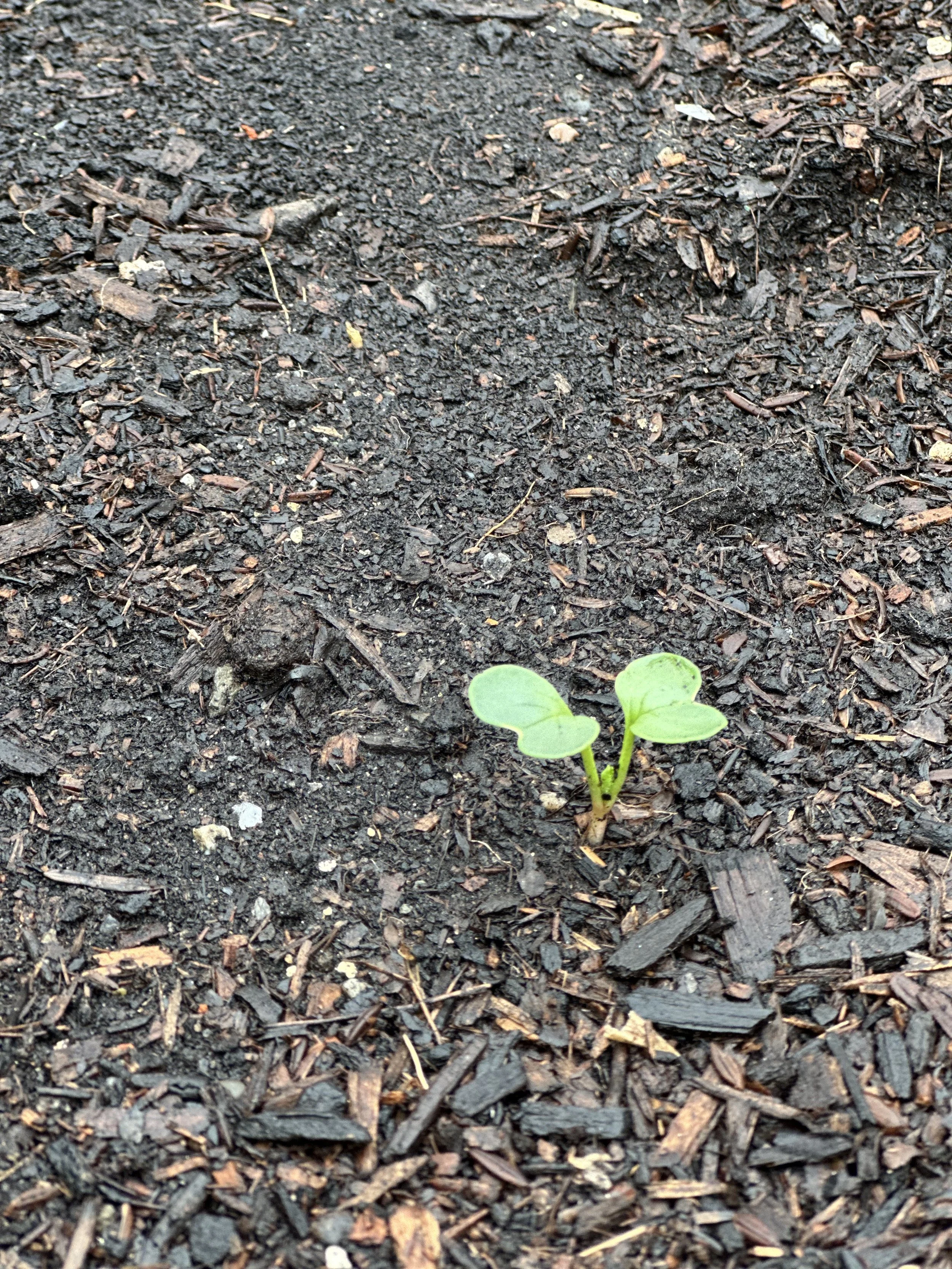
Seeds:
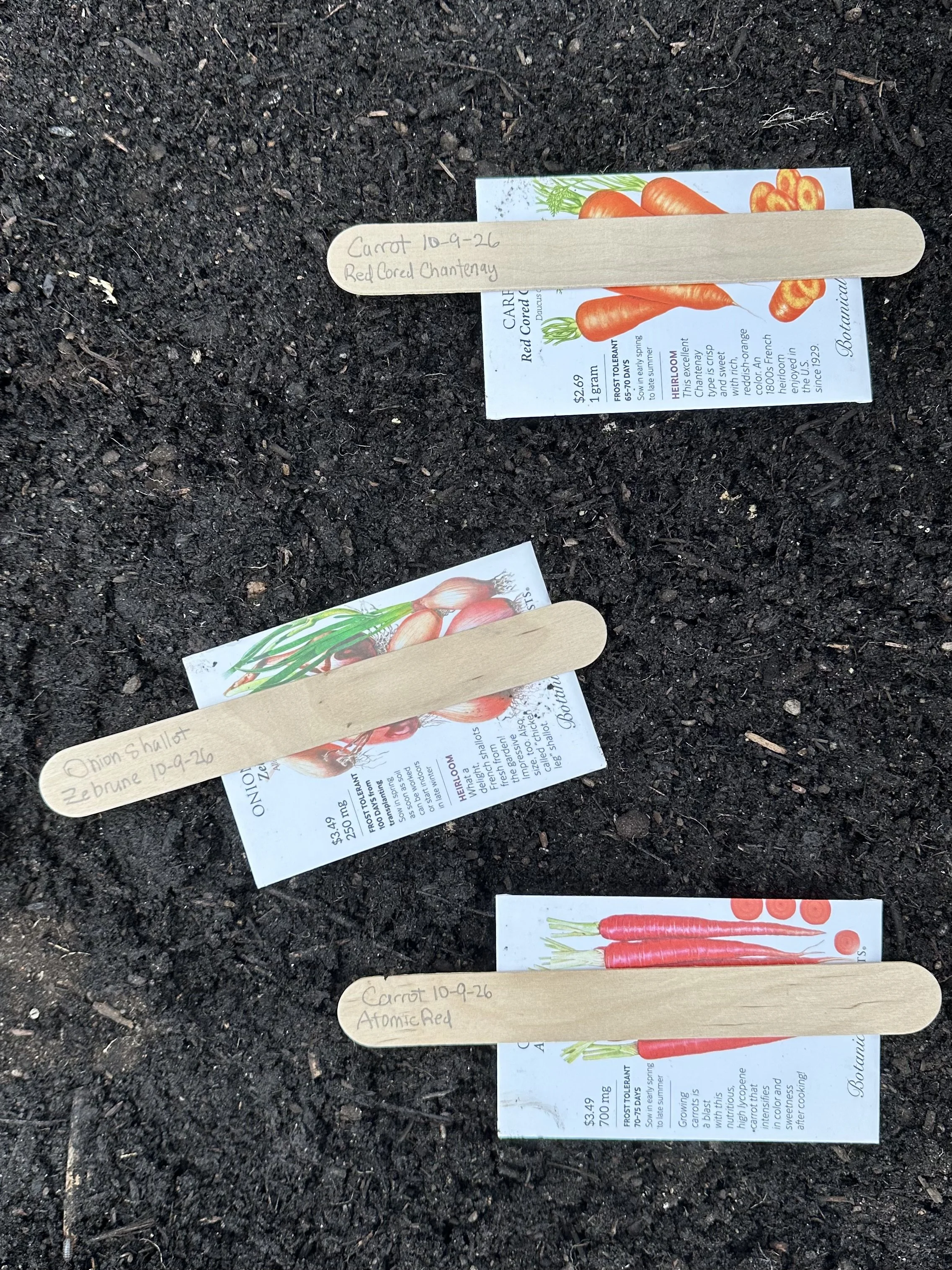
FOOD: Onion, Bulb Cipollini 'Flat of Italy' (Allium cepa, Amaryllidaceae); Onion, Shallot ' Zebrune' (Allium cepa, Amaryllidaceae); Carrot ‘Red Cored Chantenay’ (Daucus carota, Apiaceae); Radish, Watermelon 'Mantanghong' (Raphanus sativus (hybrid), Brassicaceae); Swiss Chard ‘Five Color Silverbeet’ (Beta vulgaris subsp. vulgaris, Amaranthaceae); Carrot ‘Atomic Red’ (Daucus carota, Apiaceae); Beet ‘Golden Boy’ (Beta vulgaris, Amaranthaceae); Turnip ‘Purple Top White Globe’ (Brassica rapa, Brassicaceae); Turnip ‘White Lady’ (Brassica rapa, Brassicaceae); Celery ‘Merengo’ (Apium graveolens, Apiaceae); Rutabaga ‘American Purple Top’ (Brassica napus subsp. rapifera, Brassicaceae)
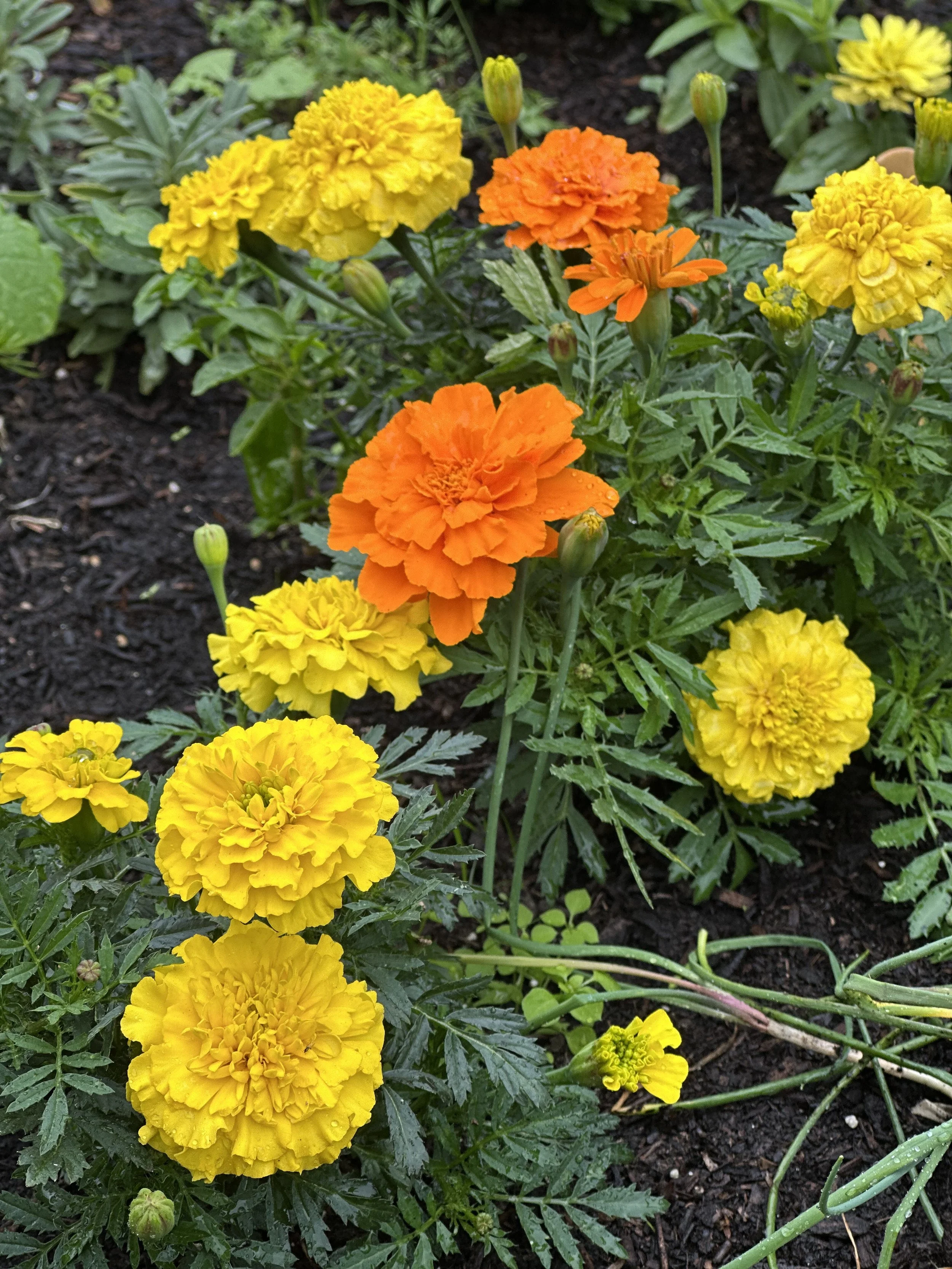
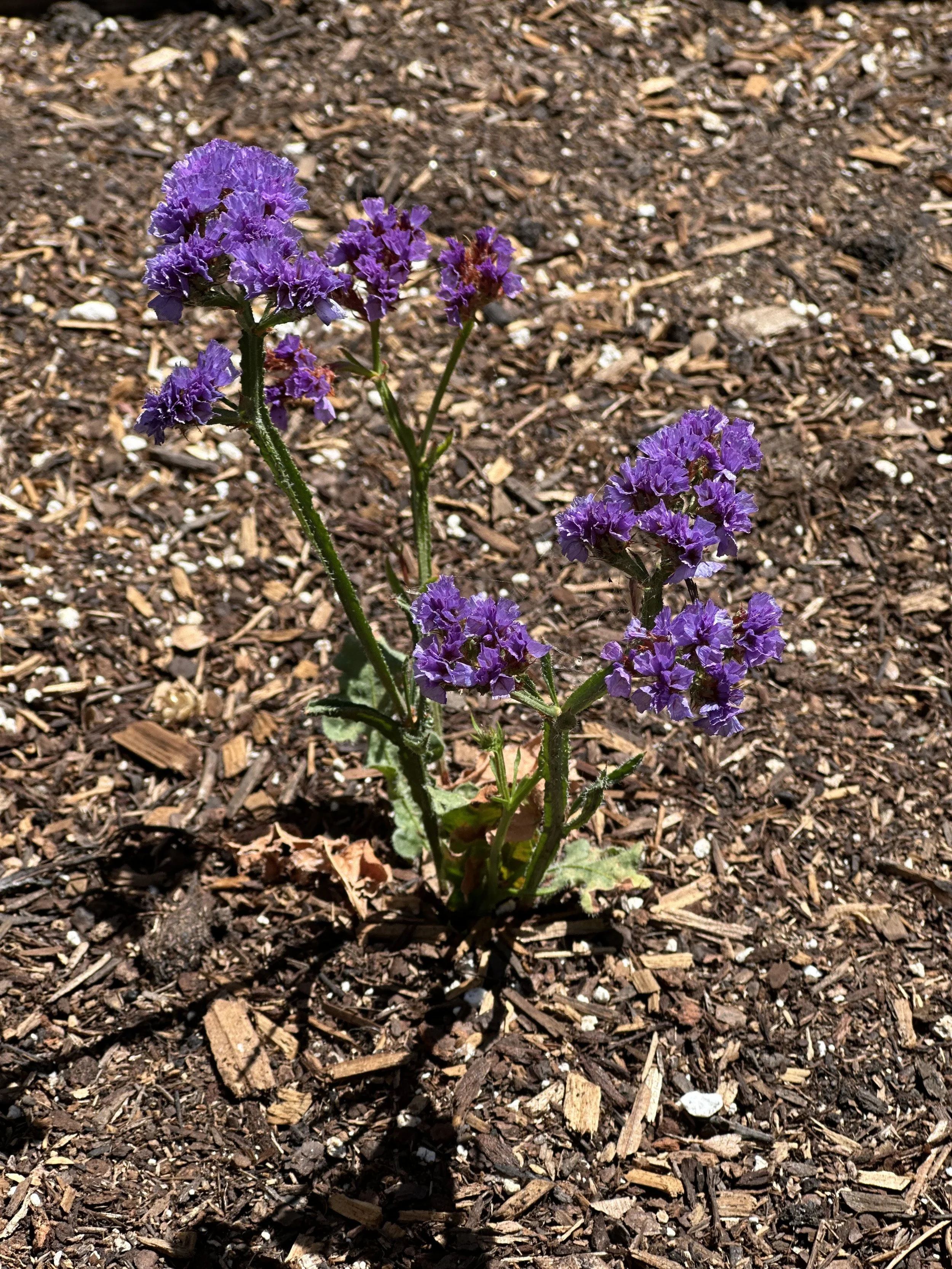
FLOWERS: African Daisy 'Cape Marigold' (Dimorphotheca sinuata, Asteraceae); Foxglove ‘Gloxiniiflora Blend’ (Digitalis purpurea, Plantaginaceae); Bluebonnet (Lupinus texensis, Fabacaeae); Linaria ‘Fairy Bouquet’ (Linaria maroccana, Plantaginaceae); Sweet Pea ‘Mammoth Blend’ (Lathyrus odoratus, Fabaceae); Statice ‘Cotton Candy Blend’ (Limonium sinuatum, Plumbaginaceae); Columbine ‘Rocky Mountain Blue’ (Aquilegia coerulea, Ranunculaceae)
What we pulled (Goodbye, summer! Until next year…)
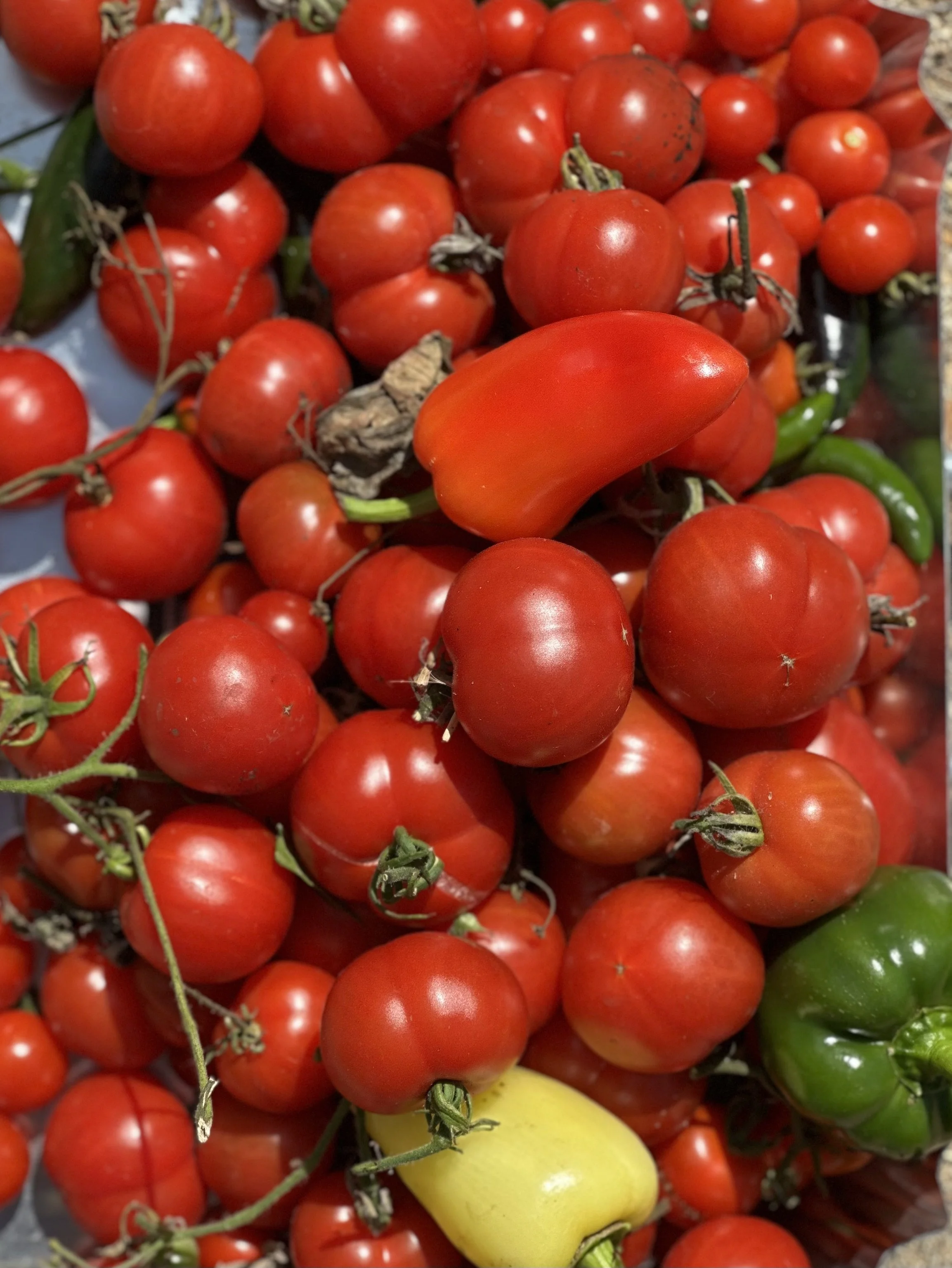
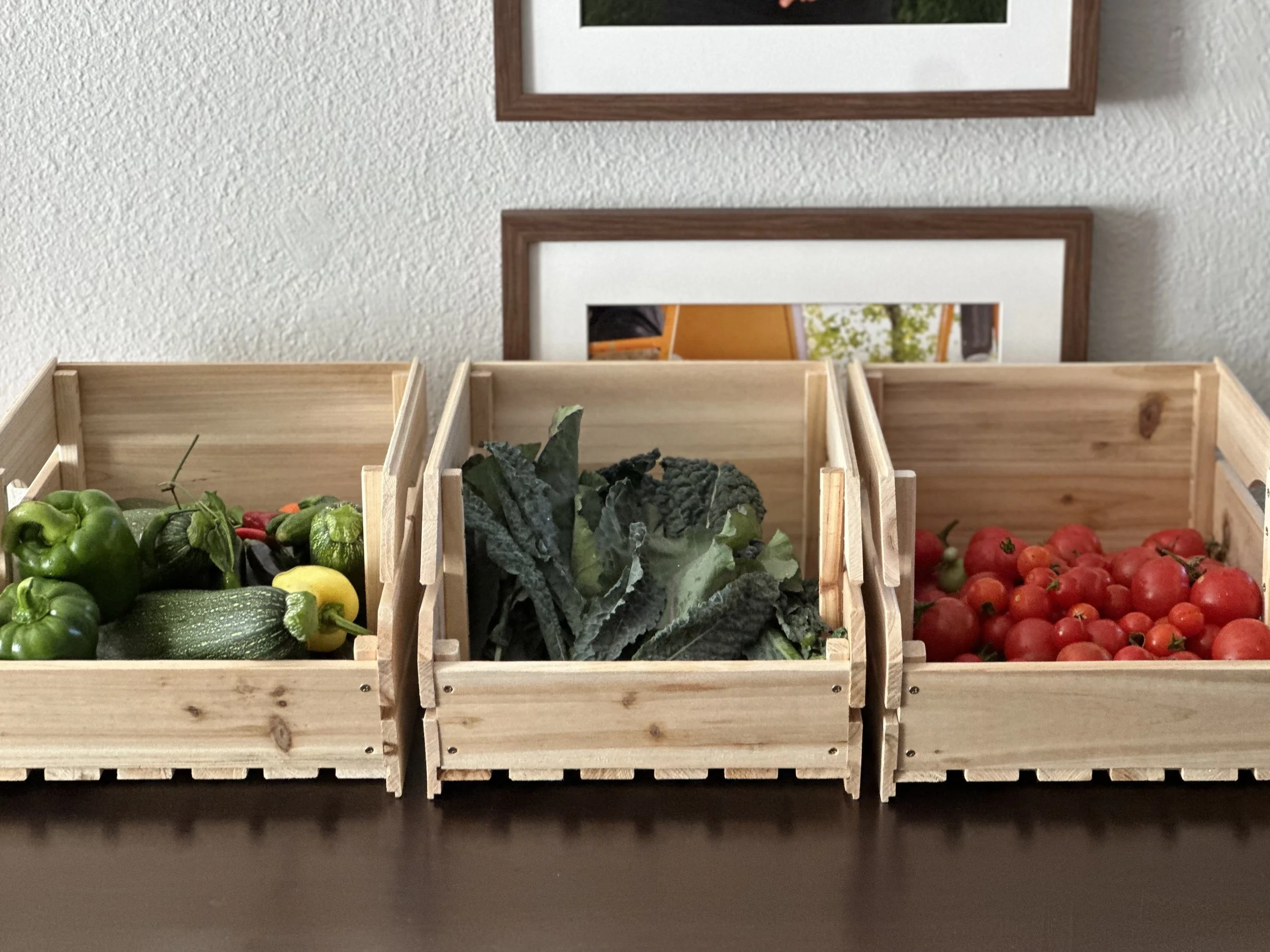
Tomatoes, most of our zucchinis
September 2026!!
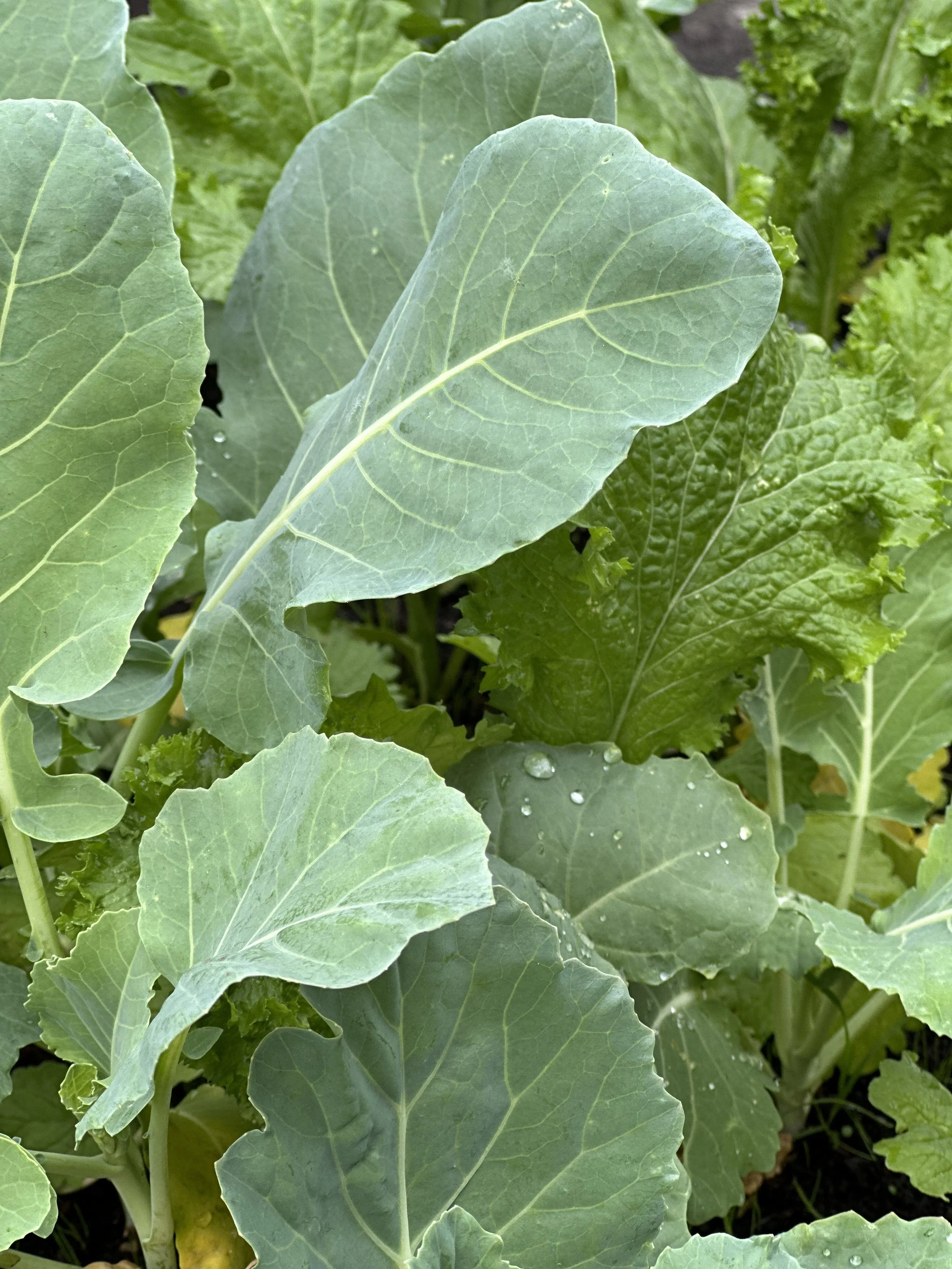
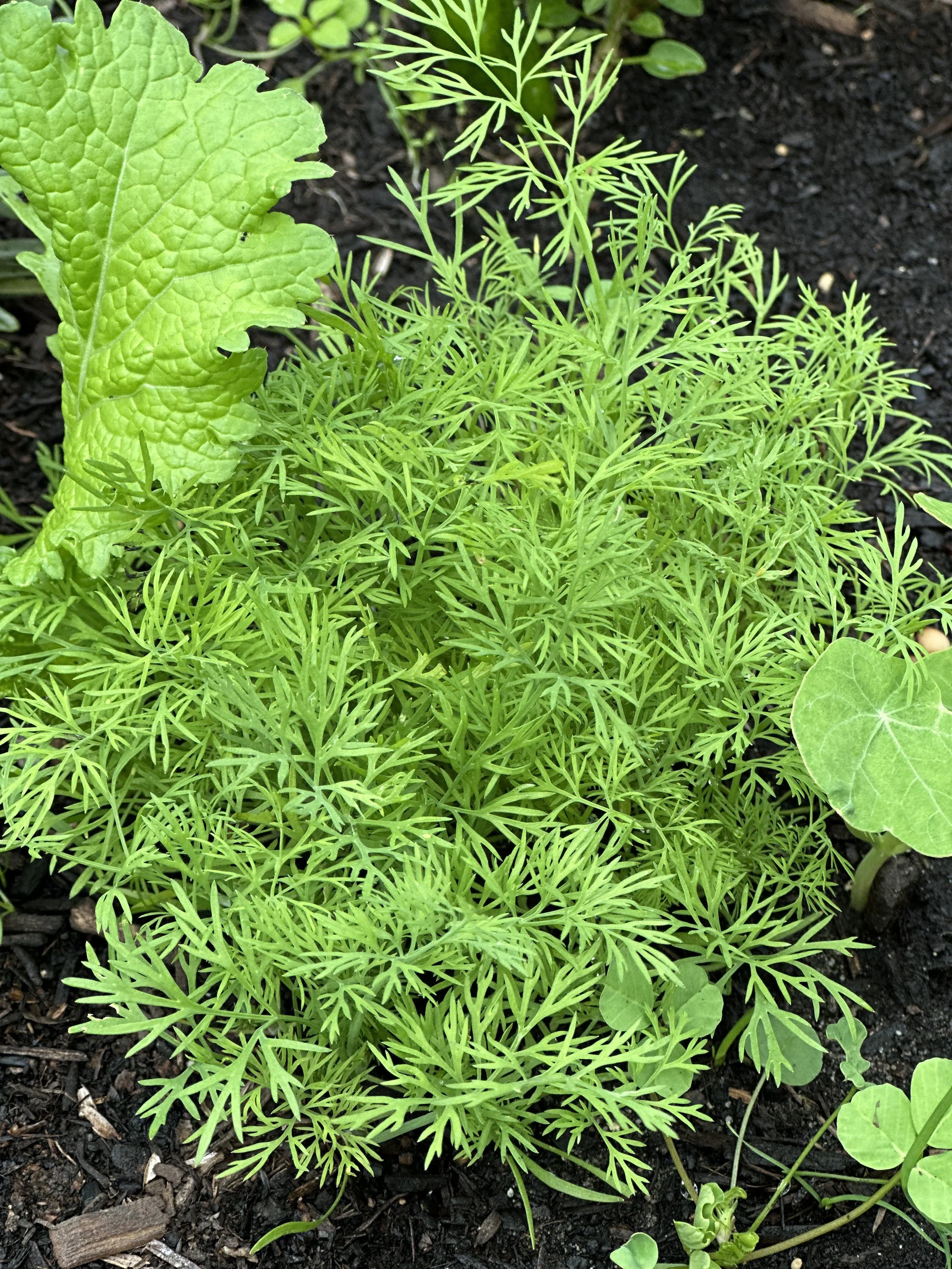
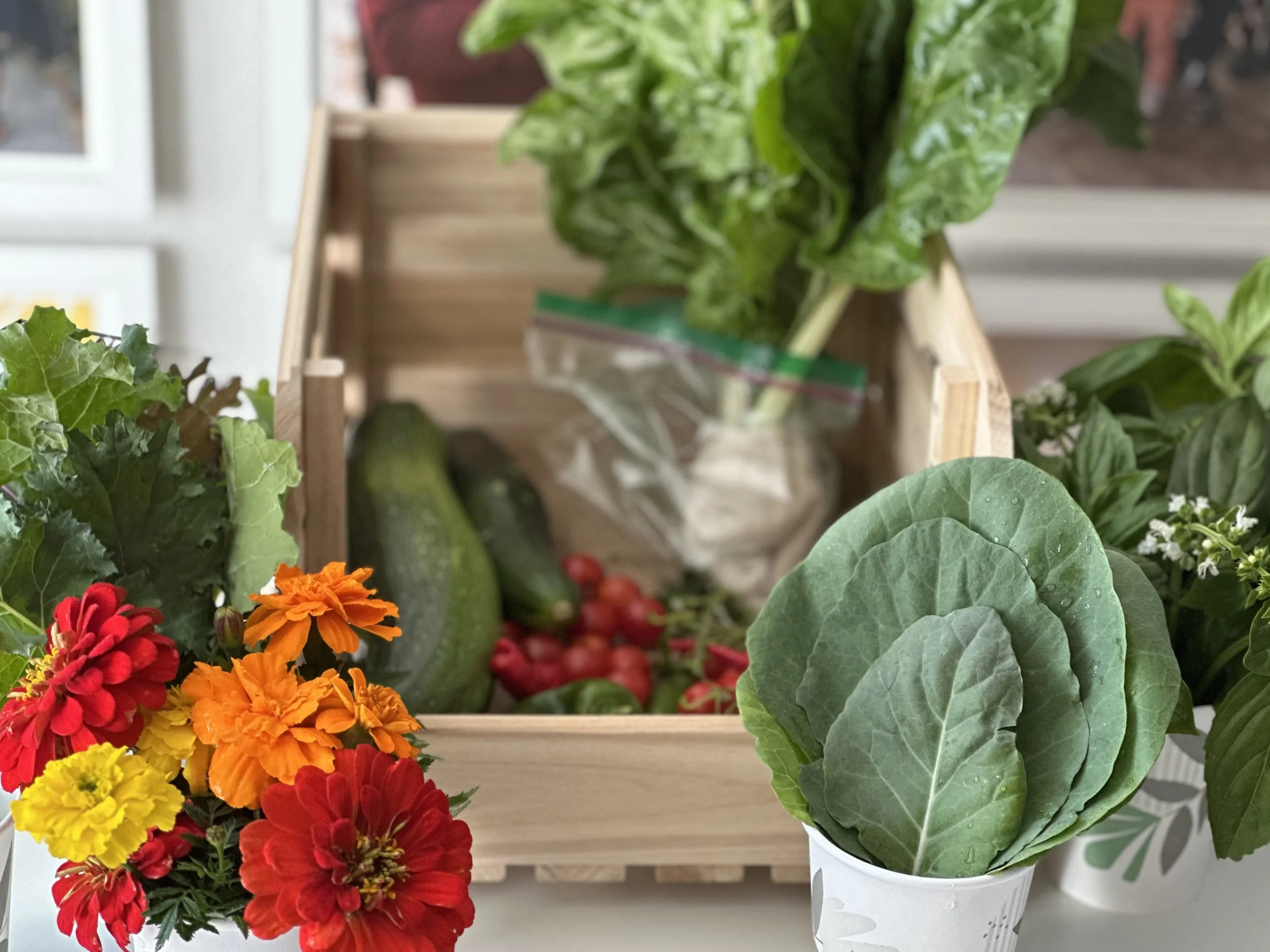
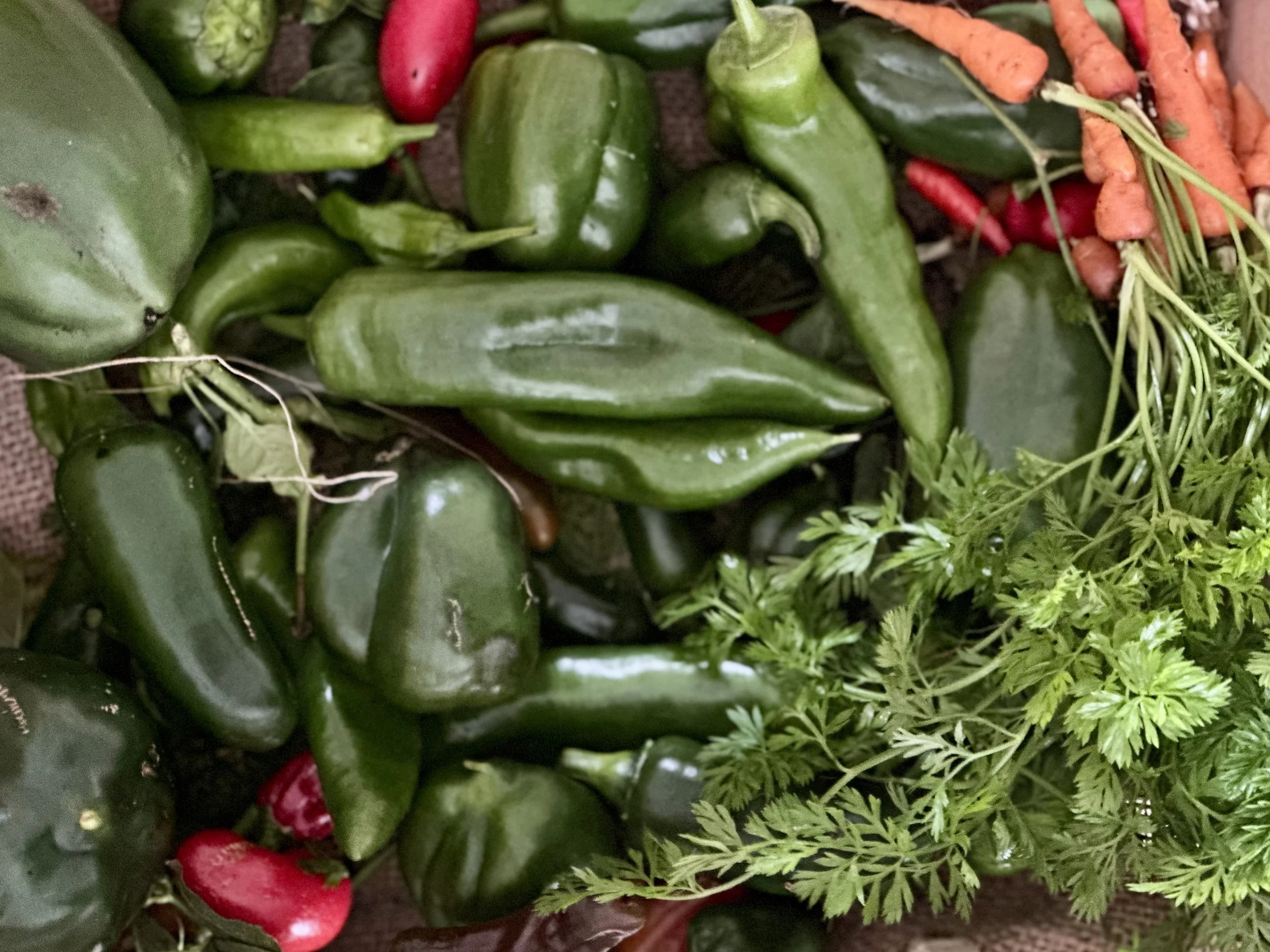
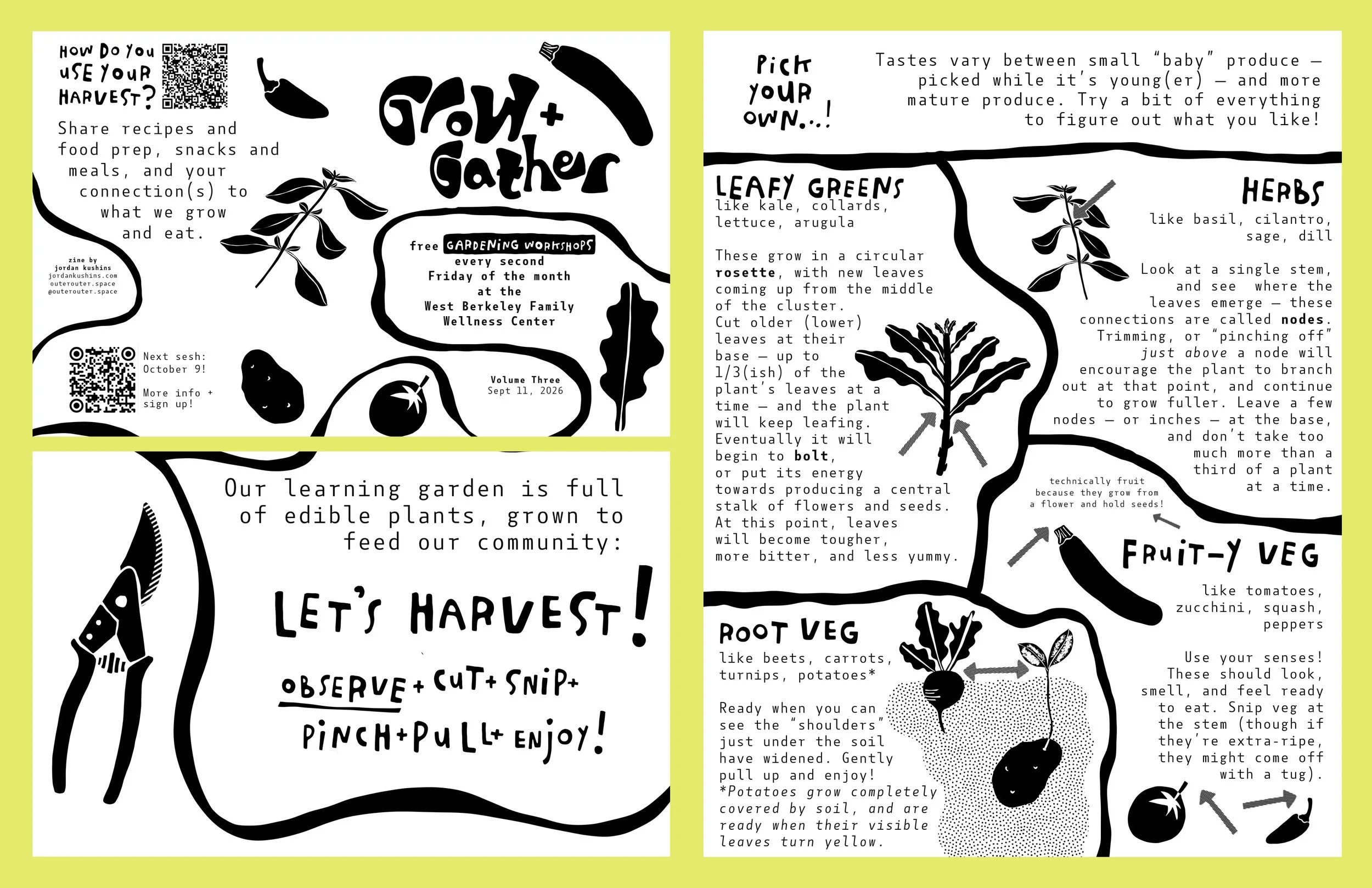
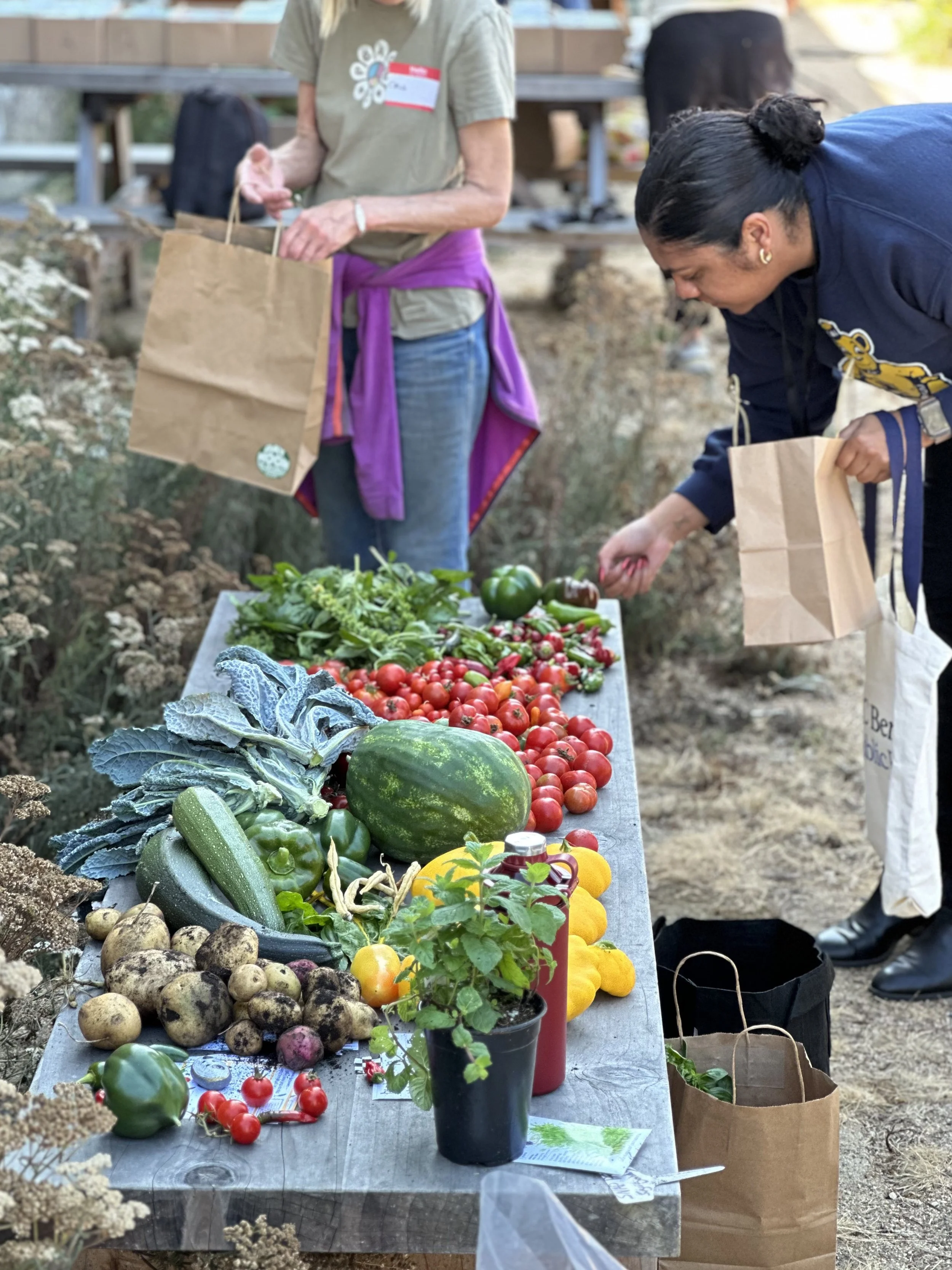
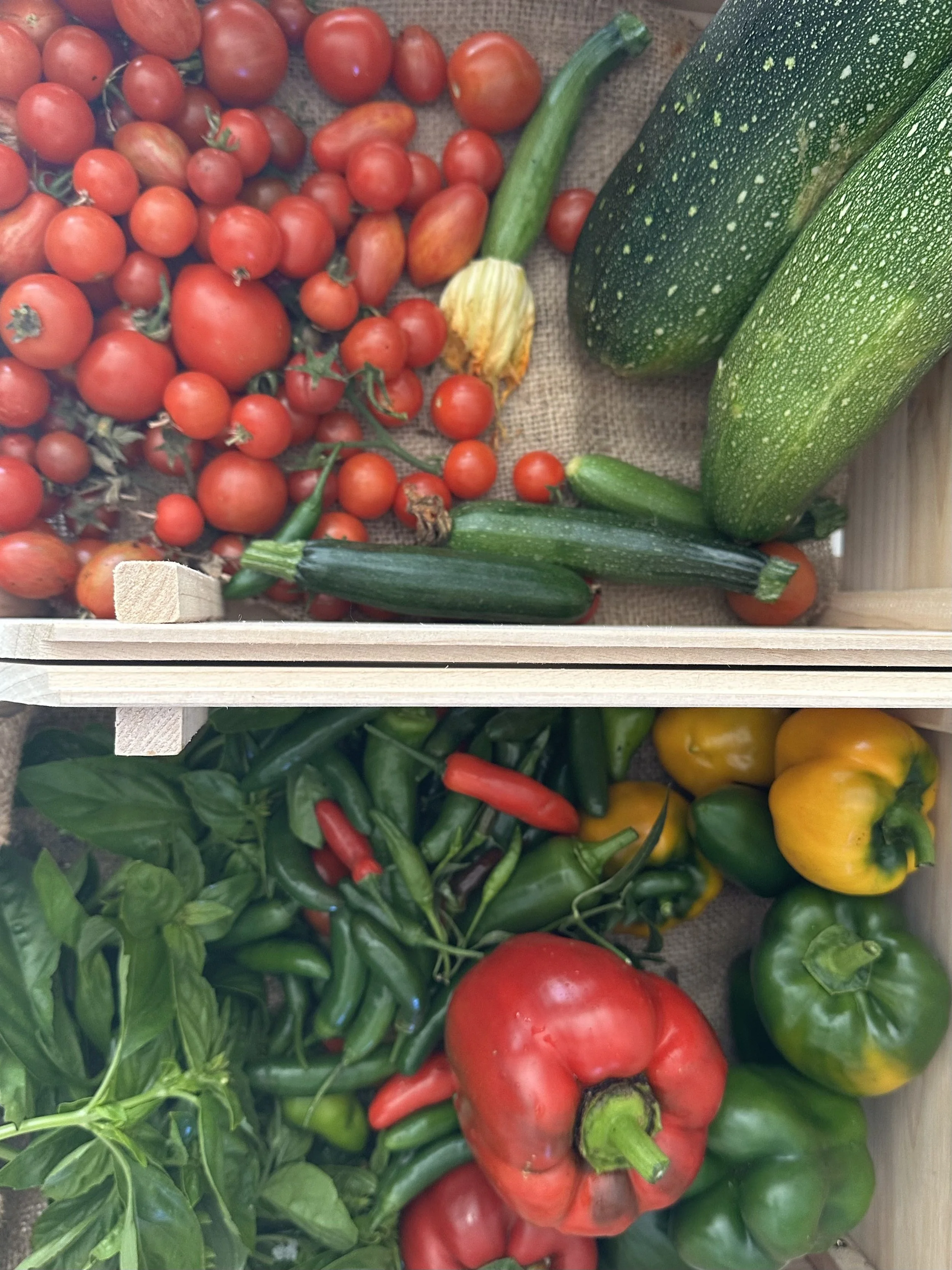
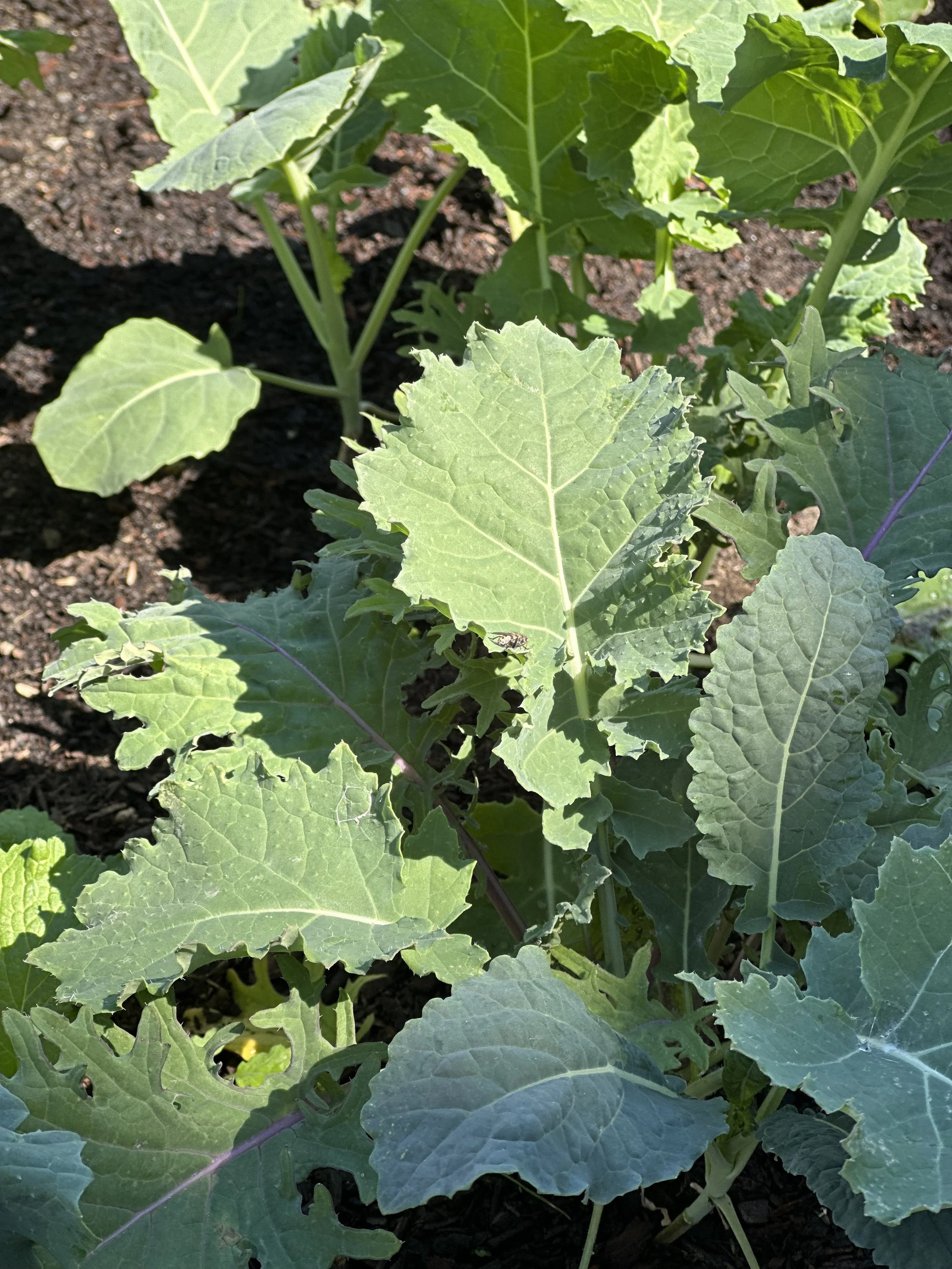
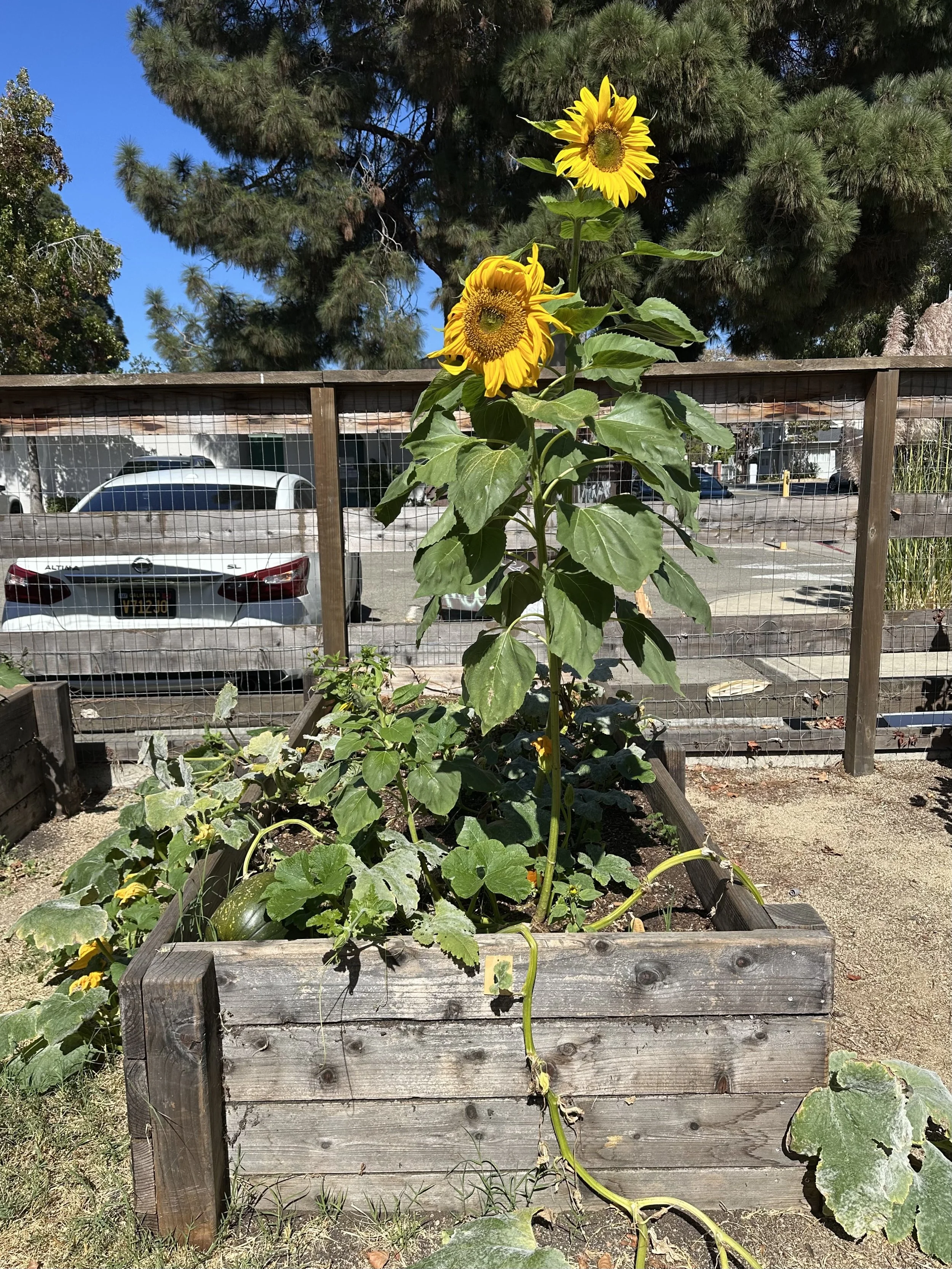
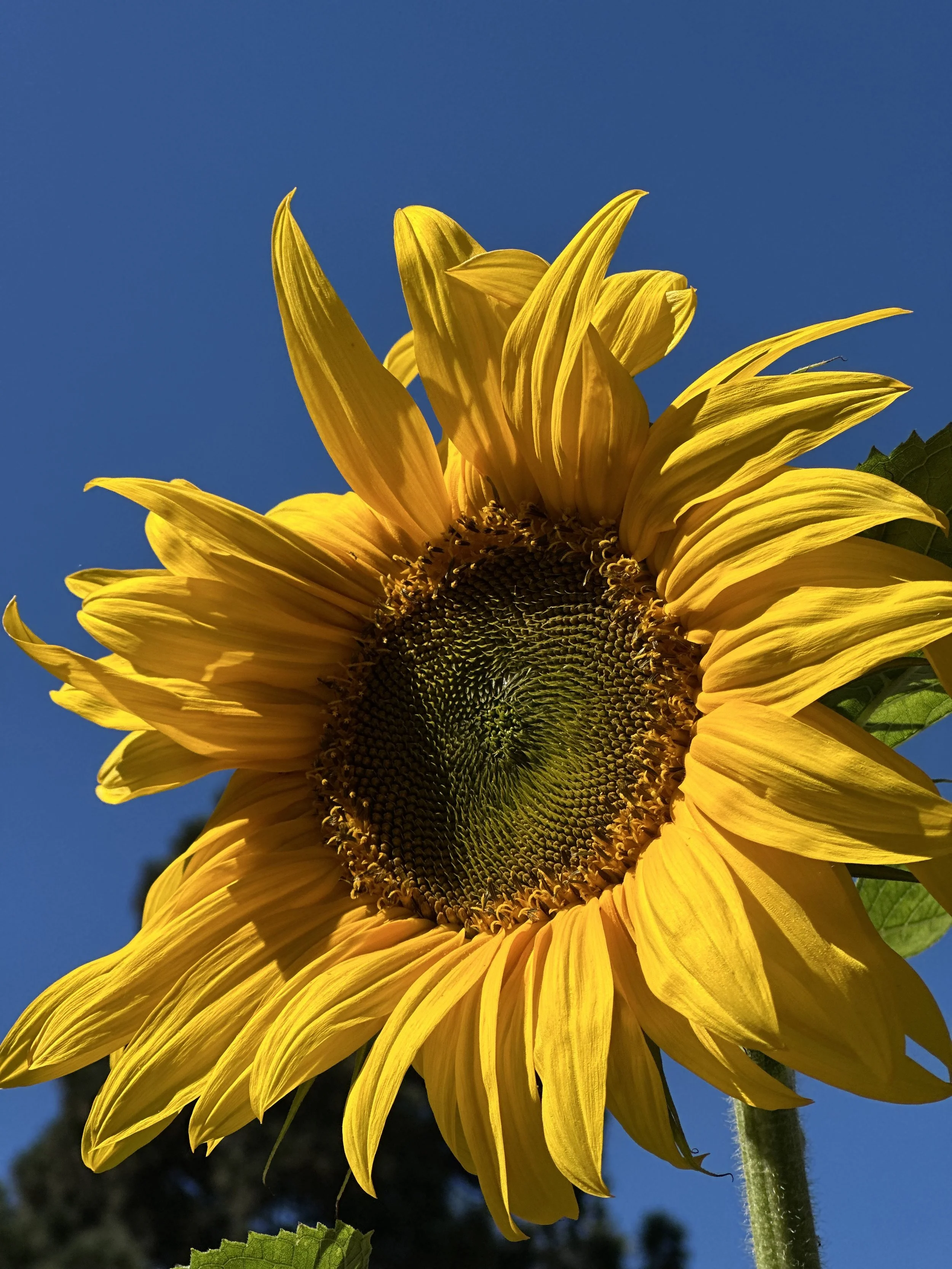
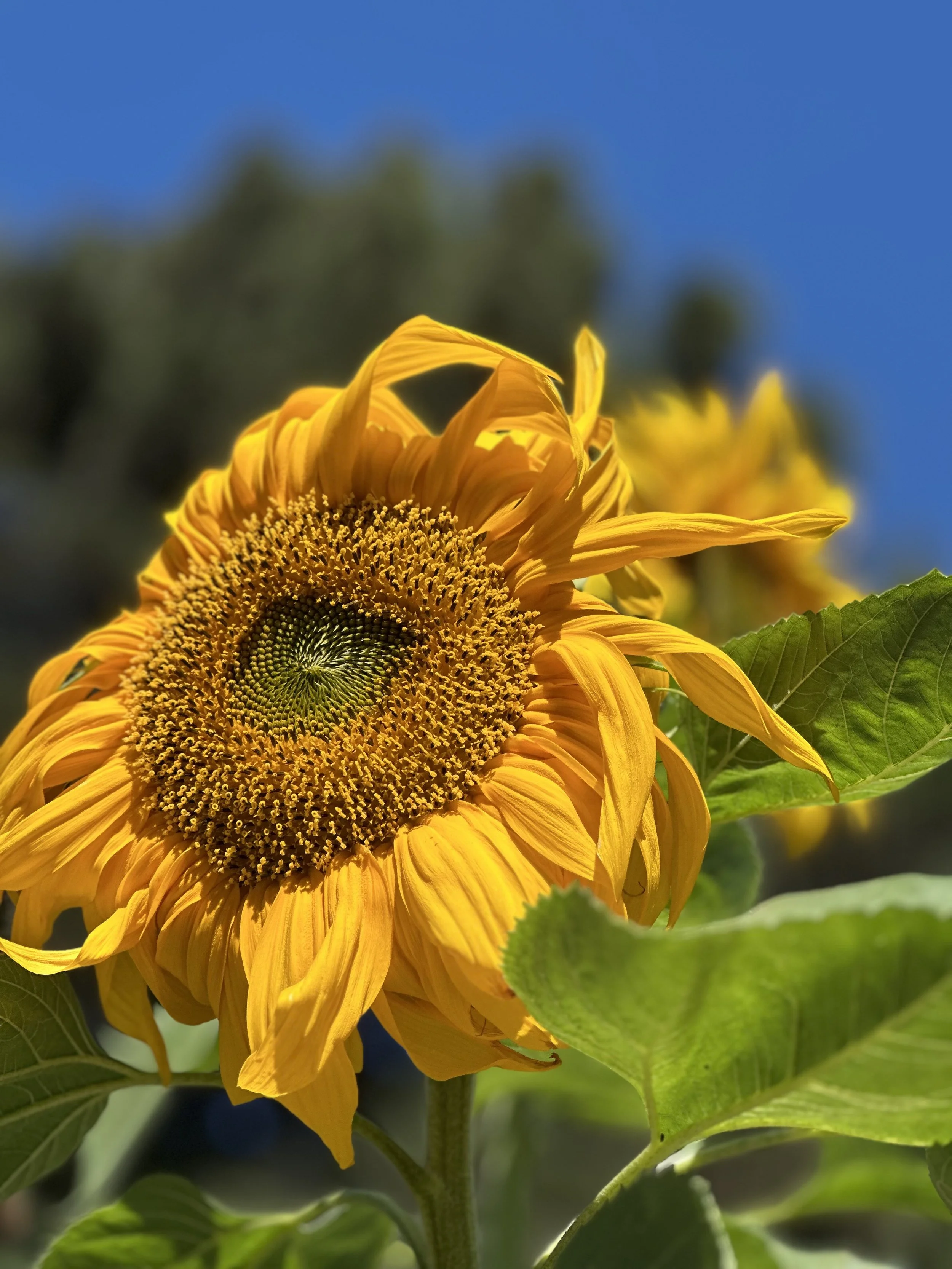
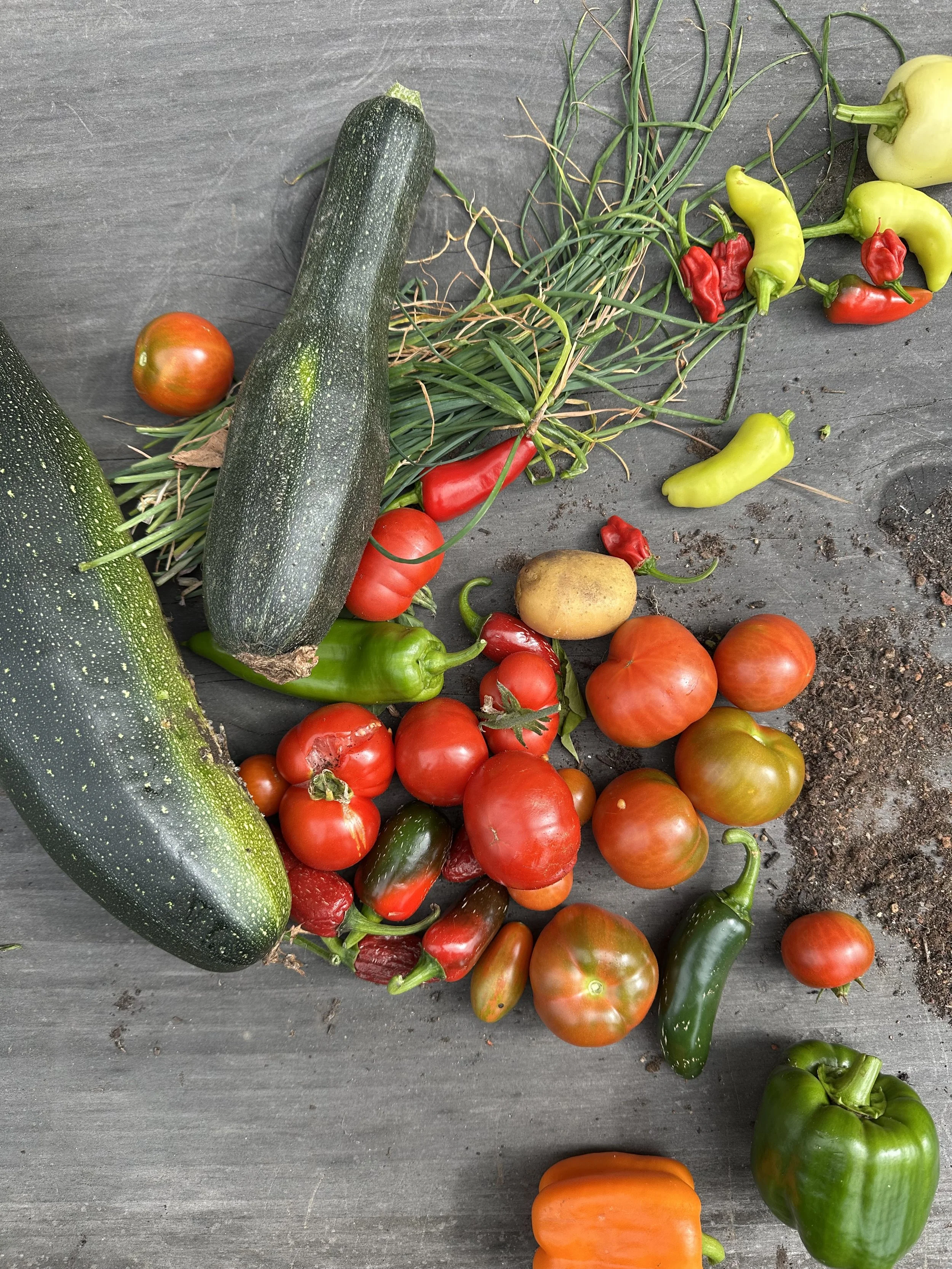
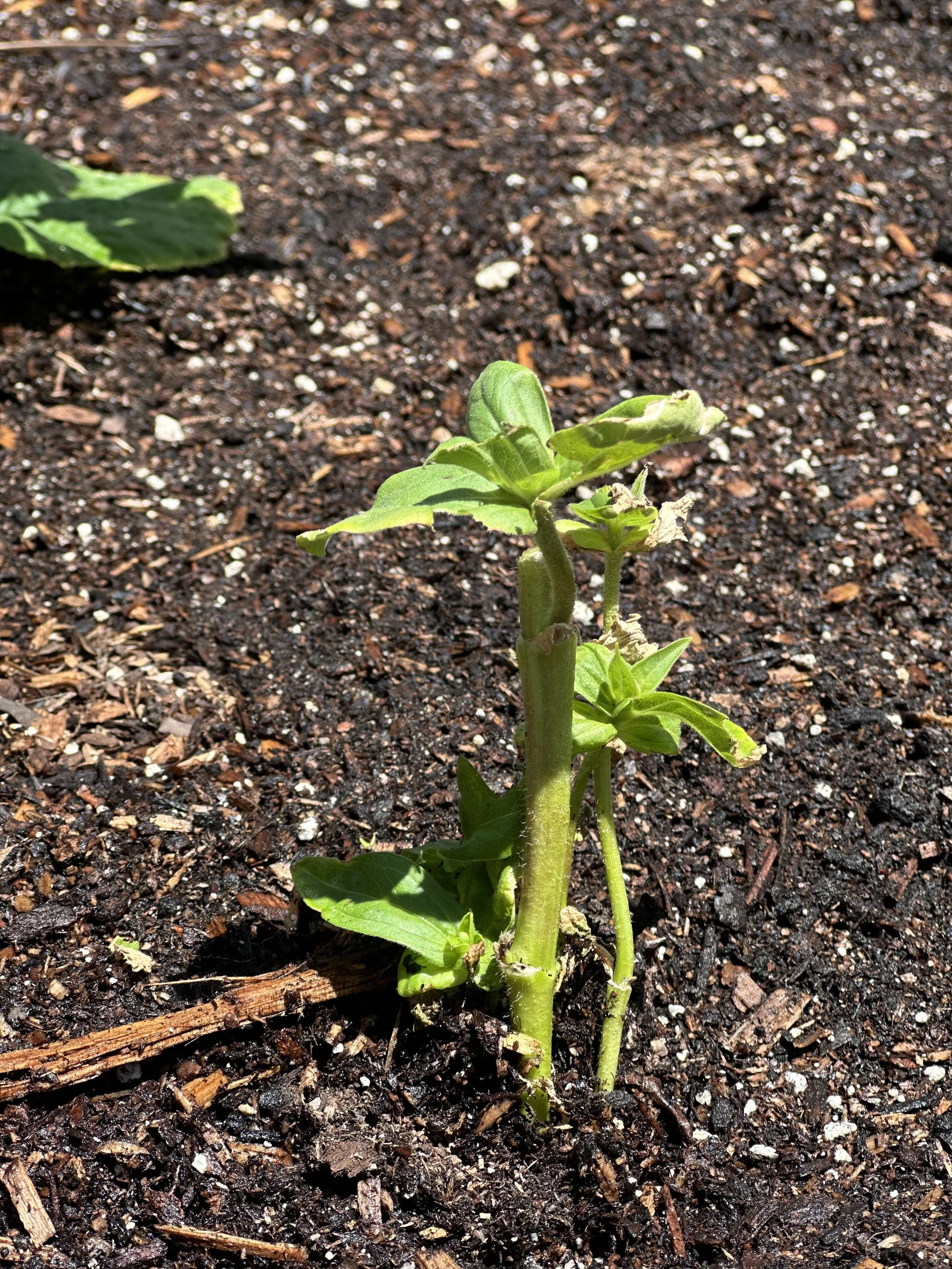
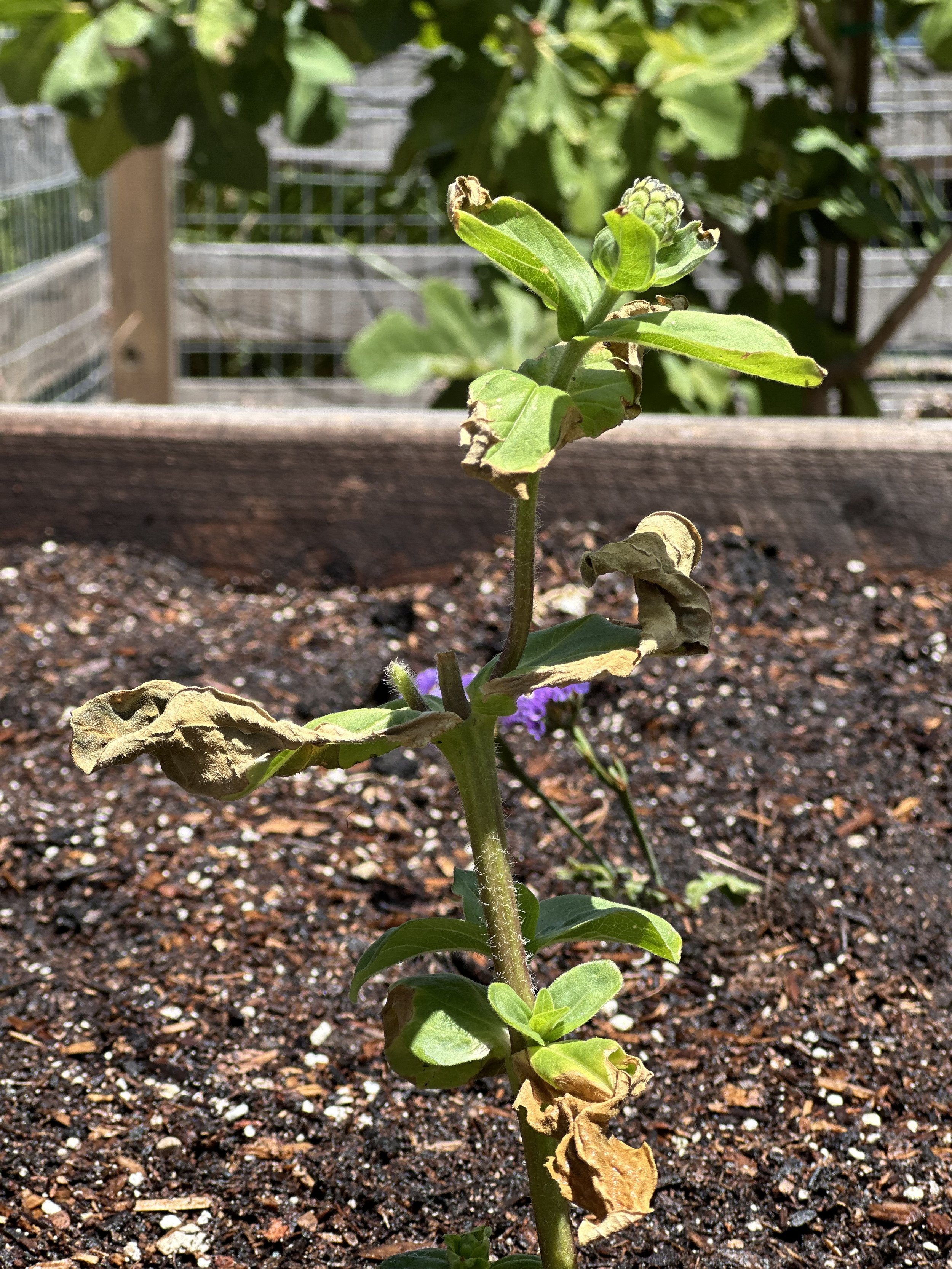
Okay! Wow, we’re heading into fall and the garden is changing with the seasons. After an absolutely incredible week-after-week-after-week crop of tomatoes, we’re almost ready to say goodbye to them until next year. We’ve had great success with some of our leafy greens grown from seed — kale, collards, lettuce — and WBFWC cooking instructor Roxy has even incorporated some of our arugula and squash into her classes. It’s beyond neat to see the sunflowers, pumpkins, and zinnia we started during our first sesh in July are still thriving, and there’s still so much to plant, and learn, and do together. This month’s zine focused on how to harvest some of the different types of edibles we’re growing, so everyone has the confidence to cut and snip and pinch and pull and enjoy!
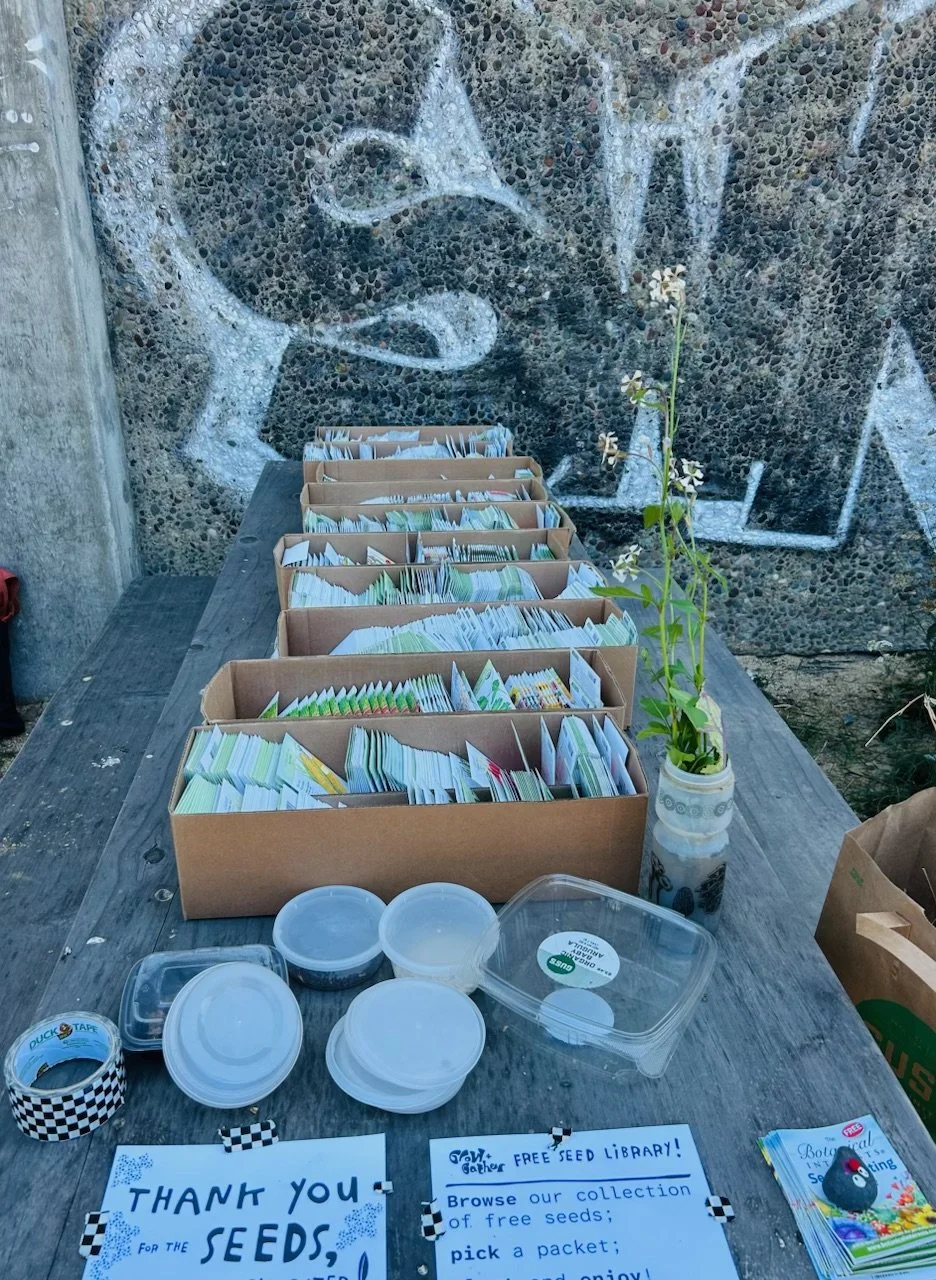
Also: We got an AMAZING donation of seeds from Sloat to start our free seed library, which will debut next month. Stay tuned…
Thanks to Allison, Cris, Ray, Sophie, Wu Yi, Roxy, Carey, Chrispy, and Ellen for being such awesome gardeners, and to Tino for watering!
August 2026!!
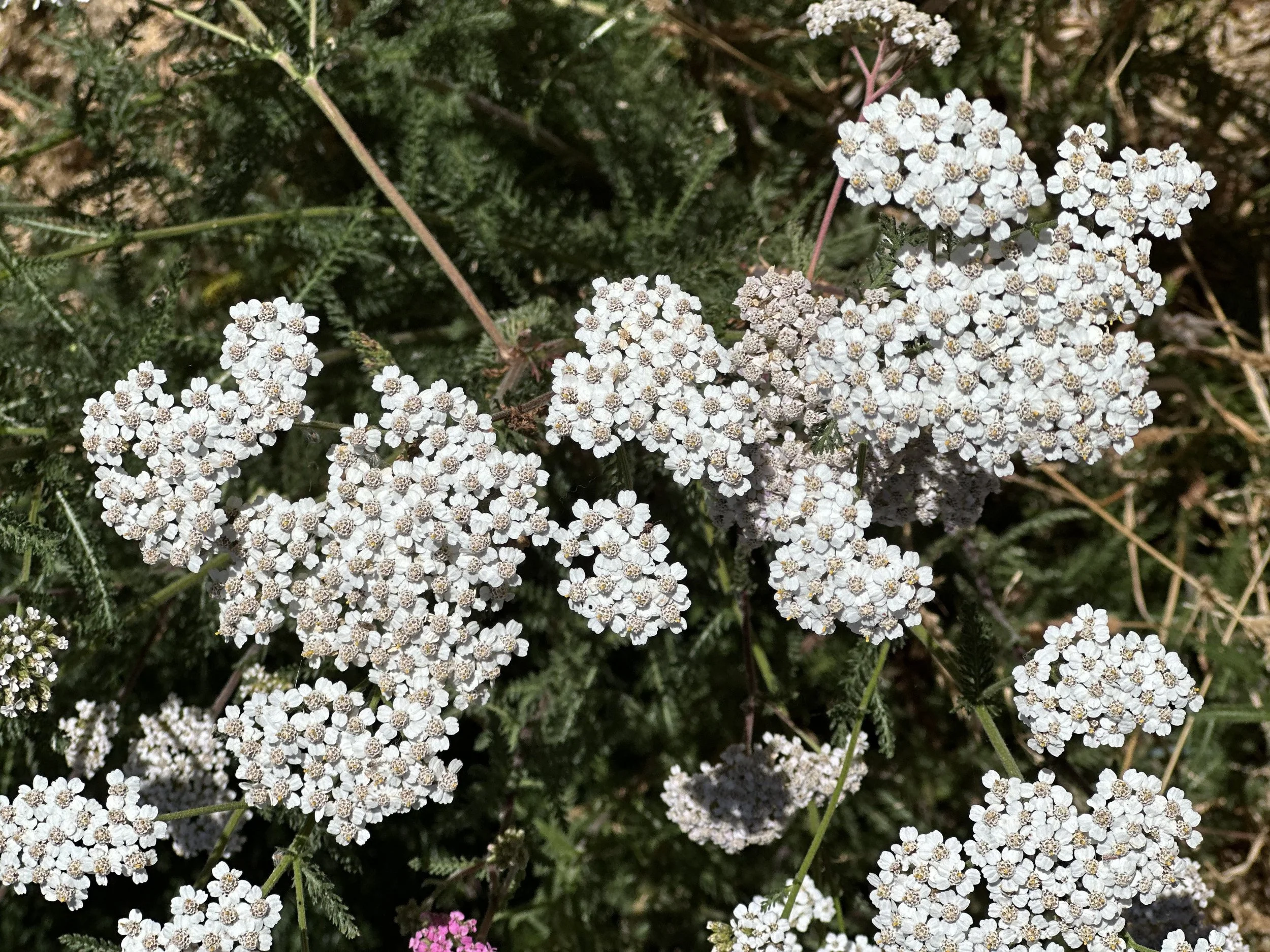
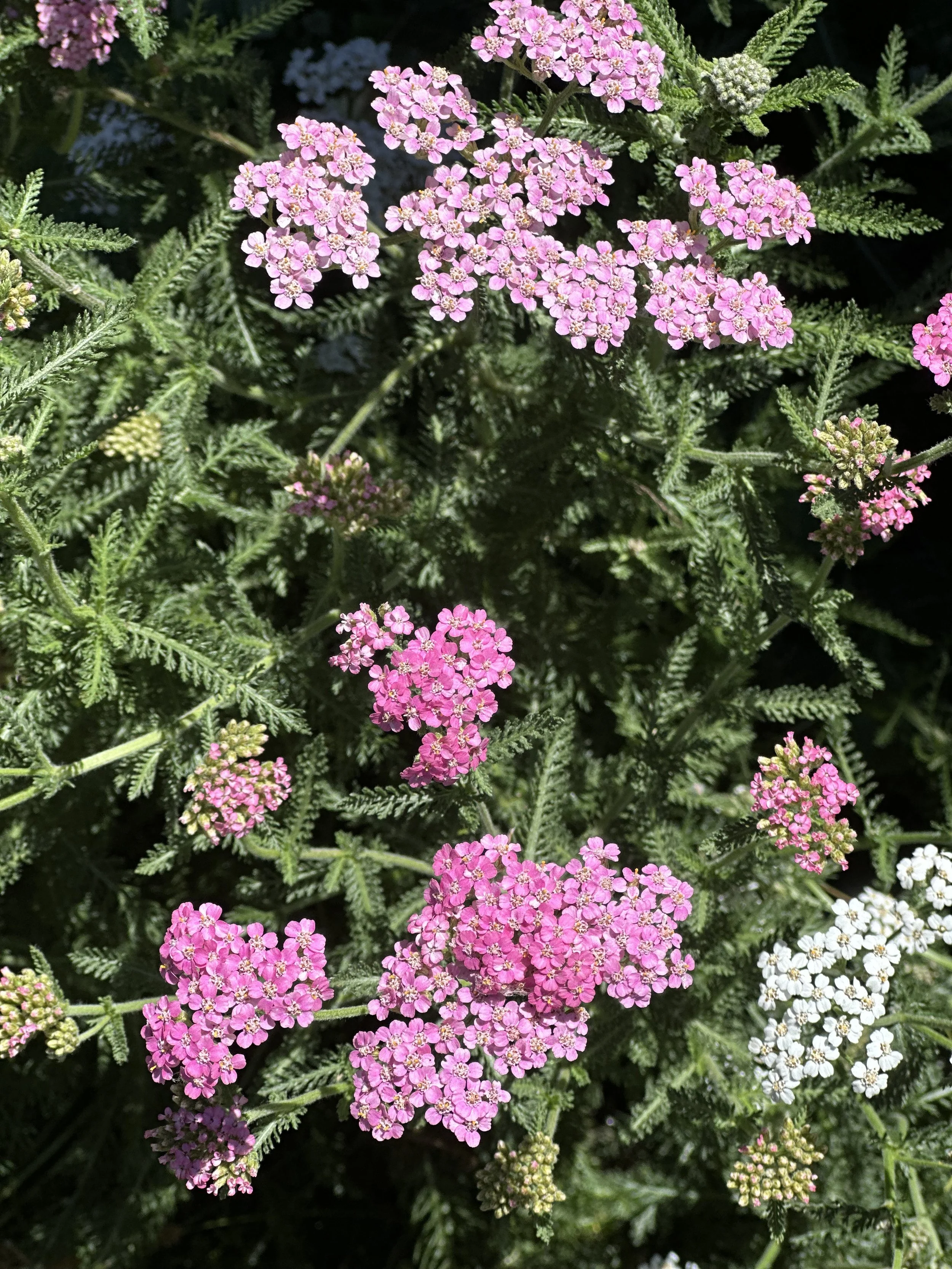
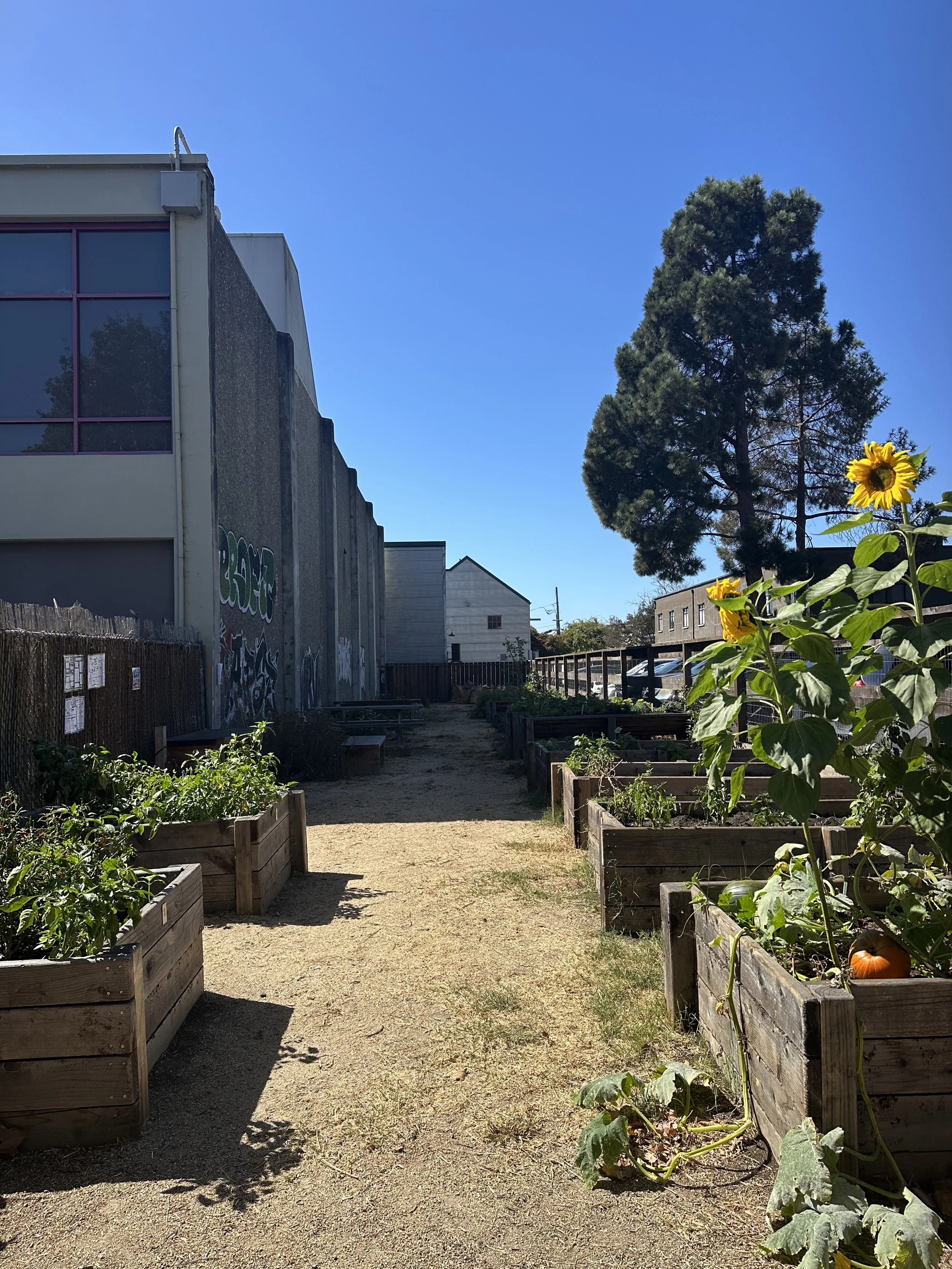
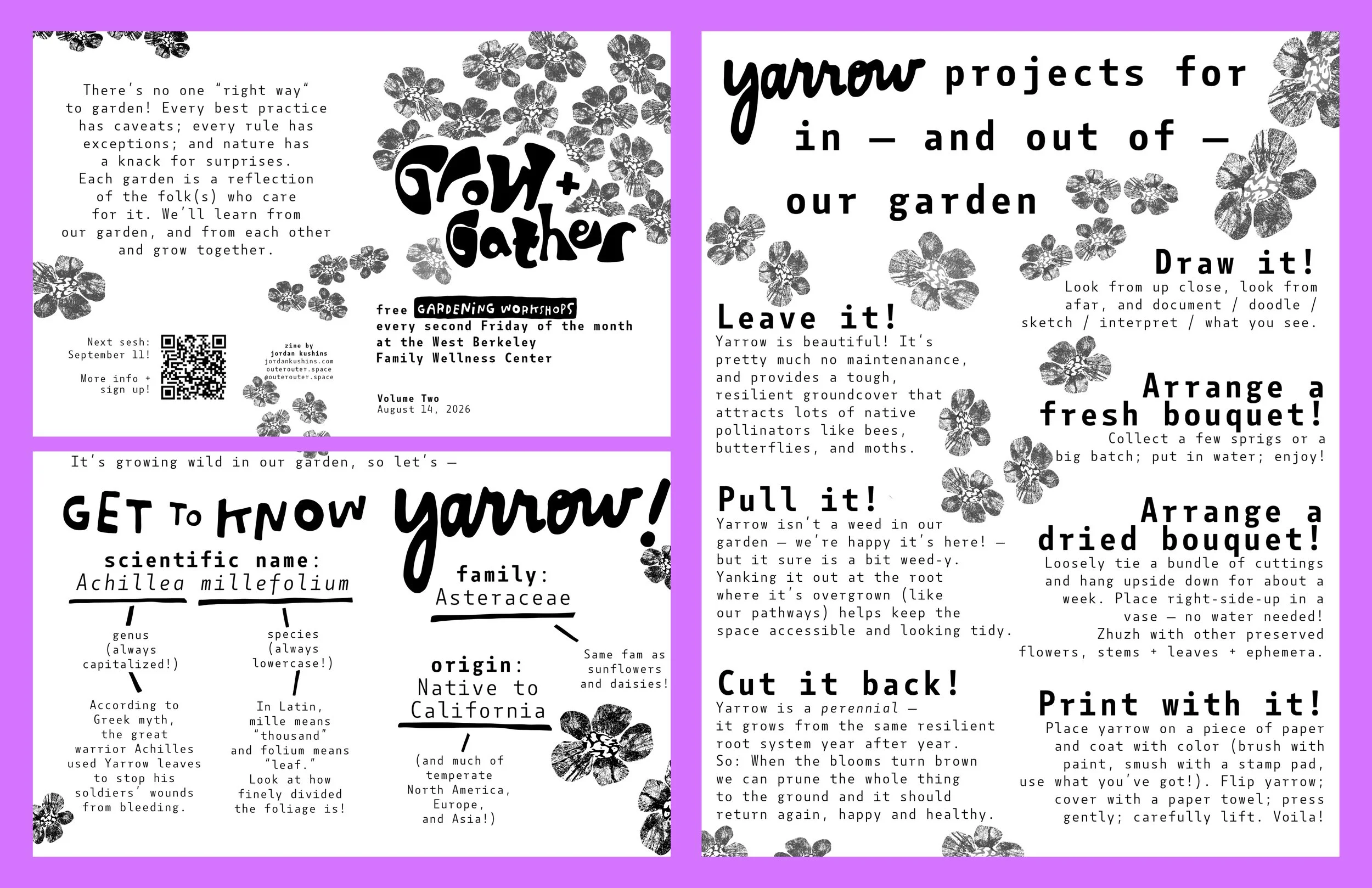
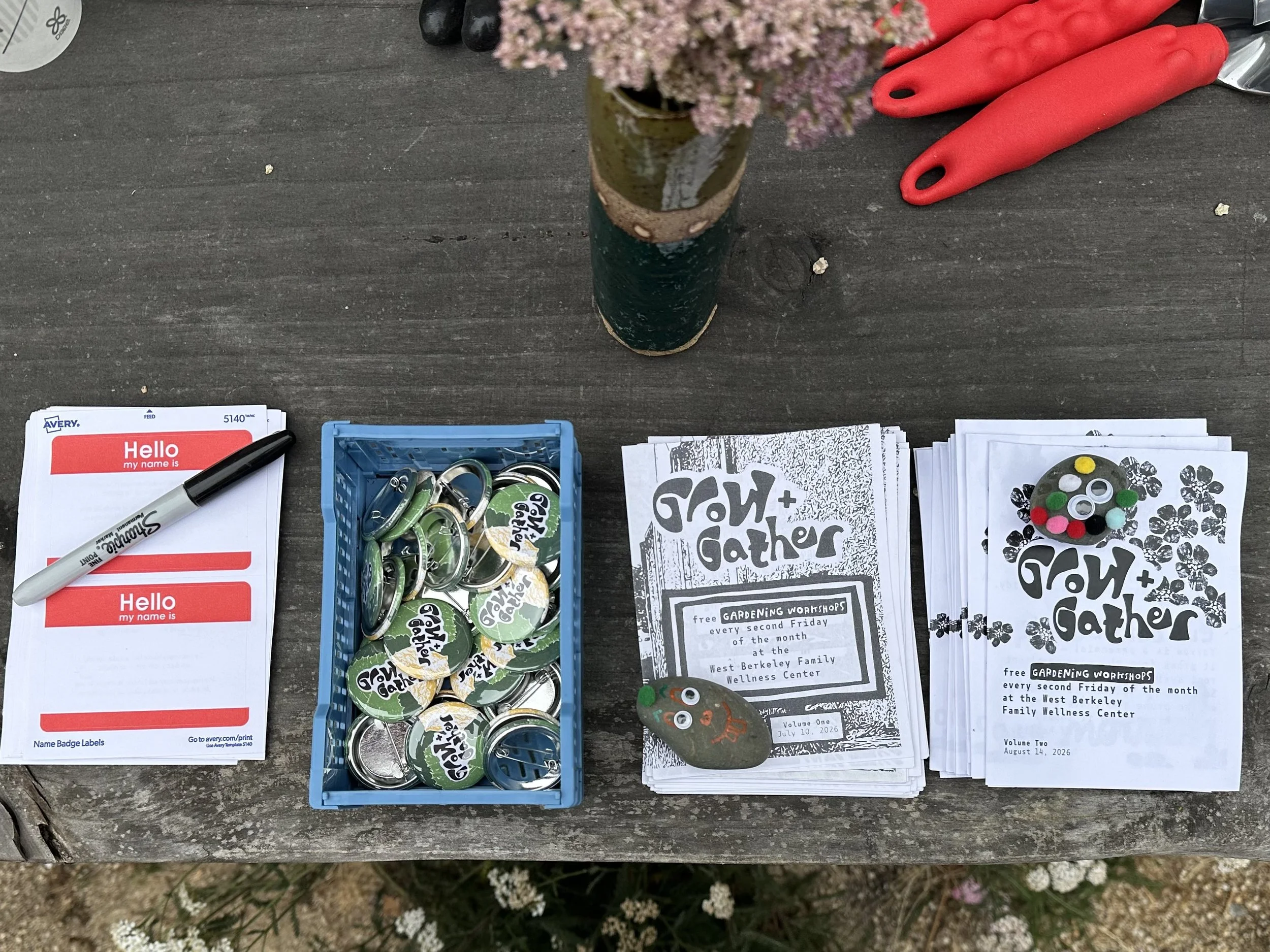
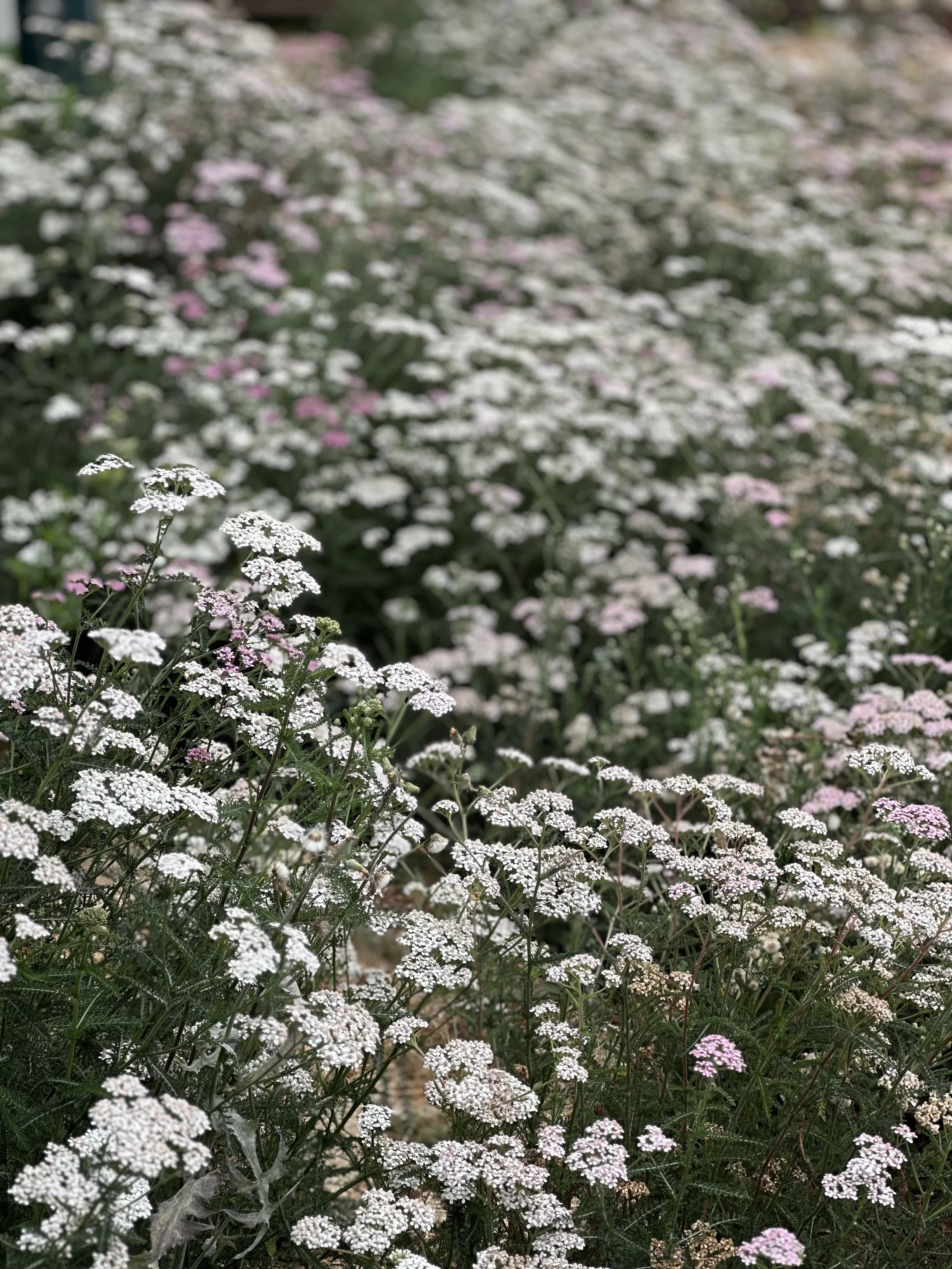
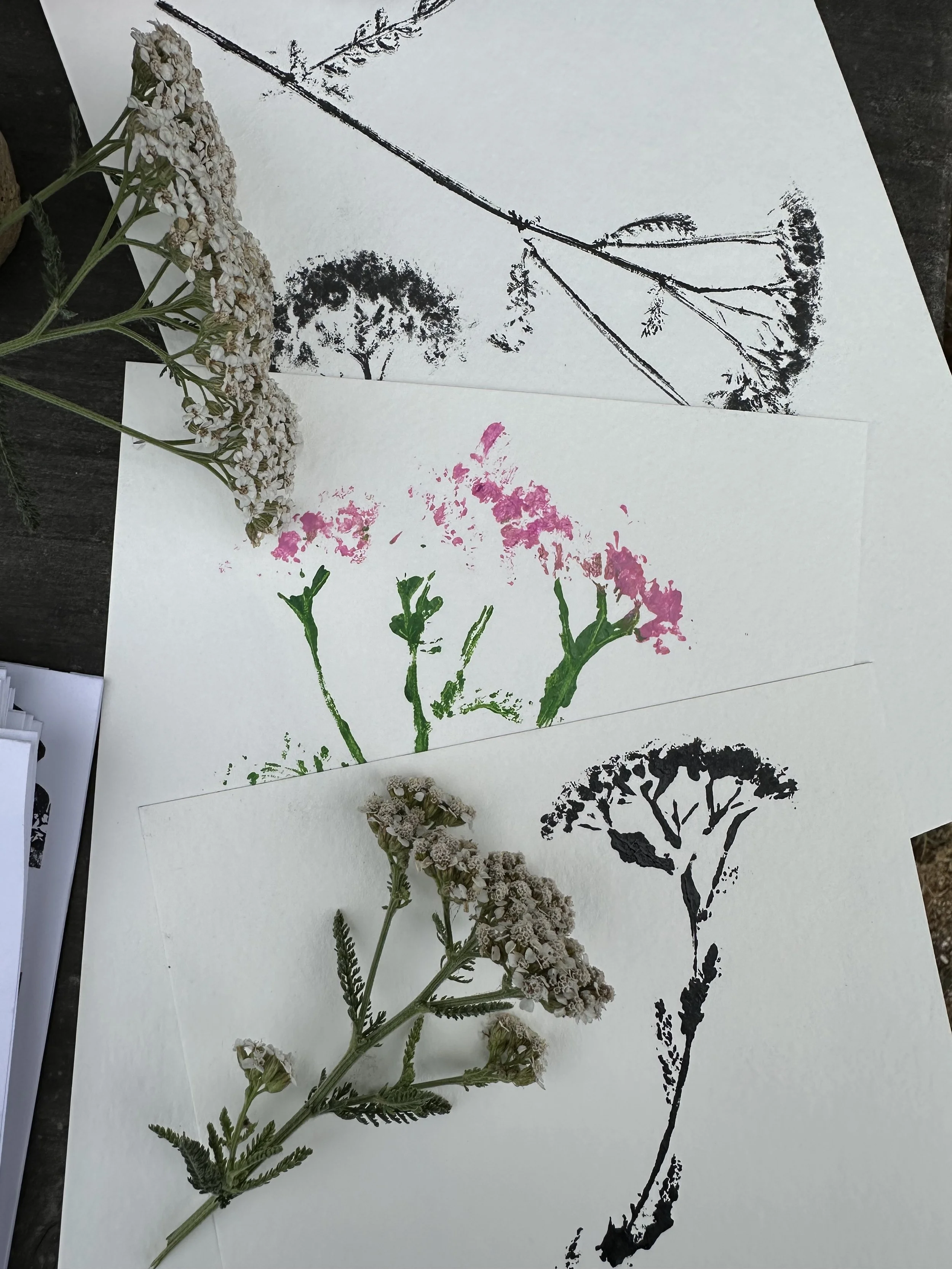
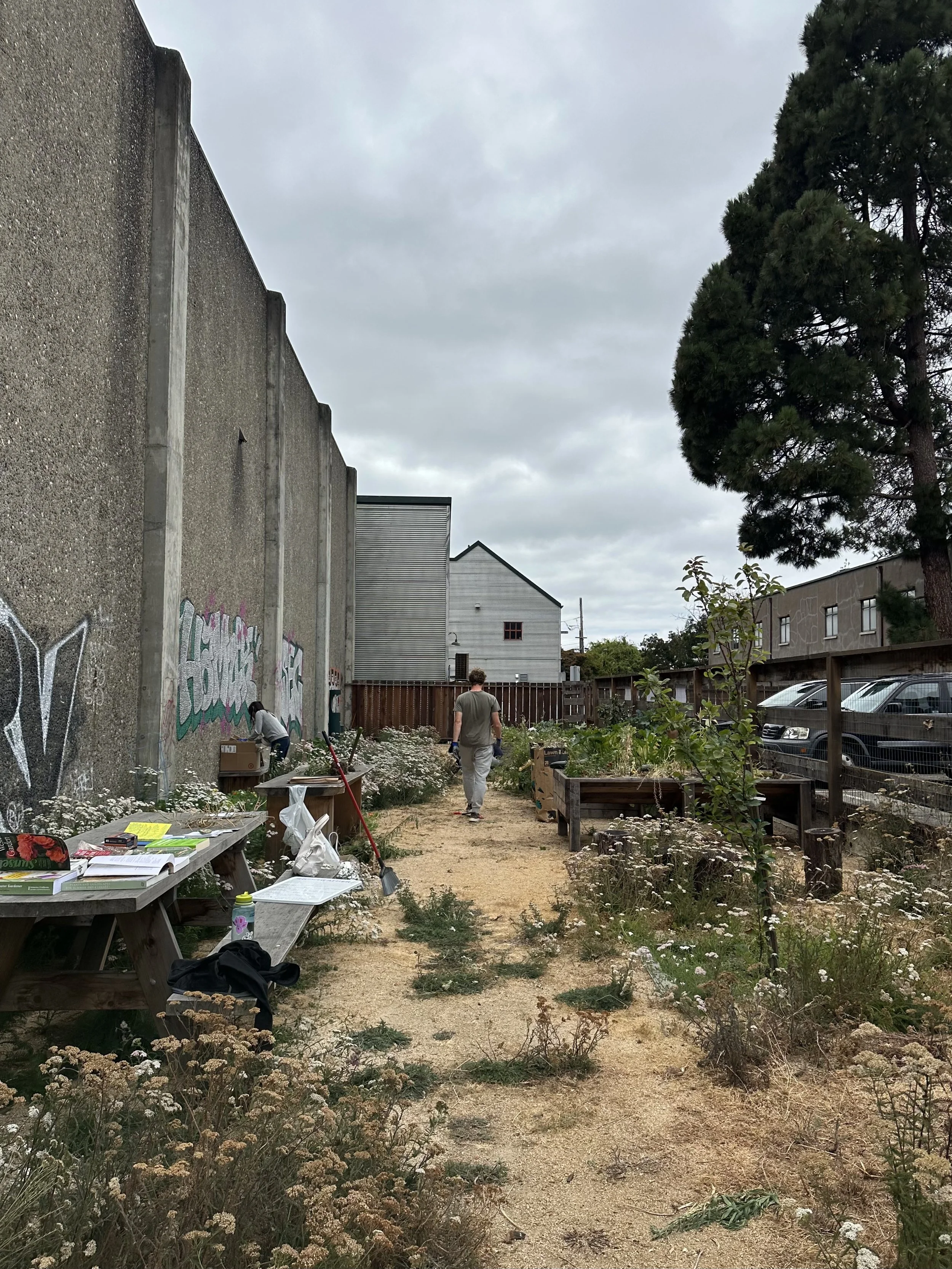
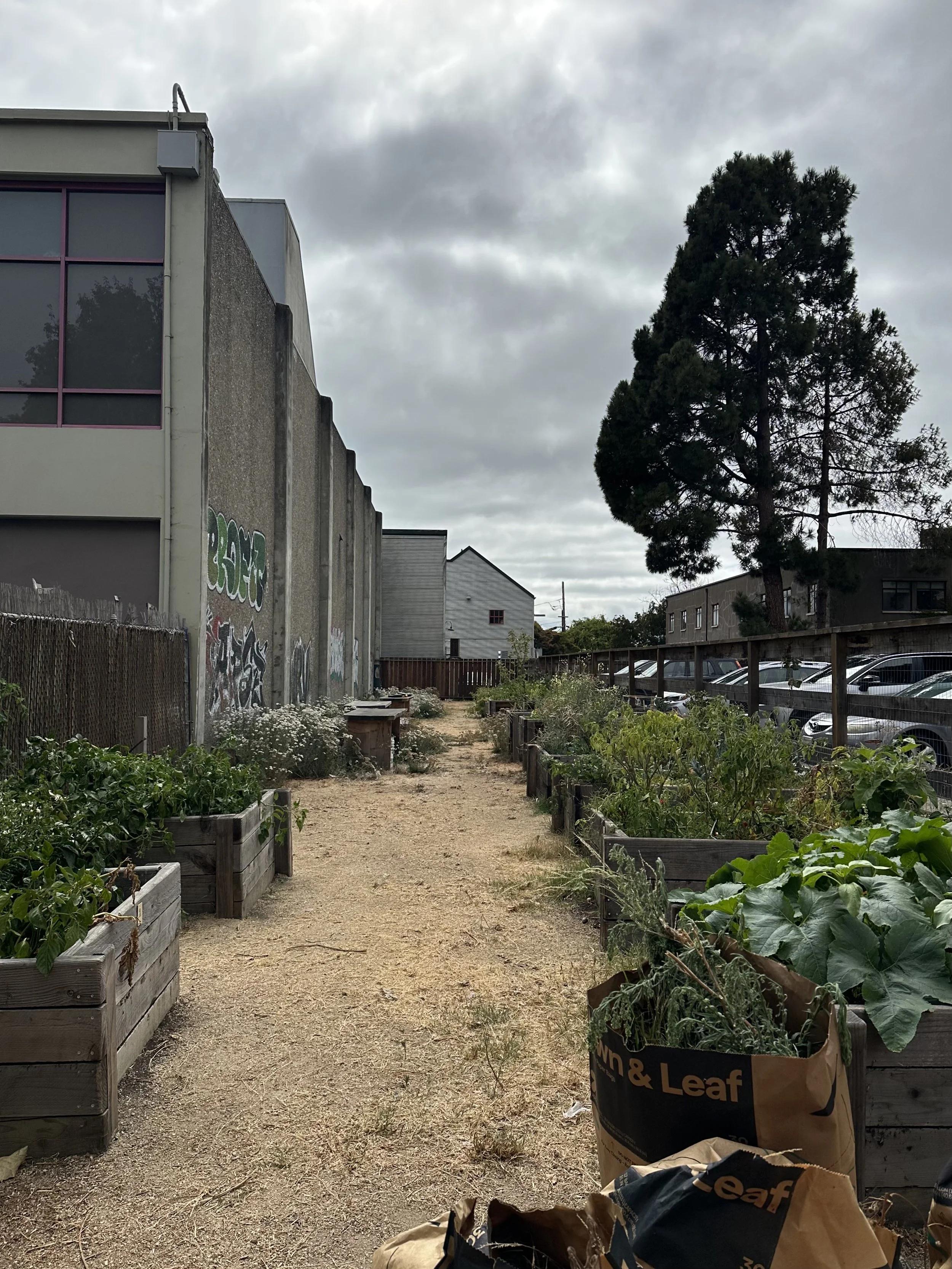
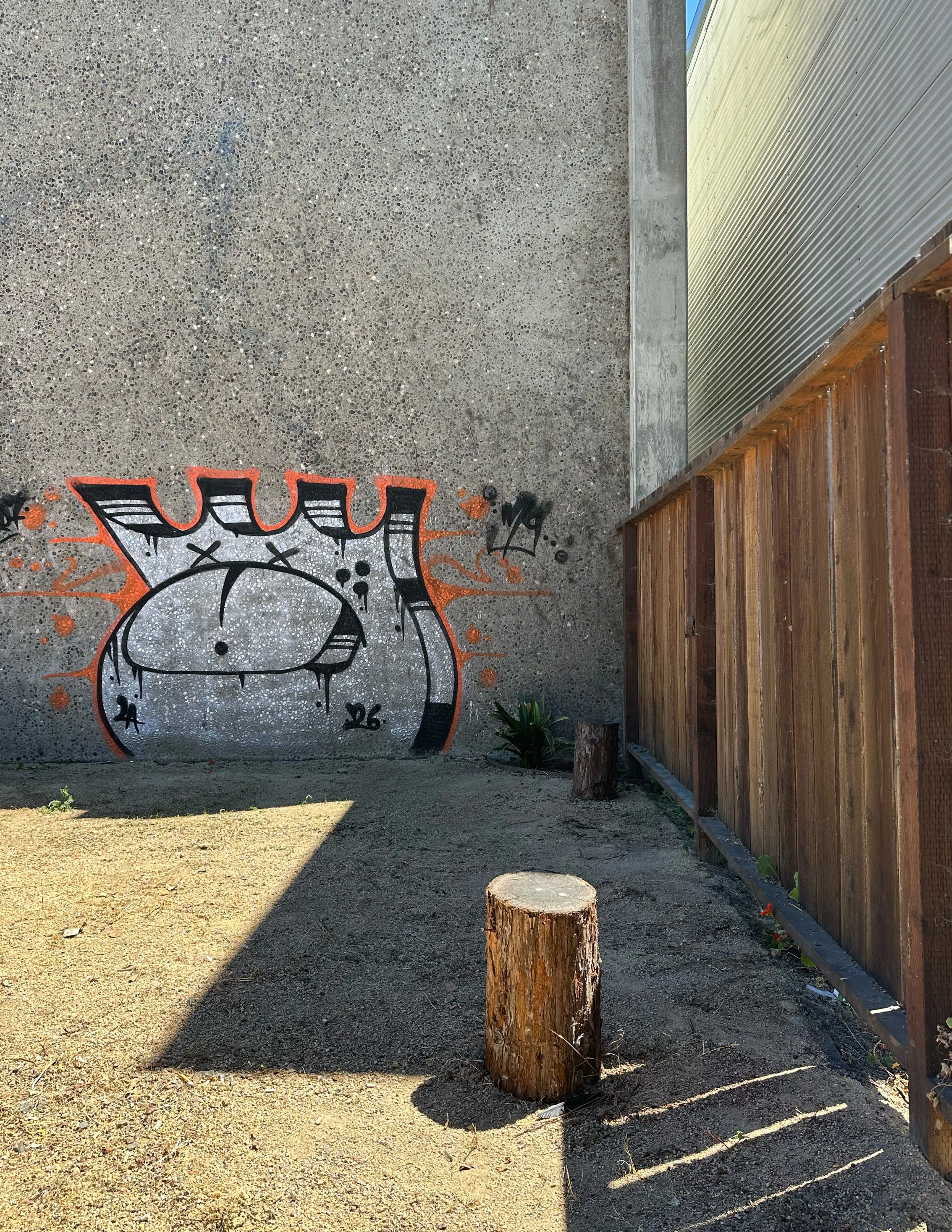
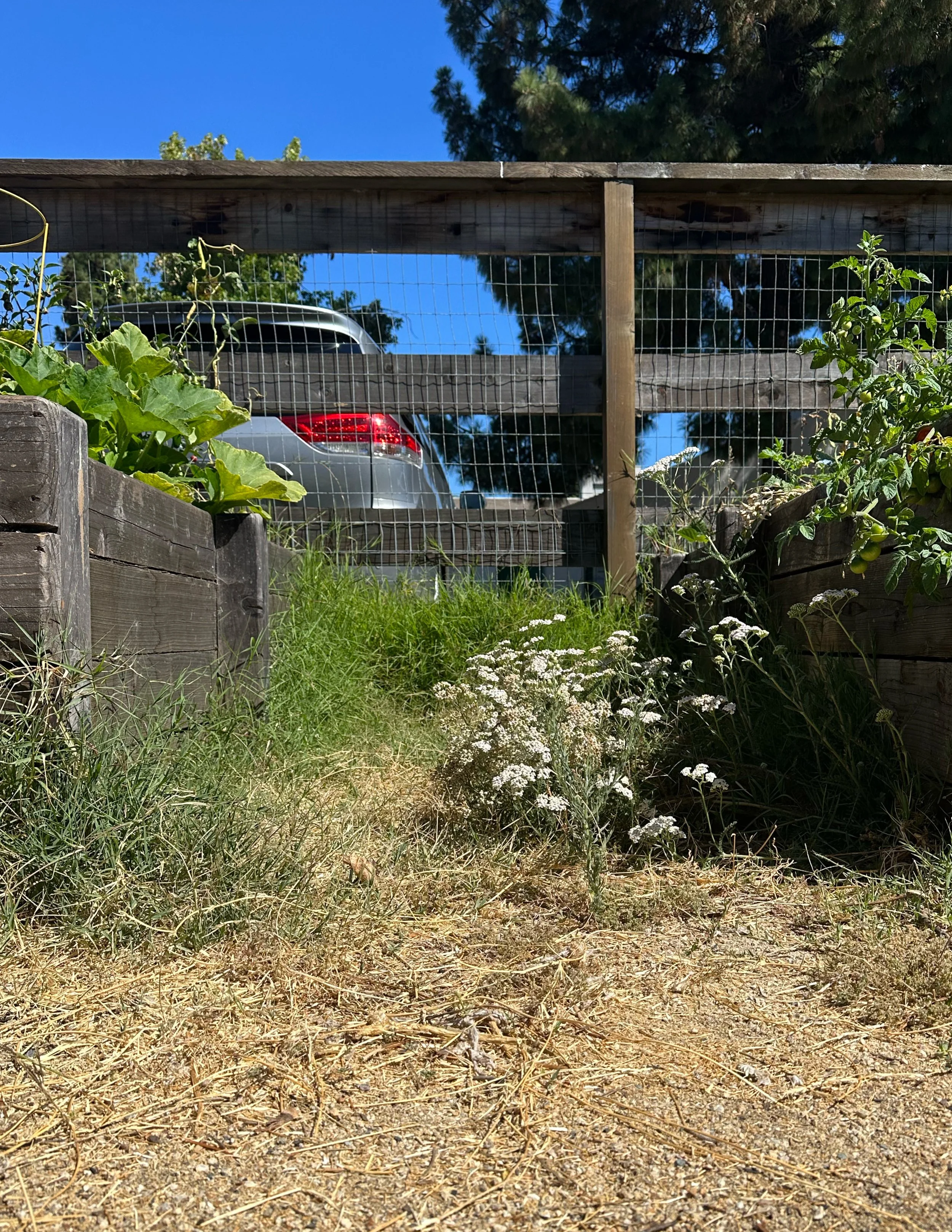
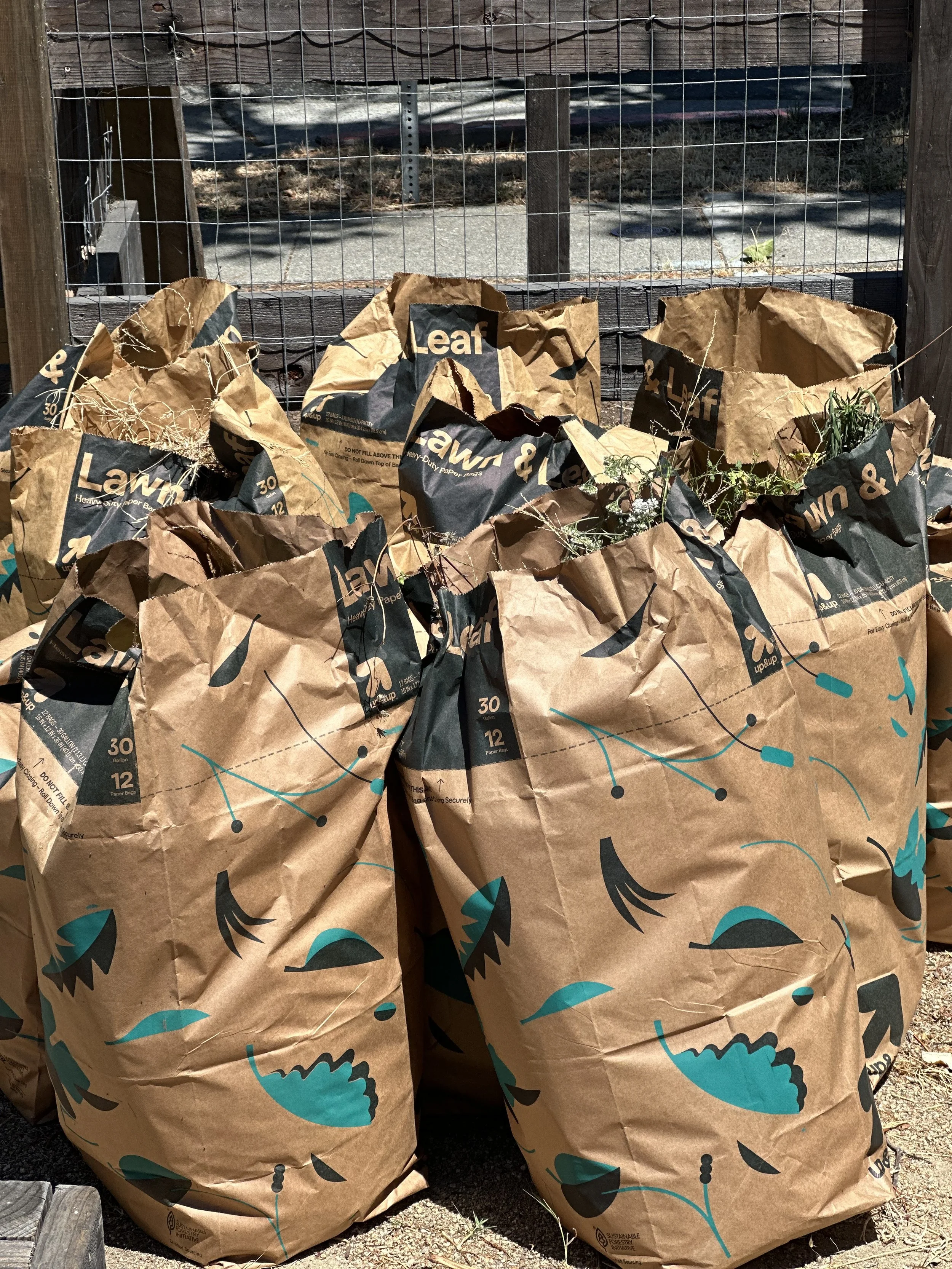
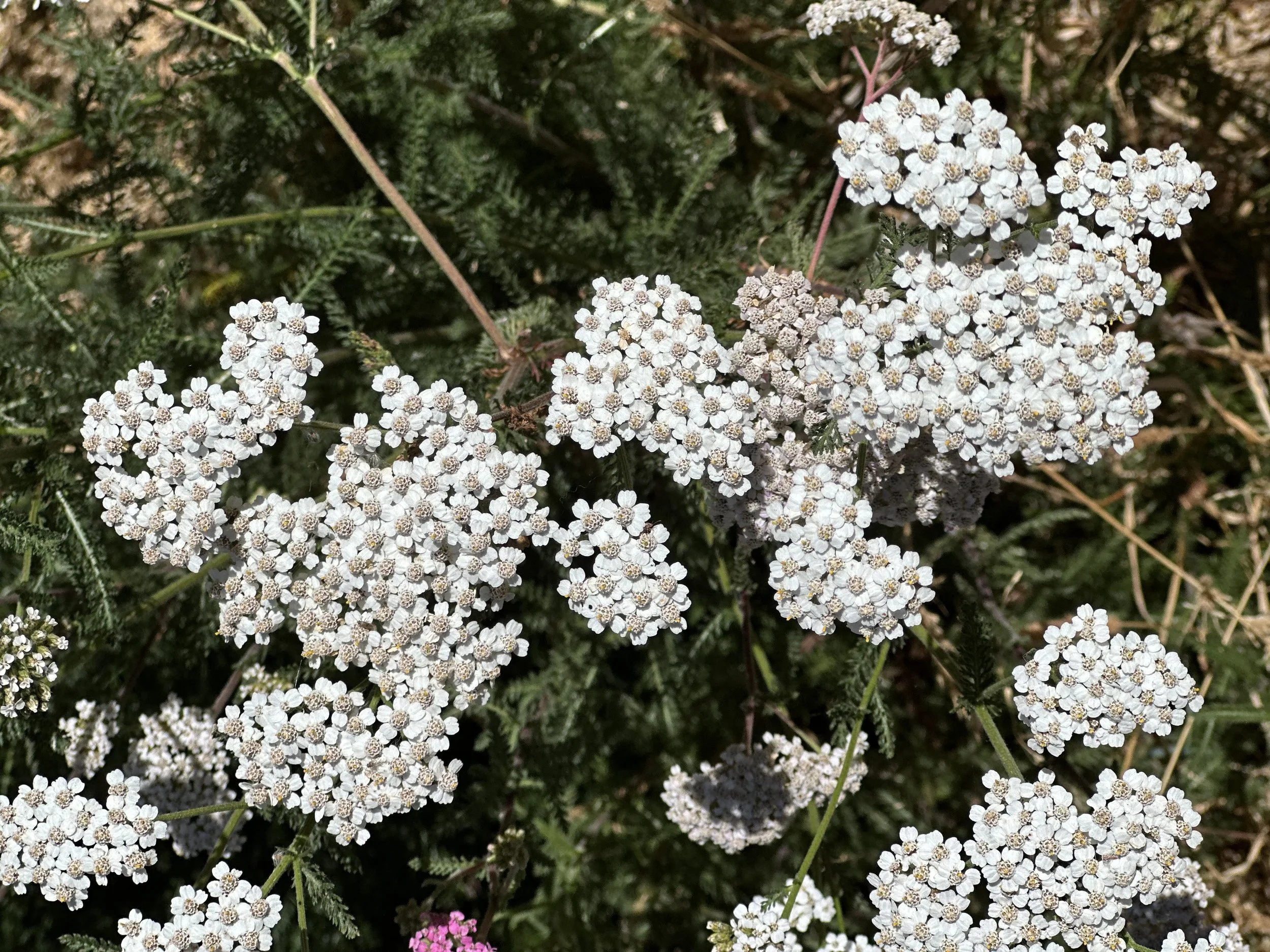
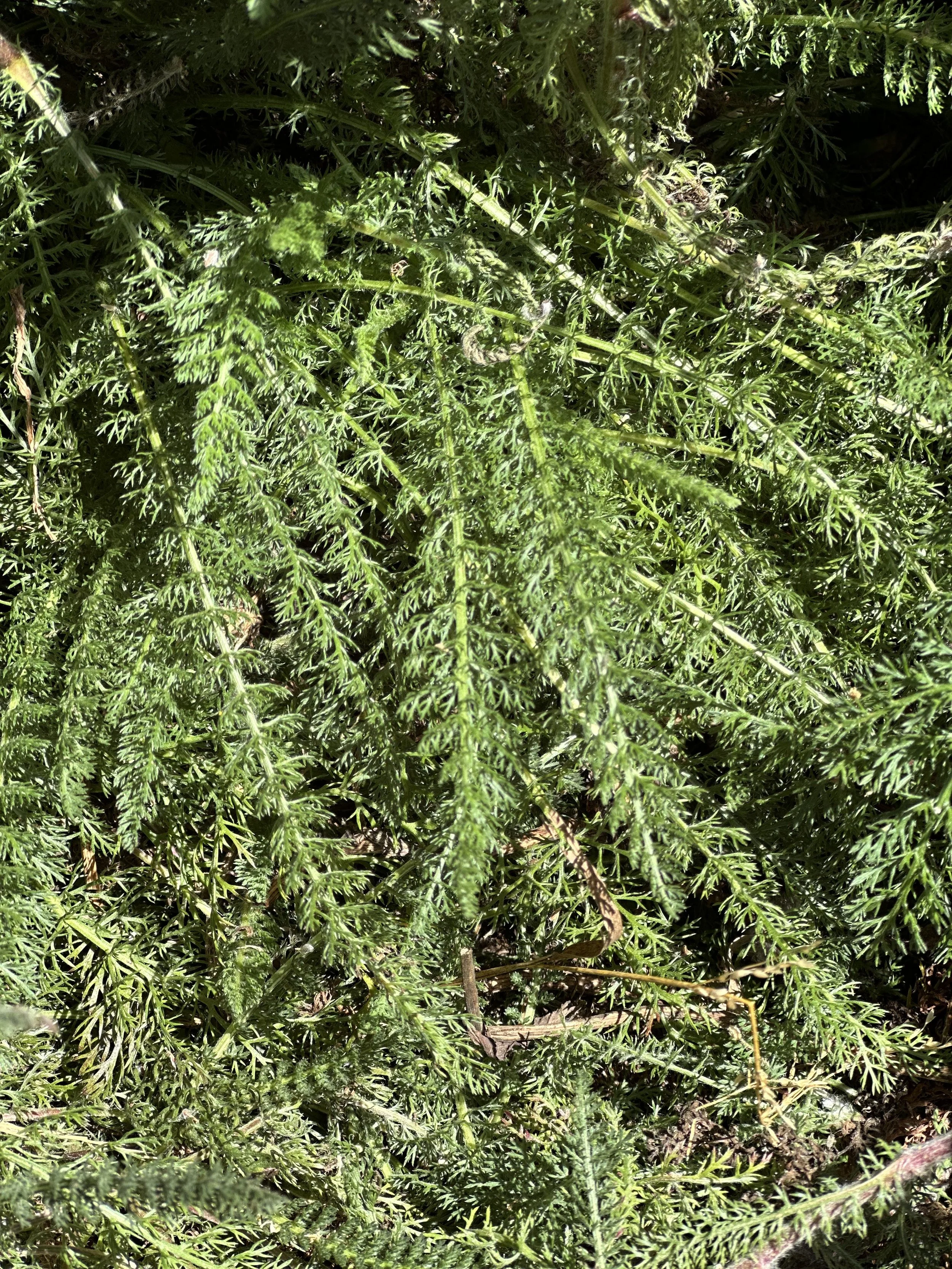
Month number two! So much to do! We’re still in major tidy mode, trying to clear paths, beds, and around tables and benches in order to allow full access to the space. We have a lot of weeds, but we also have a lot of yarrow — a lovely California native that isn’t a weed in our garden, but sure is weed-y. Because I knew we’d be taking a ton of it out, I wanted to dedicate the second volume of our Grow + Gather zine to Achillea millefolium — what we might do with it in our garden, along with suggestions for a few creative projects.
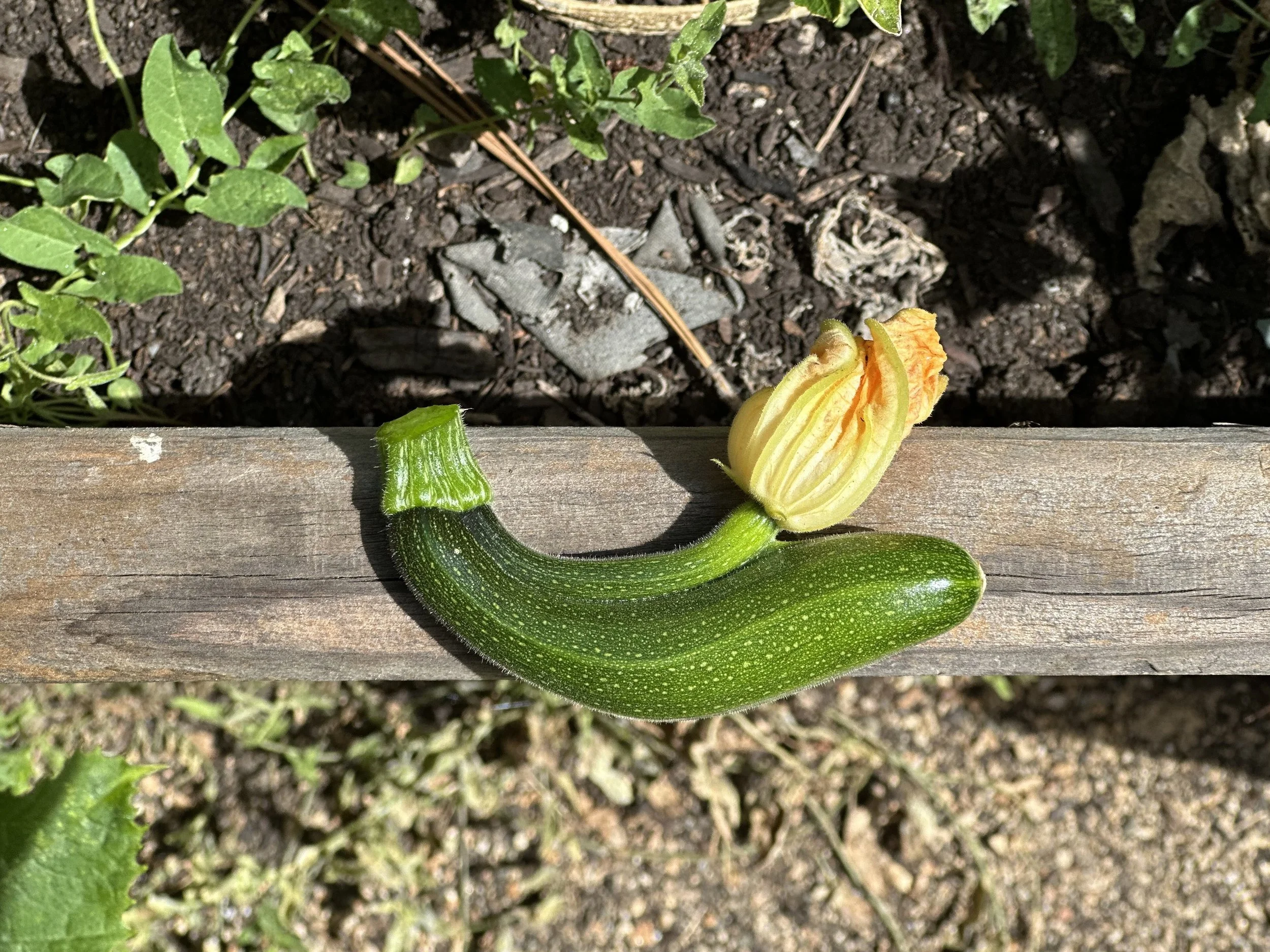
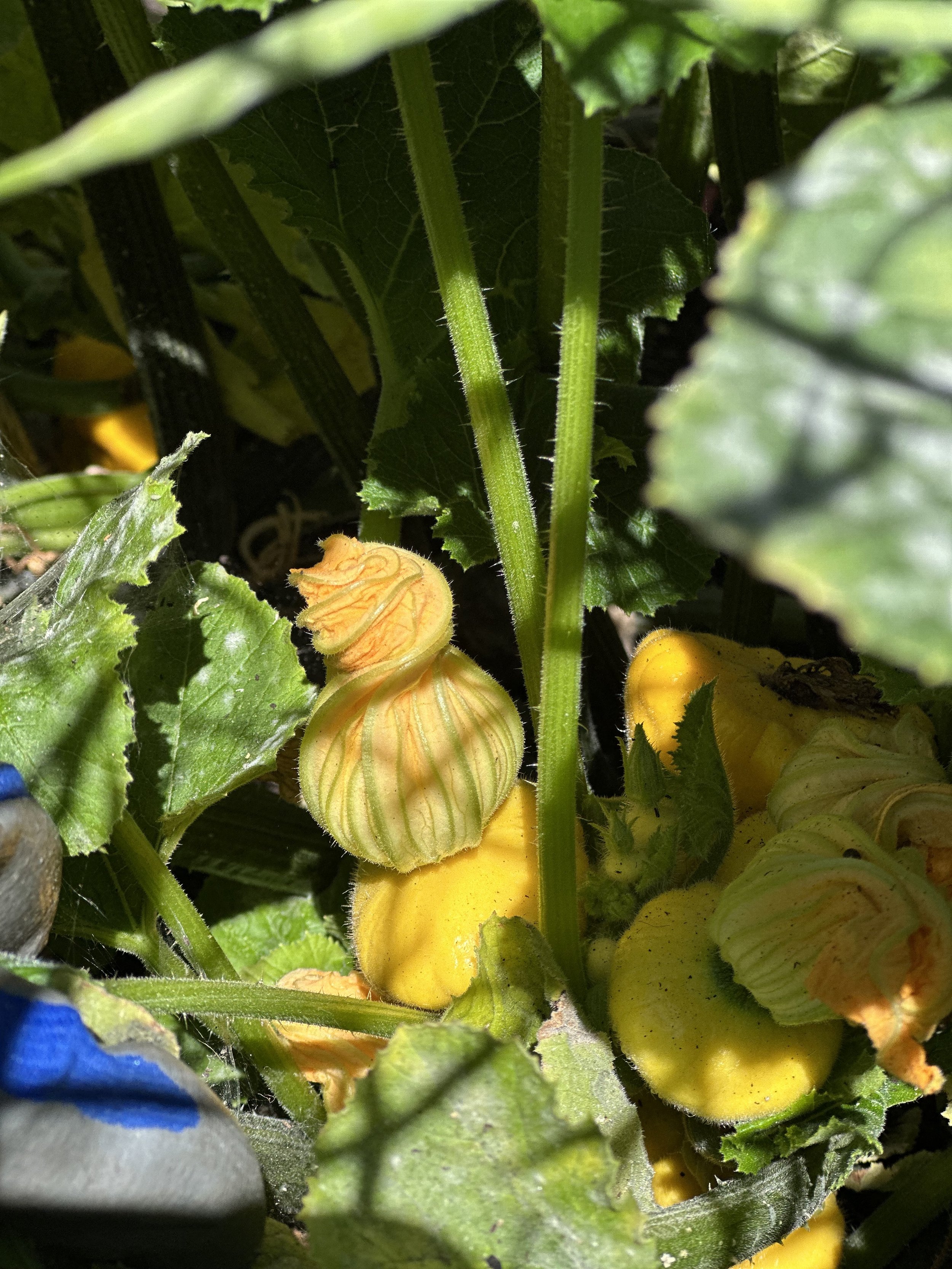
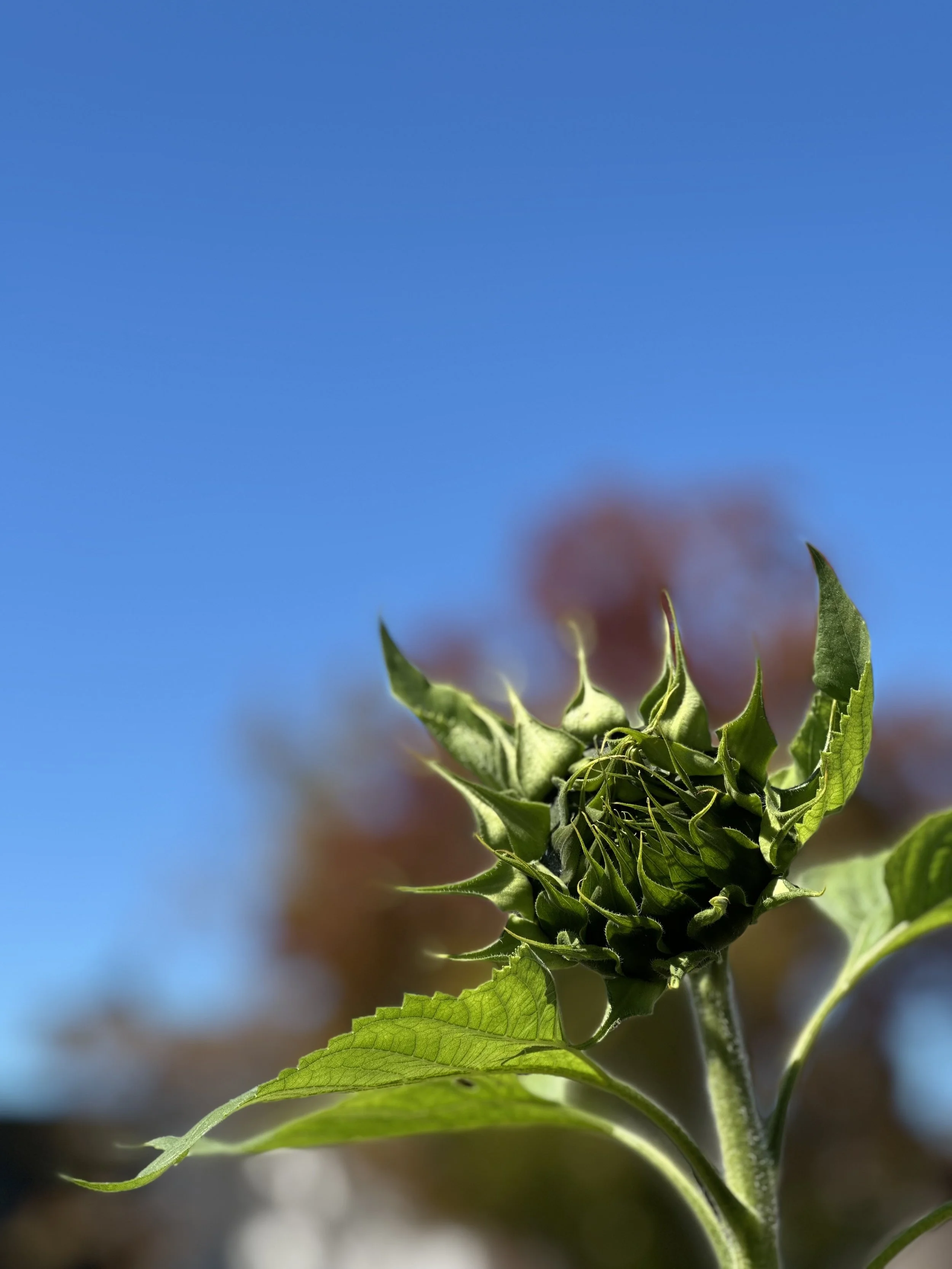
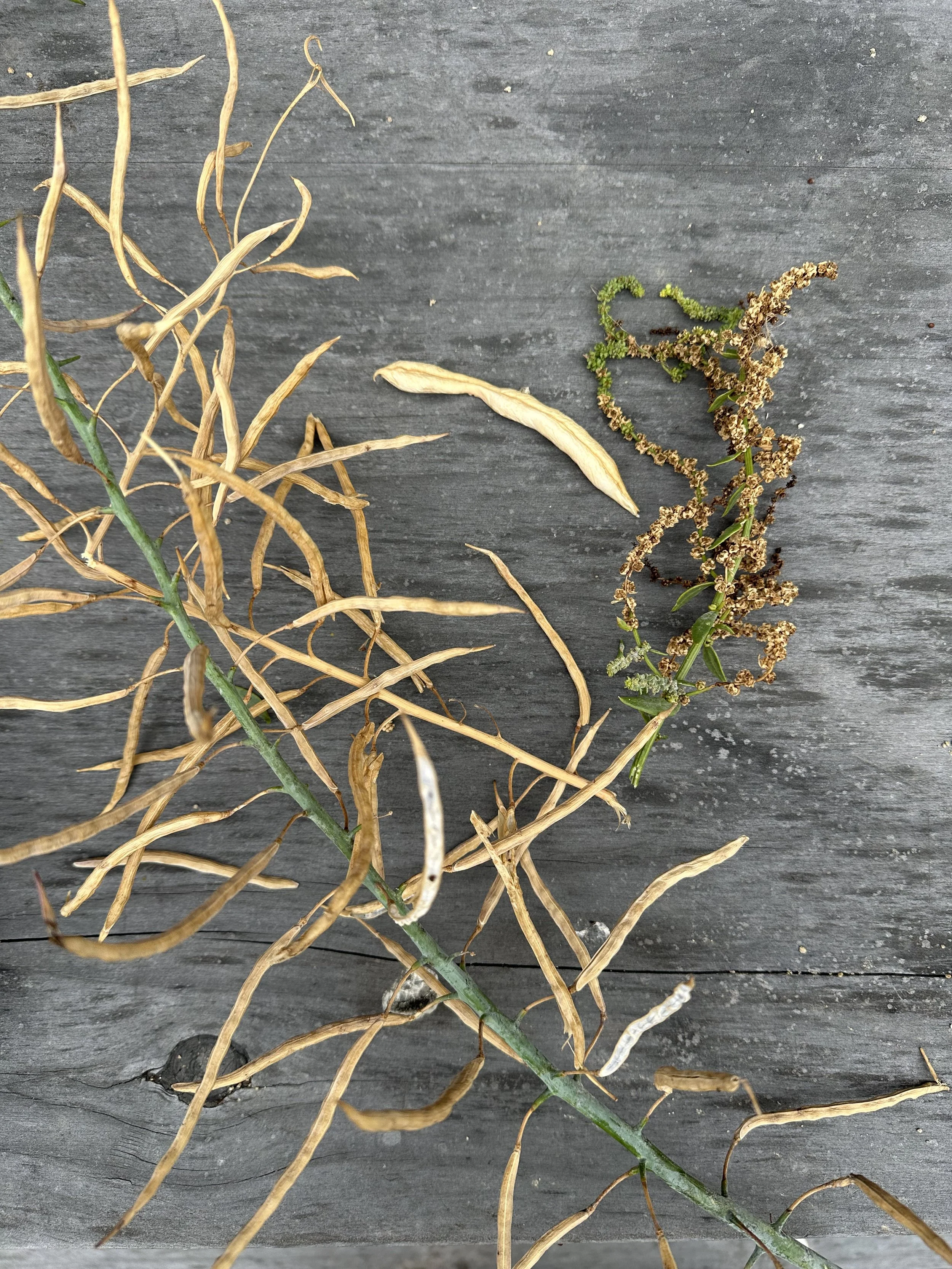
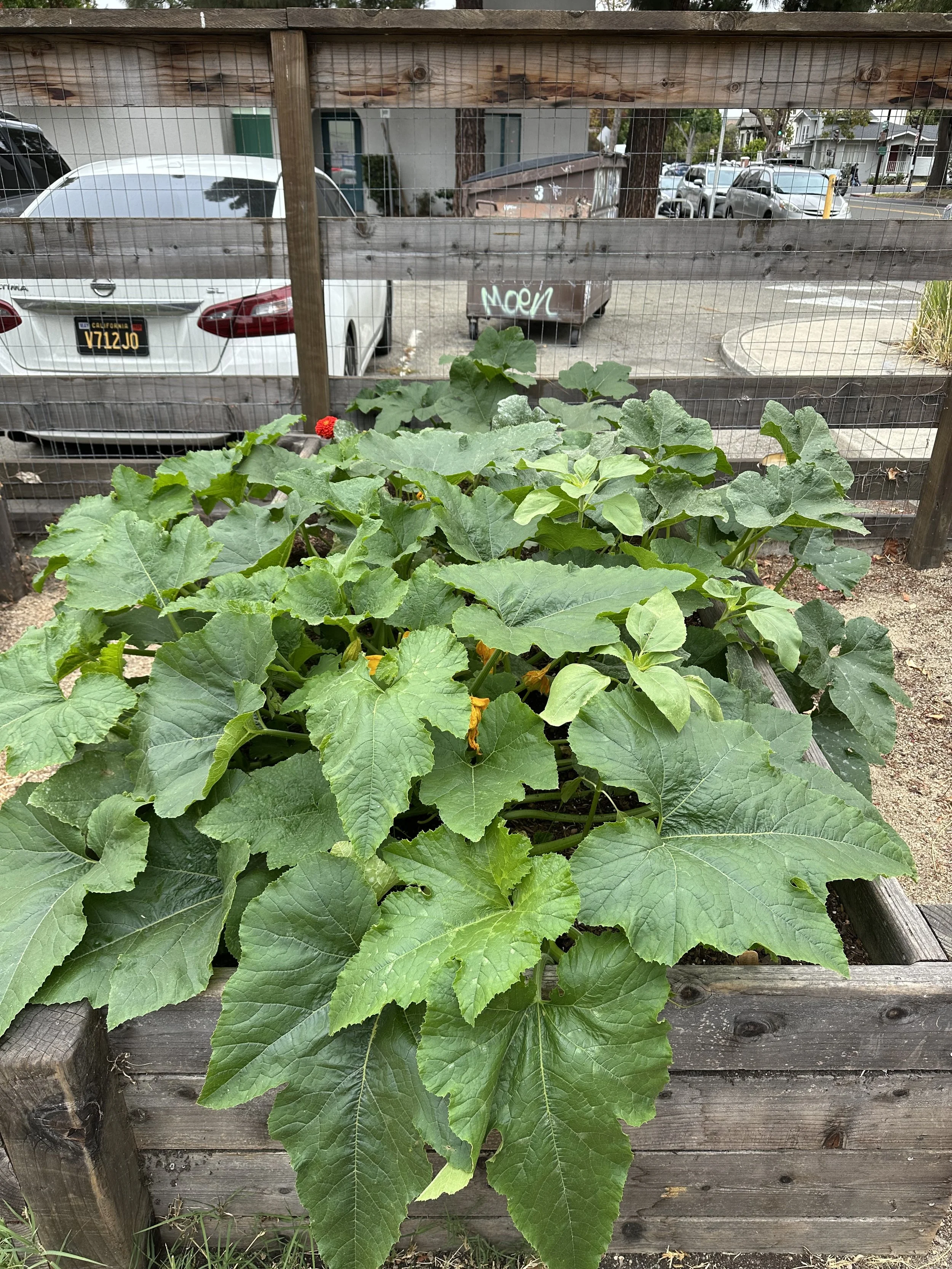
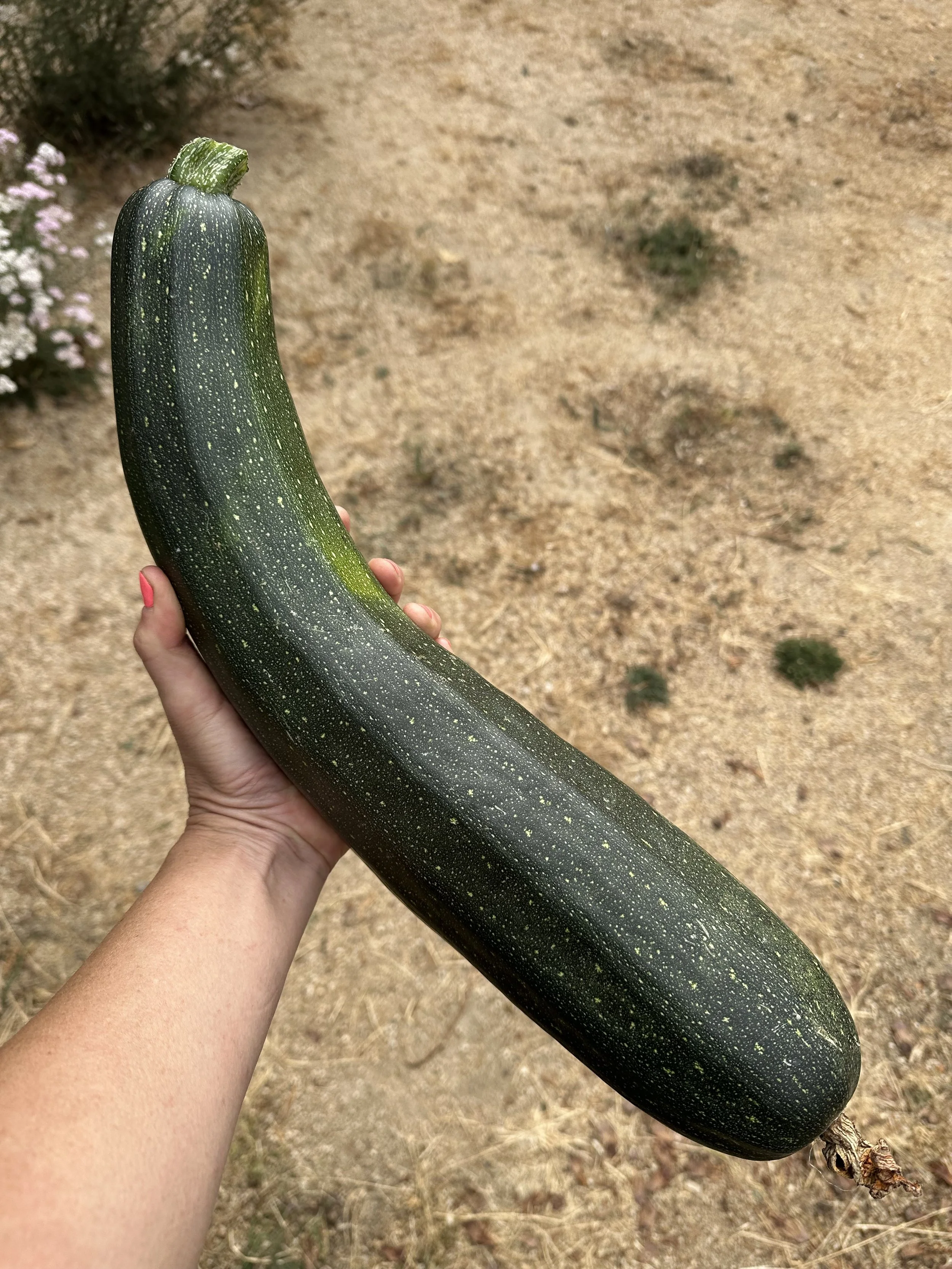
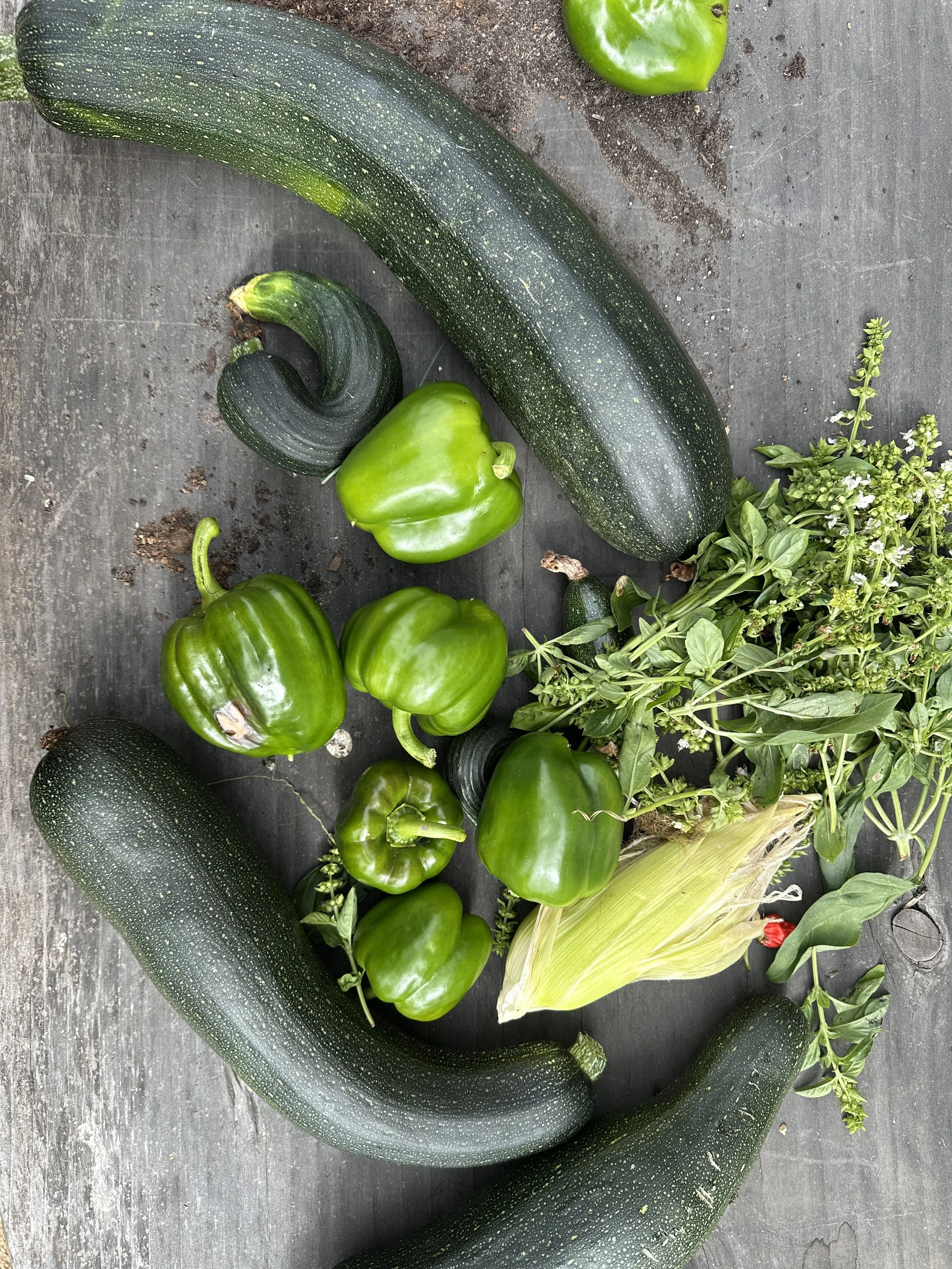
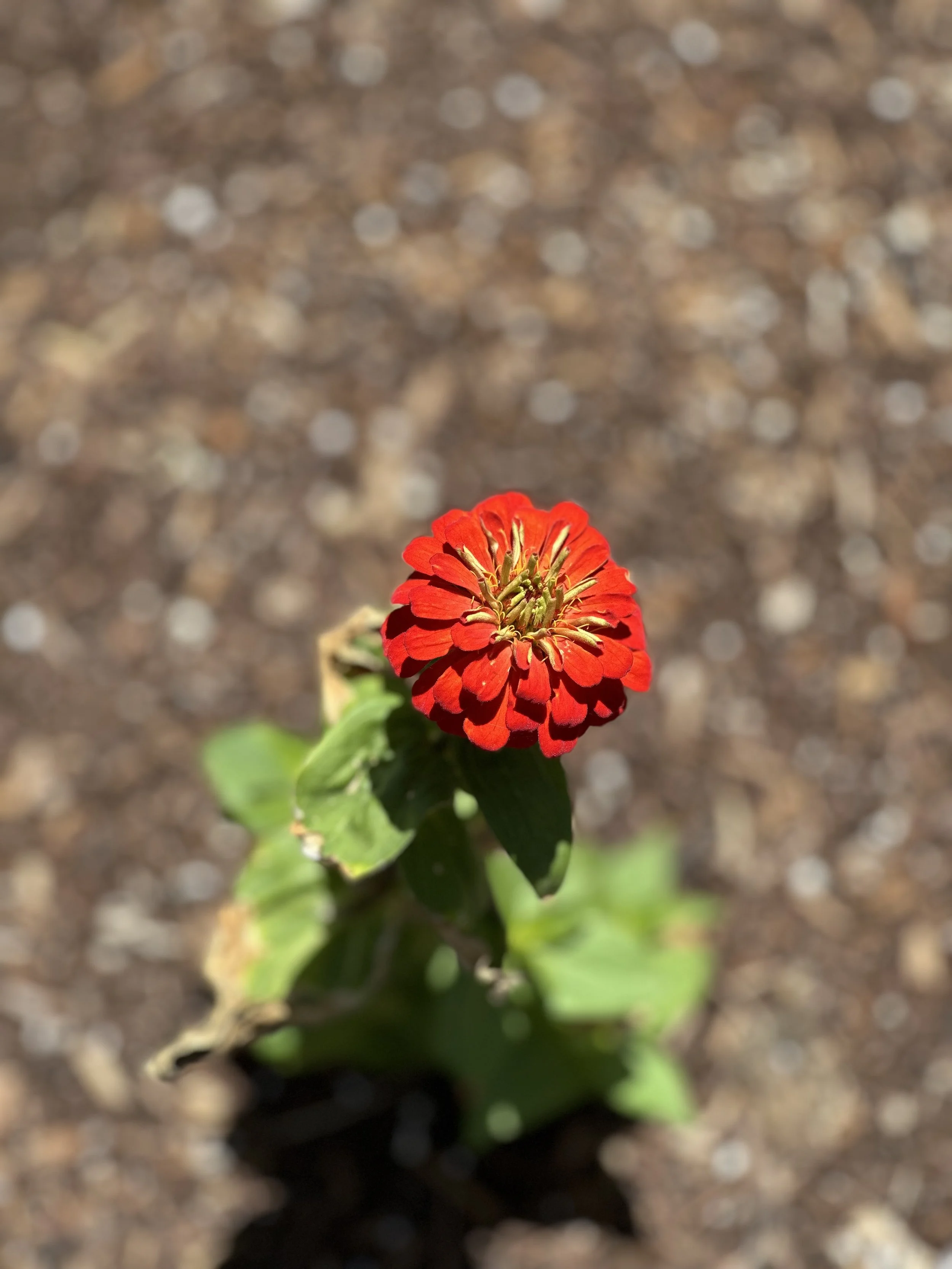
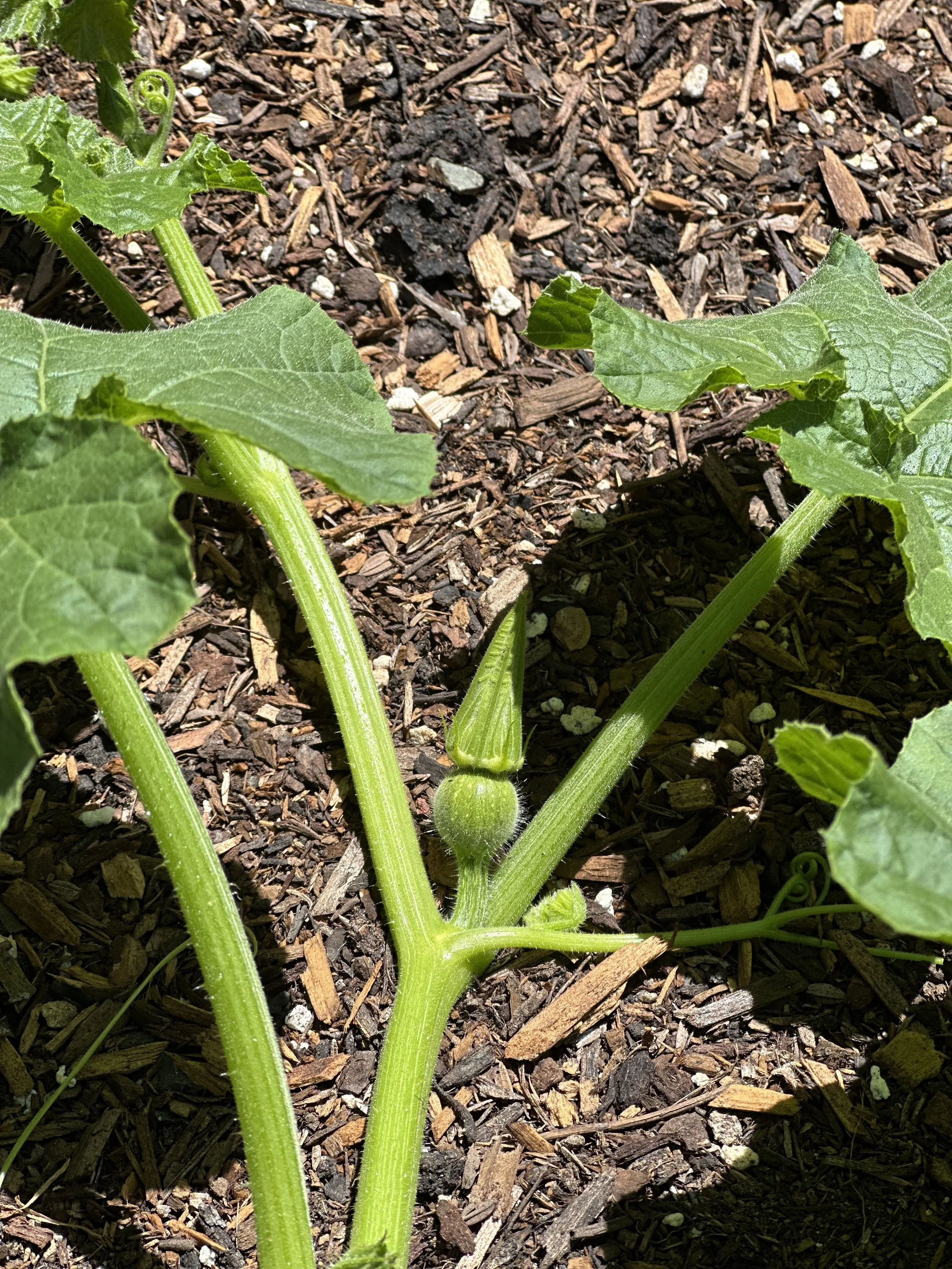
Some notes: The pumpkin starts we planted last month have absolutely TAKEN OVER!! Incredible, they are really thriving. Fingers crossed we get some good Halloween gourds going by October. Our zinnias are still blooming, and our sunflowers are almost ready to flower. We continue to produce the biggest zukes I’ve ever seen, and our tomatoes are finally turning red. Very cool to harvest chard and broccoli seeds and some beans — these will become the first additions to our on-site seed library, coming soon!
Thanks to Shay, Adi, Ray, Elle, Nina, Lina, Naomi, Rosalind, Layhoon, Konstantin, and Anna for being such awesome gardeners, and to Tino for watering!
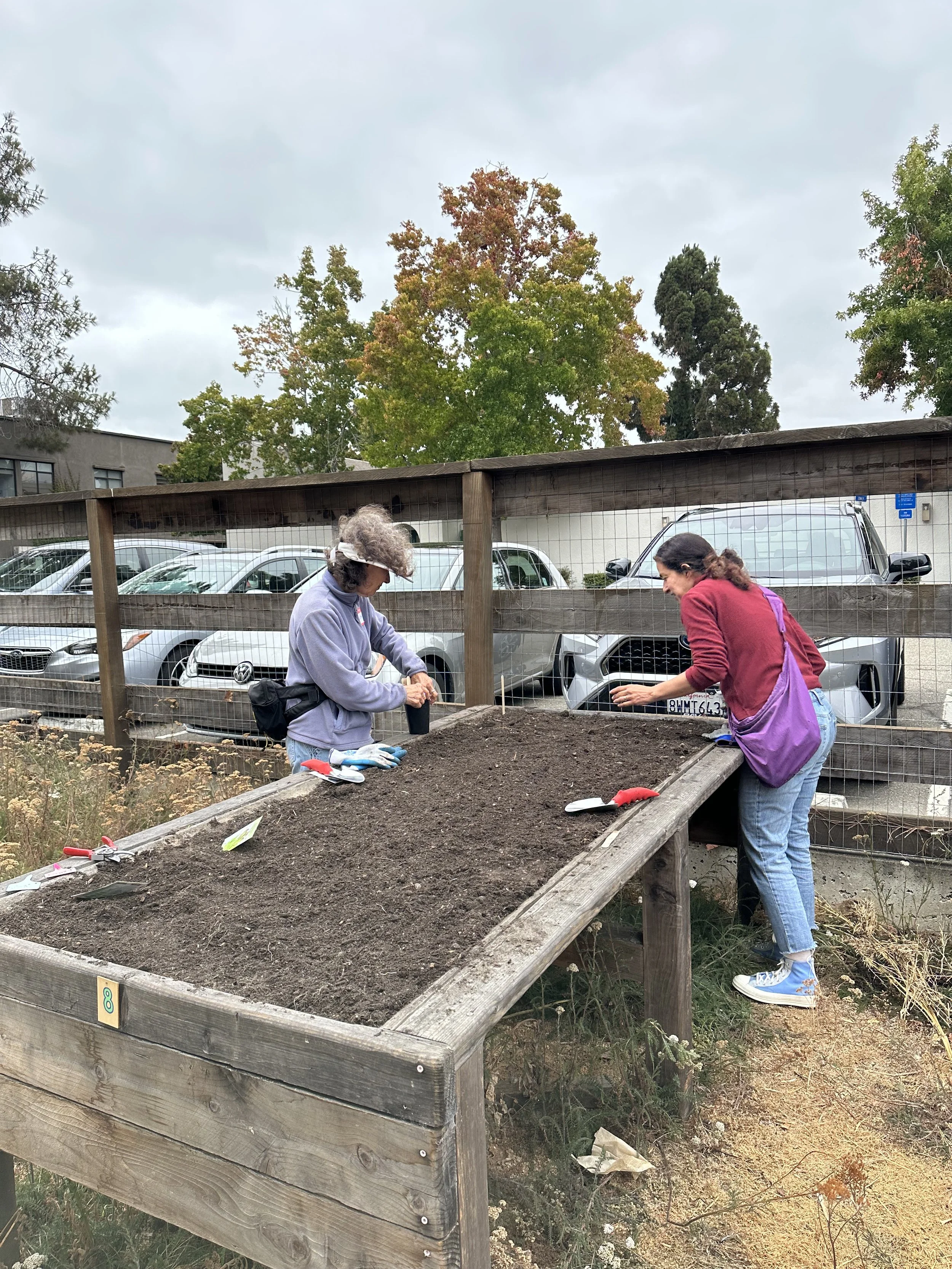
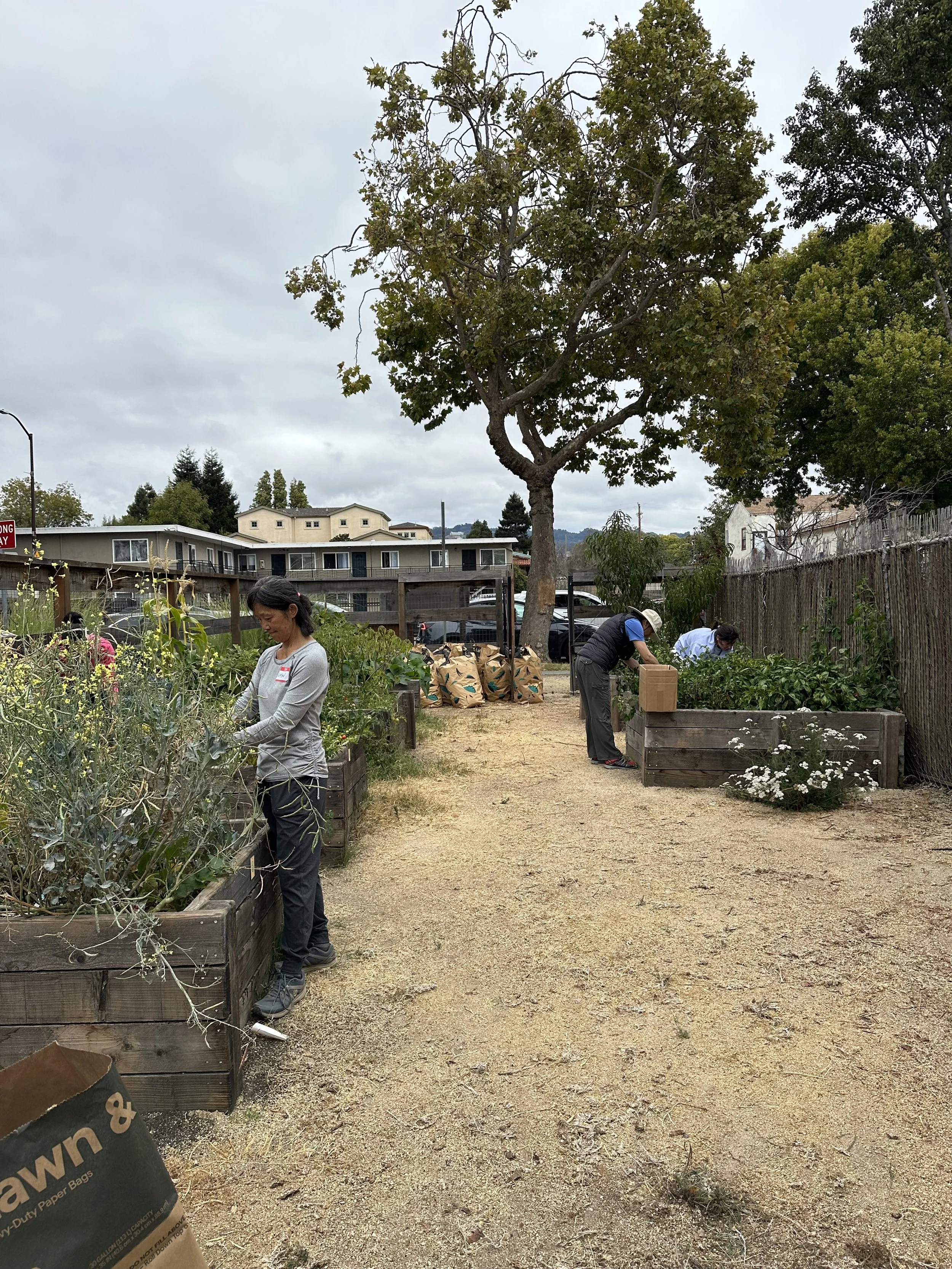
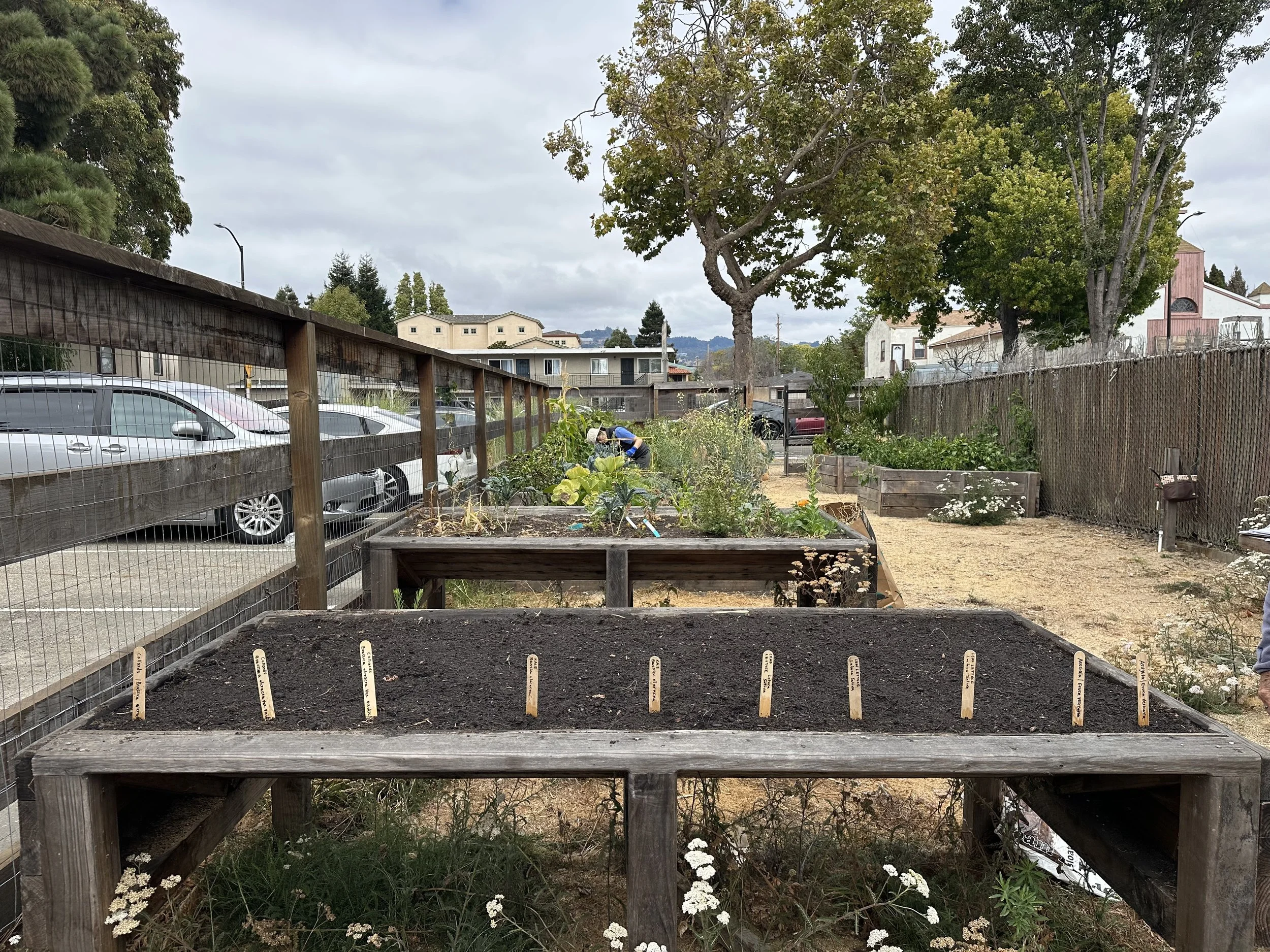
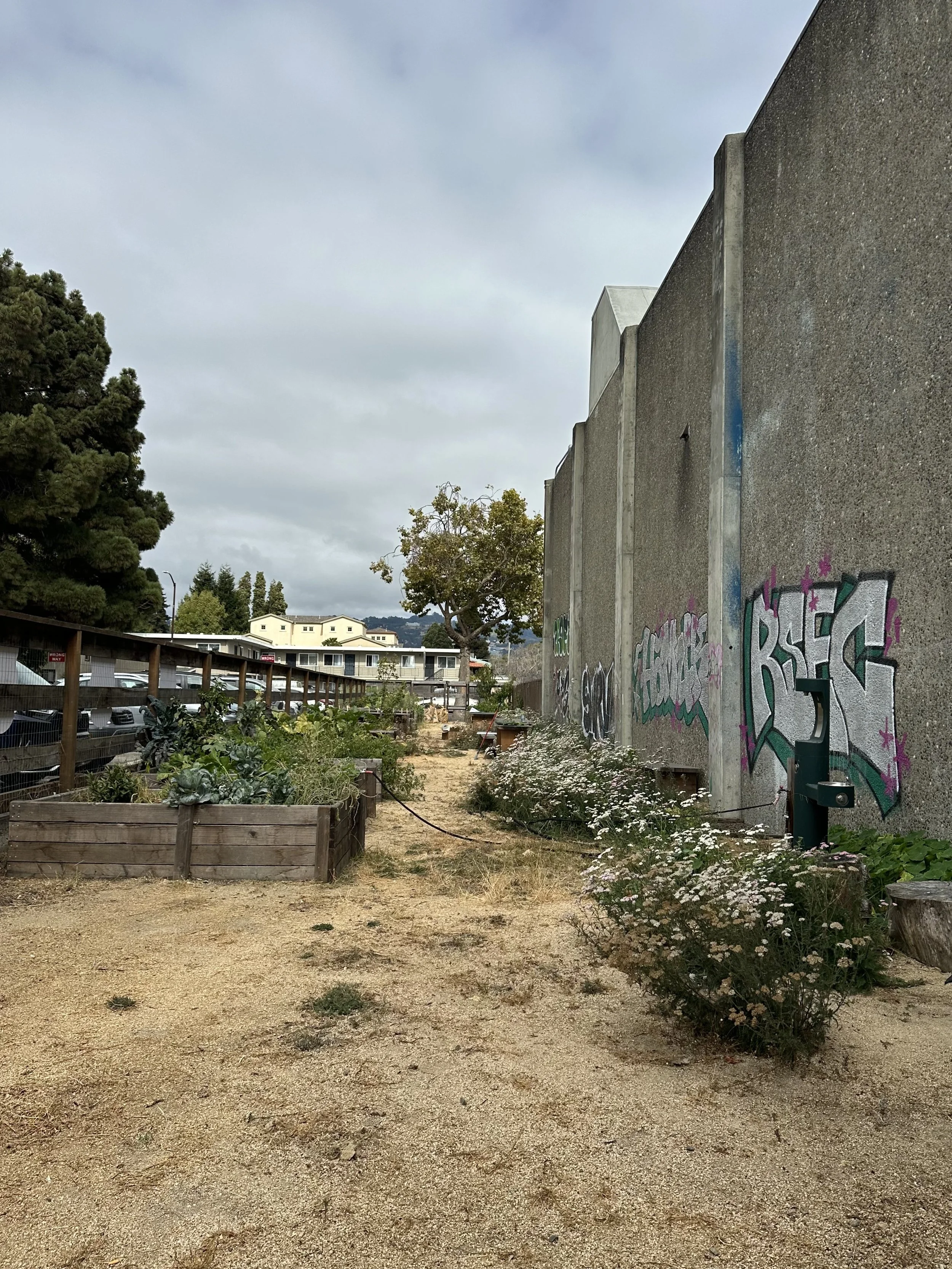
JULy 2026!!
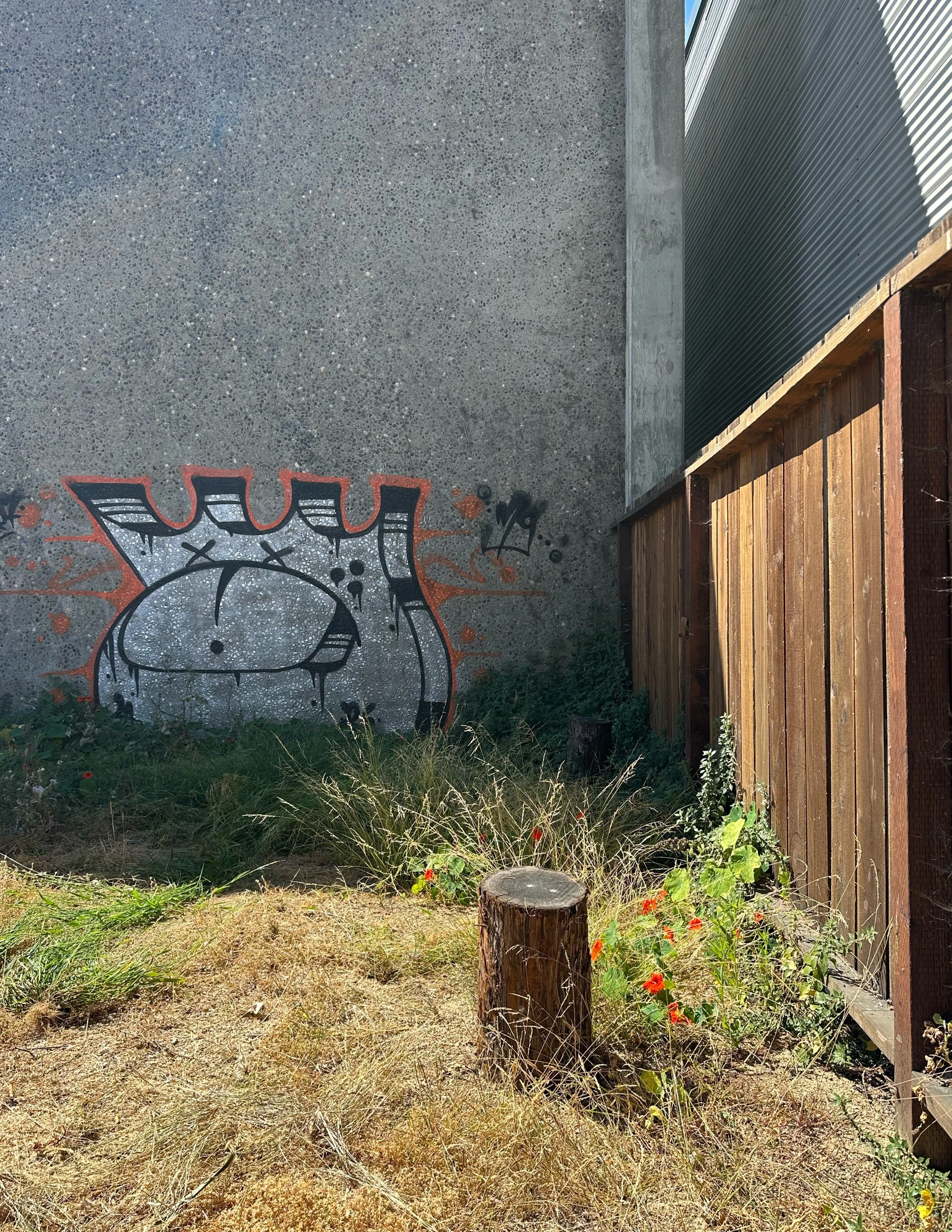
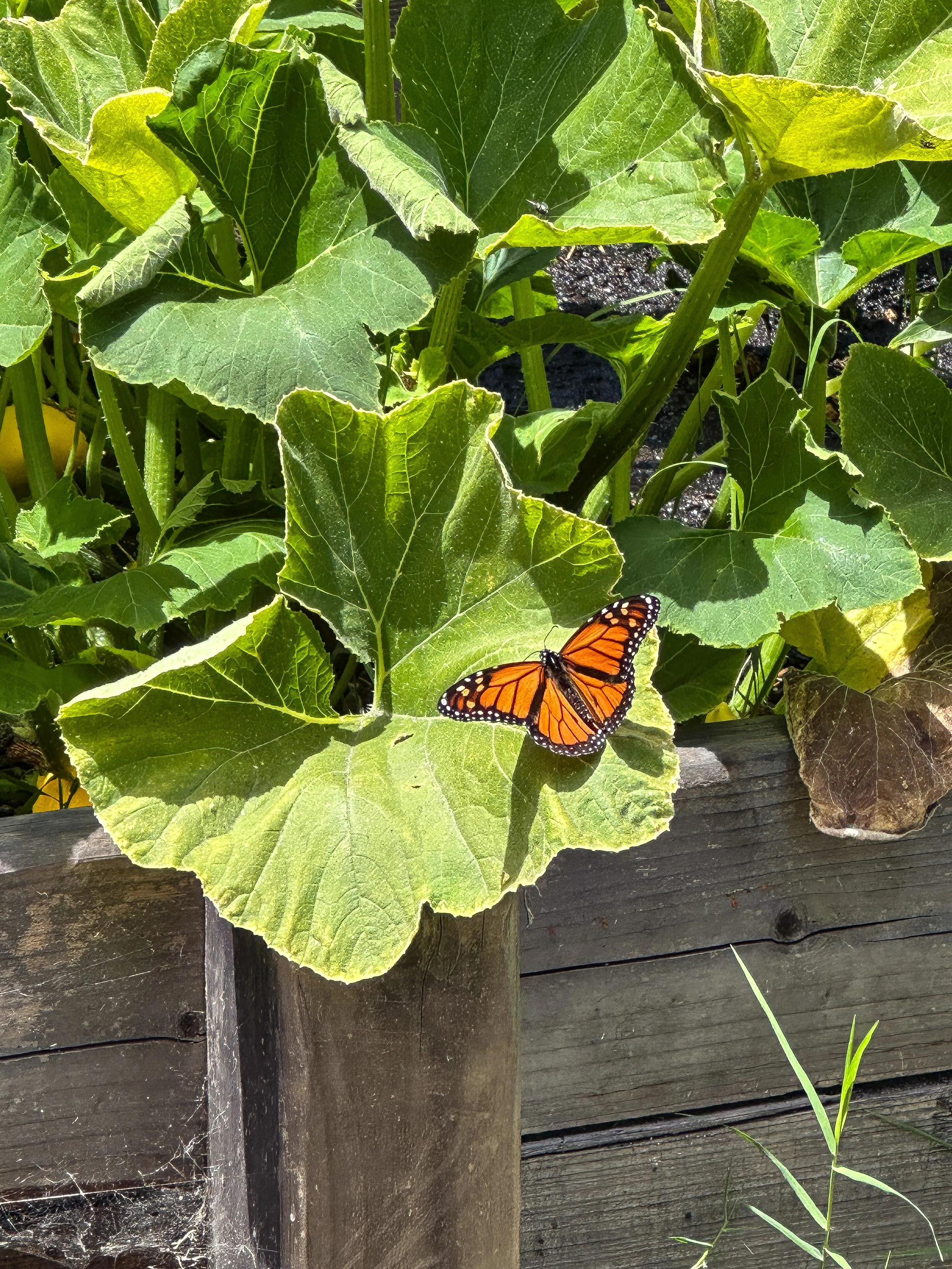
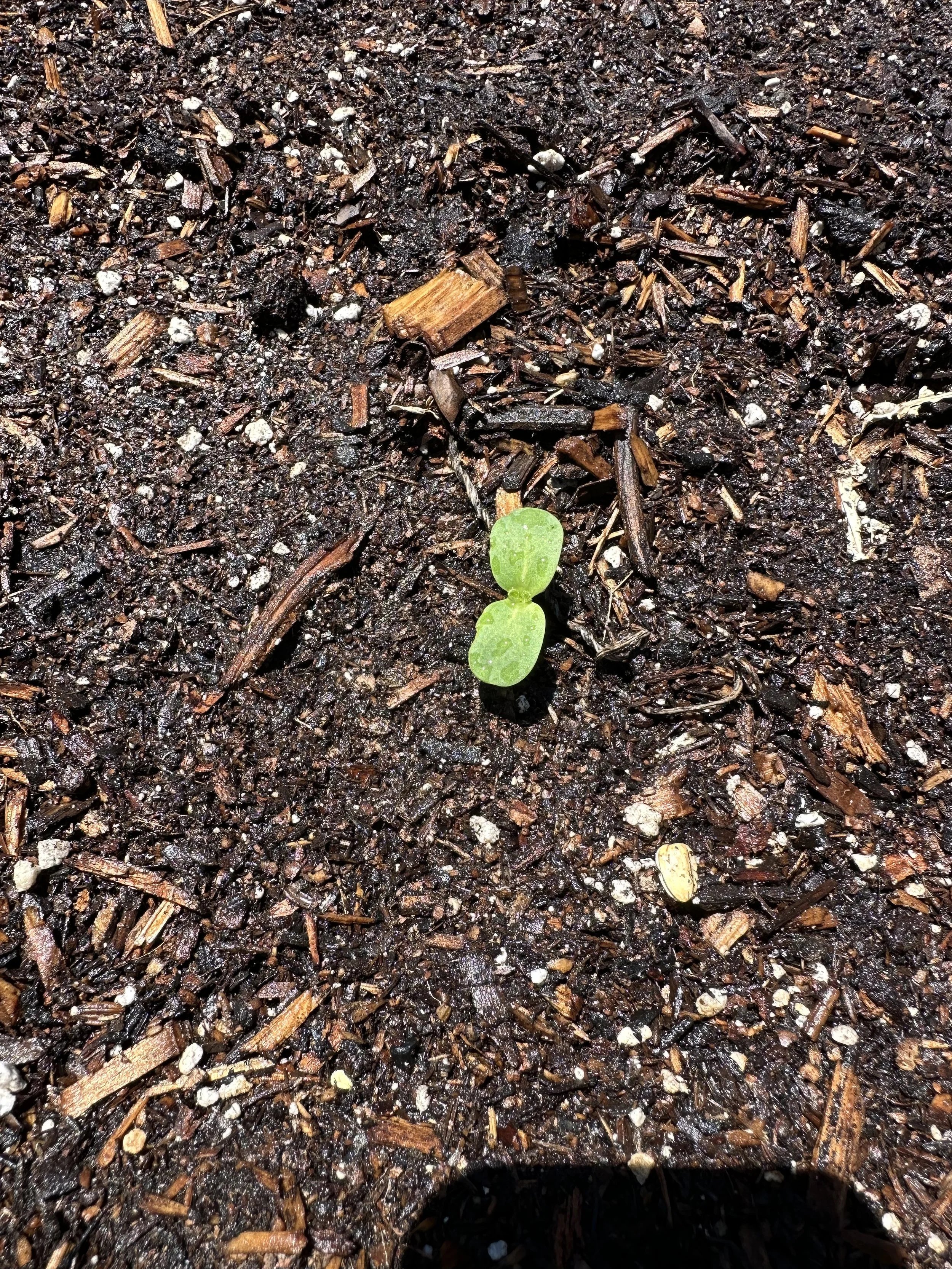
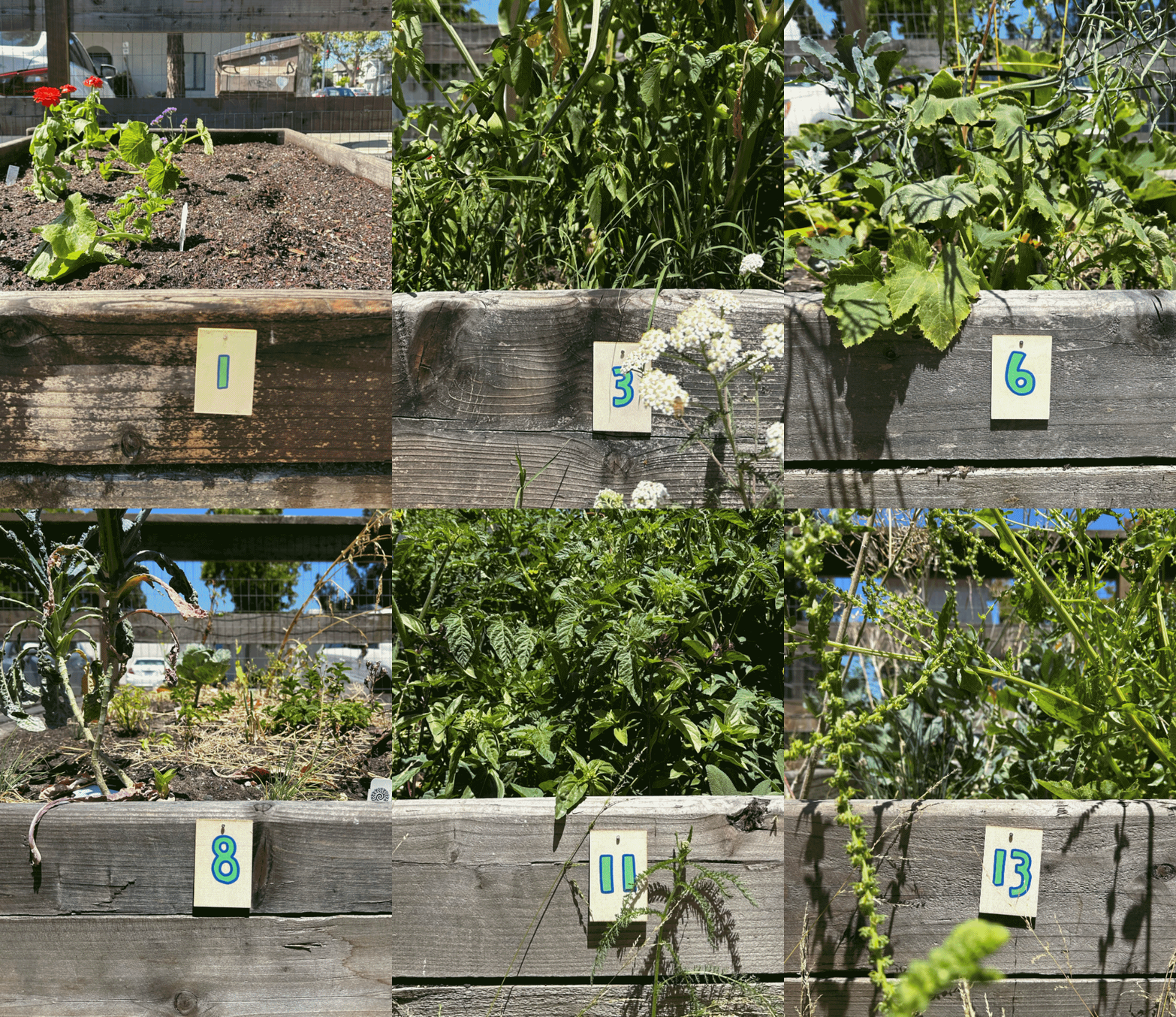
Our first month! We’re really just getting to know our garden now: observing our beds, harvesting what’s ready, watching what changes from week to week, and weeding. Hooo-wee, we are weeding. We amended bed #1 and planted a six-pack of zinnias, two pumpkin starts, and some sunflower seeds. After a super hot spell we’ve (still) got some sprouts, blooms, and itty bitty gourds going for it. Shout out to the Monarch butterfly that’s flitted around during each visit.
Thanks to Brittany, Kevin, William, and Julie for being such awesome gardeners, and to Tino for watering!
Glossary
Annuals: Plants that go through their whole life cycle in one year, from seed, to flower, to seed again. Annuals can be as persistent as a California poppy, or as ephemeral as baby blue eyes.
Observation: One of the most important things we can do as gardeners is to pay close attention to our plants and our environment — then be curious, ask questions, and seek answers about what we see. Over time, we’ll learn the natural rhythms of our unique urban ecosystem, along with how to protect and support it.
Soil: Soil isn’t dirt! It’s alive and thriving, a nutrient-rich of minerals, organic material, and beneficial micro-organisms that nourish plants through their roots. The good stuff often gets depleted over time — we add compost, loam builder, and / or fertilizer to replenish and rebalance. Healthy soil = happy plants!
Perennials: Plants that grows from the same resilient root system year after year. Perennials can be as small as a seaside daisy or as big as a coast live oak.
Summer-dry climate: Characterized by temperate, dry summers and mild, wet winters. Coastal California is one of five of earth’s summer-dry zones, along with the coastal Mediterranean, southern and western Australia, central Chile, and the west South African coast.
Weed: If something’s growing in your garden and you don’t want it there — it’s a weed. Because any plant can be considered a weed, as gardeners, we get to choose what we keep and what we pull in our space (and we’re allowed to change our minds as we go!). Weeding is an ongoing process — and incredibly annoying or meditative, depending on your perspective.
Resources
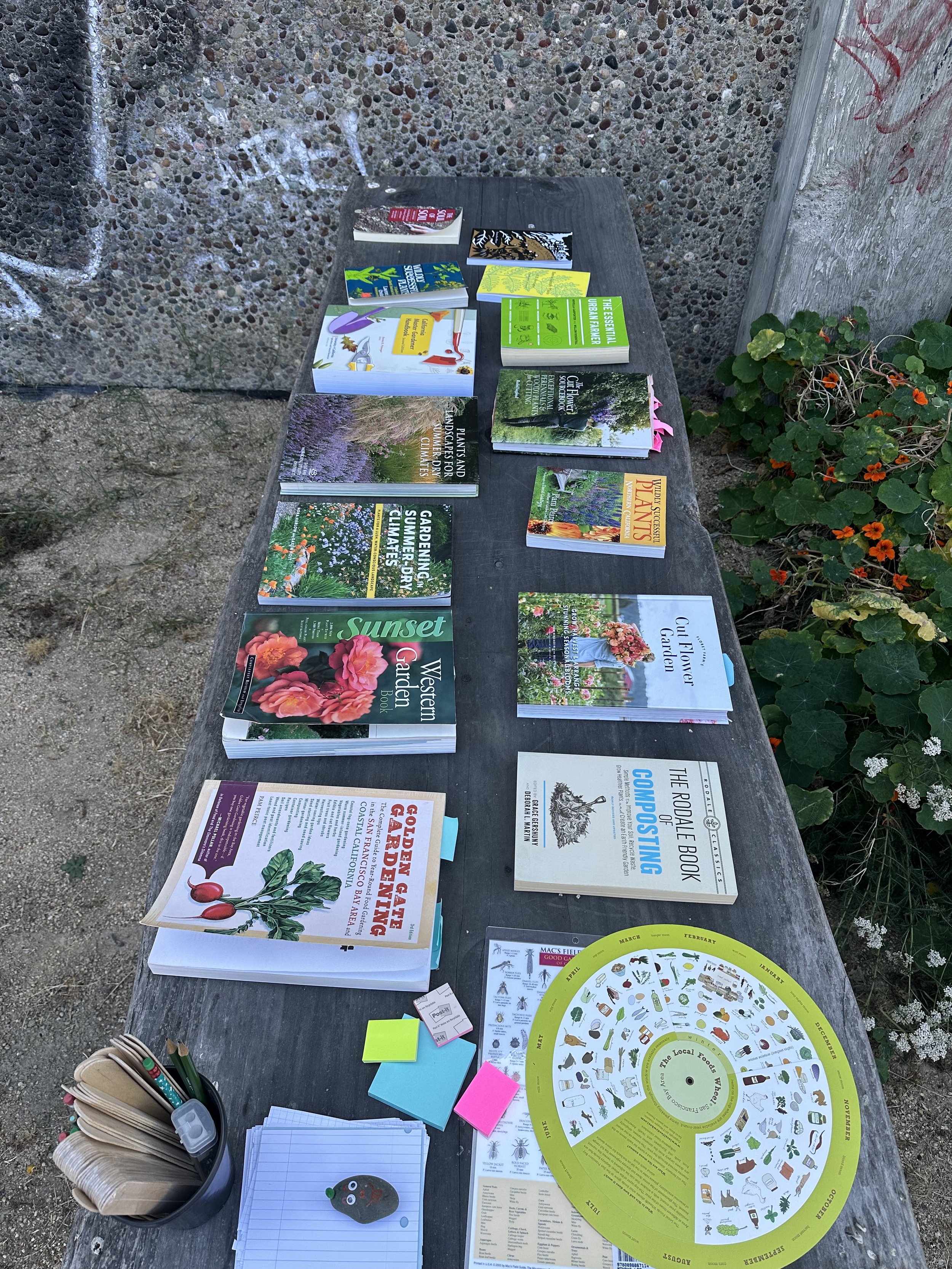
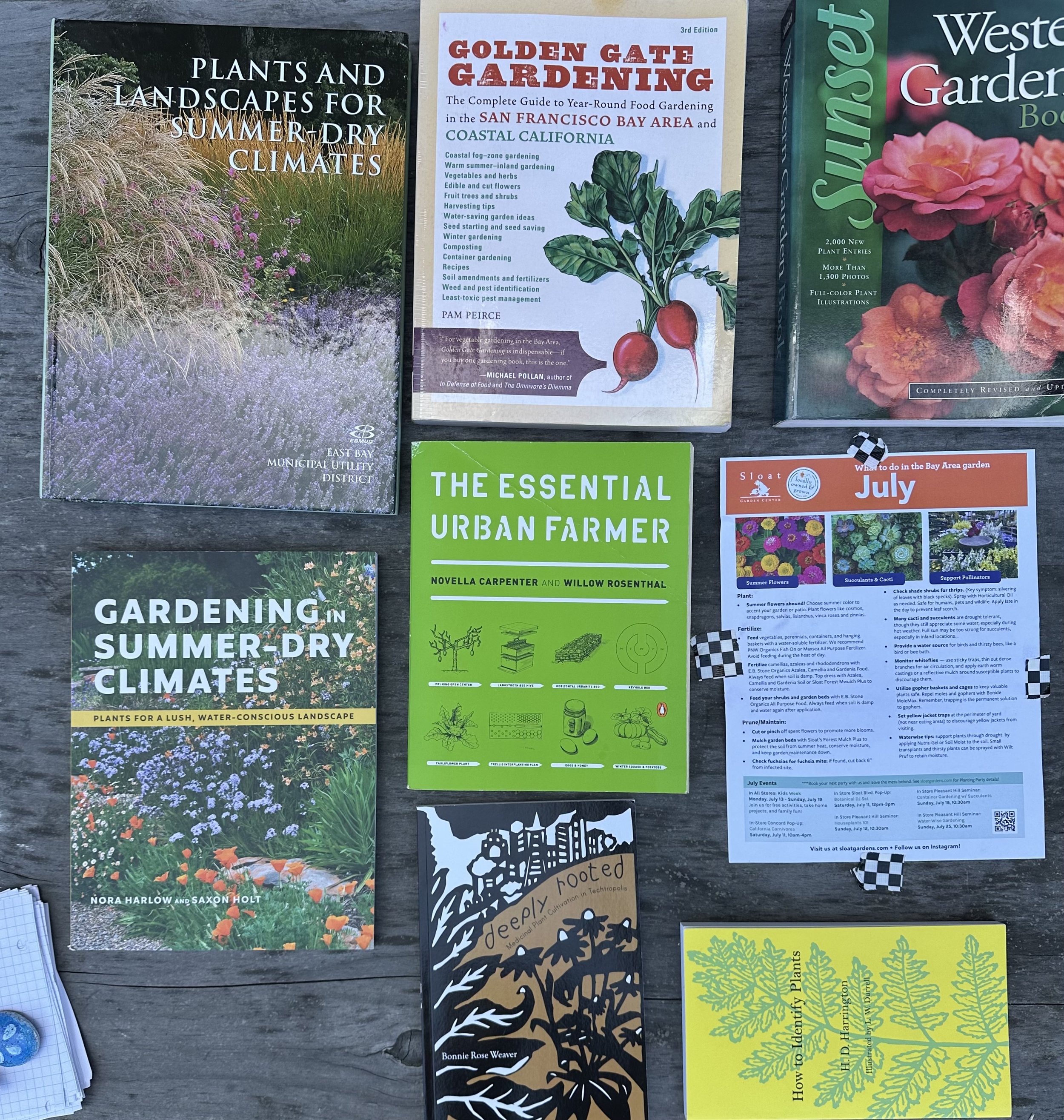
Golden Gate Gardening by Pam Peirce • The Complete Guide to Year-Round Food Gardening in the San Francisco Bay Area & Coastal California
Gardening in Summer-Dry Climates by Nora Harlow and Saxon Holt • Plants for a Lush, Water-Conscious Landscape
The Essential Urban Farmer by Novella Carpenter and Willow Rosenthal
The Rodale Book of Composting edited by Grace Gershuny and Deborah L. Martin • Simple Methods to Improve Your Soil, Recycle Waste, Grow Healthier Plants, and Create an Earth-Friendly Garden
How to Identify Plants by H.D. Harrington, illustrated by L.W. Durrell • The classic guide to the art of plant identification
California Master Gardener Handbook edited by Dennis R. Pittenger
The Soul of Soil by Grace Gershuny and Joe Smillie • A Soil-Building Guide for Master Gardeners and Farmers
Wildly Successful Plants, Northern California by Pam Peirce
Deeply Rooted by Bonnie Rose Weaver • Medicinal Plant Cultivation in Techtropolis
Sunset Western Garden Book
Plants and Landscapes for Summer-Dry Climates by the East Bay Municipal Utility District
The Cut Flower Sourcebook by Rachel Siegfried • Exceptional Perennials & Woody Plants for Cutting
Floret Farm’s Cut Flower Garden by Erin Benzakein with Julie Chai • Grow, Harvest & Arrange Stunning Seasonal Blooms
The Local Foods Wheel, San Francisco Bay Area by Maggie Gosselin, Sarah Klein, and Jessica Prentice • The Local Woods Wheel® shows what foods grow in the San Francisco Bay Area at different times of the year
Mac’s Field Guide, Good and Bad Garden Bugs of California